Creative Teaching Ideas for
by Norton Juster (1961)

On this page, we share our creative, hands-on activity ideas for teaching The Phantom Tollbooth. They're perfect for homeschoolers, co-ops, classrooms, libraries, book clubs, and families! We've been helping kids experience literature in memorable ways since 2010, and we'd love to help you engage and inspire your readers, too.
When kids step into the story and do what the characters did, books come alive. Hands-on experiences help them better understand the story's events, themes, and secret meanings—and discover how clever and fun great books can be.
Free creative teaching ideas
Explore the hands-on activities, discussion prompts, supply lists, teaching notes, and learning links on this page.
Printables
Many of our activities use LitWits worksheets, project templates, maps, and other printable resources, available separately.
The LitWits Kit
Want to skip the prep work? Our open-and-go LitWits Kit includes supplies and printed materials for most activities.
for teaching The Phantom Tollbooth by Norton Juster
LitWits makes a small commission (at no extra cost to you) on supplies or books you buy through our Amazon affiliate links.
Creative Teaching Idea #1
A table of objects pulled “straight from the story” can lead to all sorts of wonderful discussions and wide-eyed, “aha!” moments. Throughout your teaching experience of The Phantom Tollbooth, pause to discuss and/or pass around relevant props. Items unique to the setting help kids understand “what that was like,” and those symbolic of themes help kids literally grasp big ideas.
More story props for bringing The Phantom Tollbooth to life:
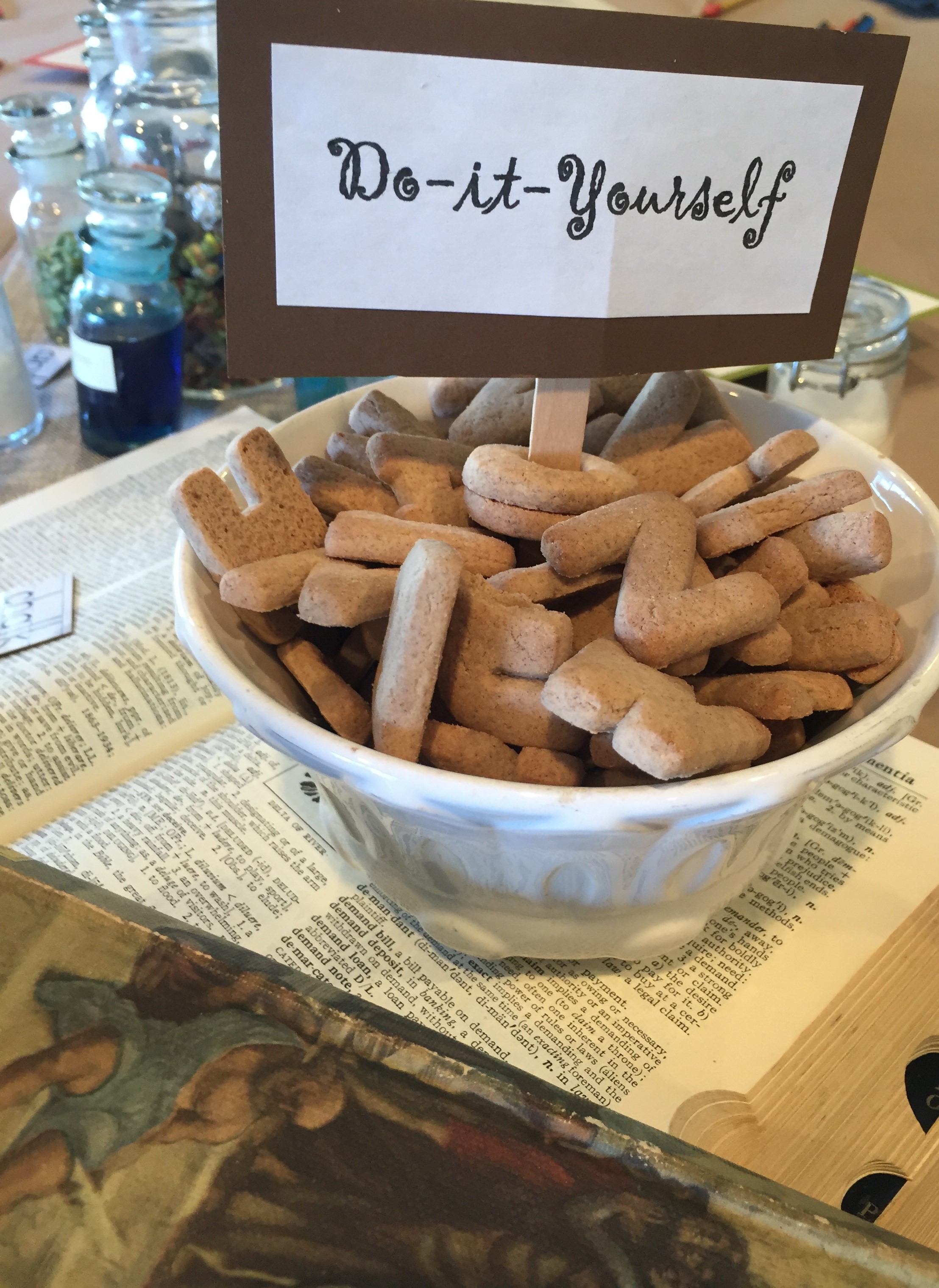
DIY letters from the Word Market
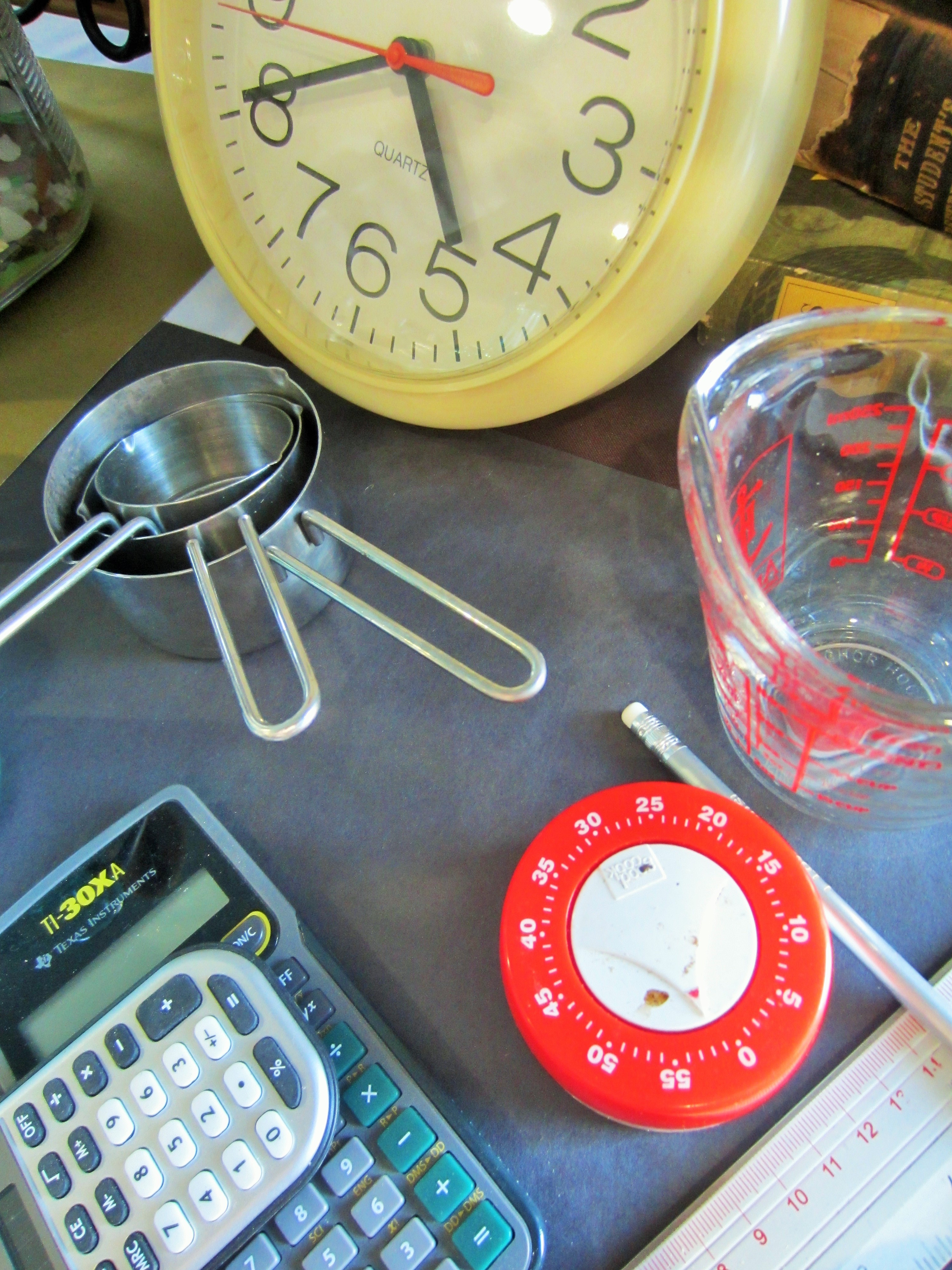
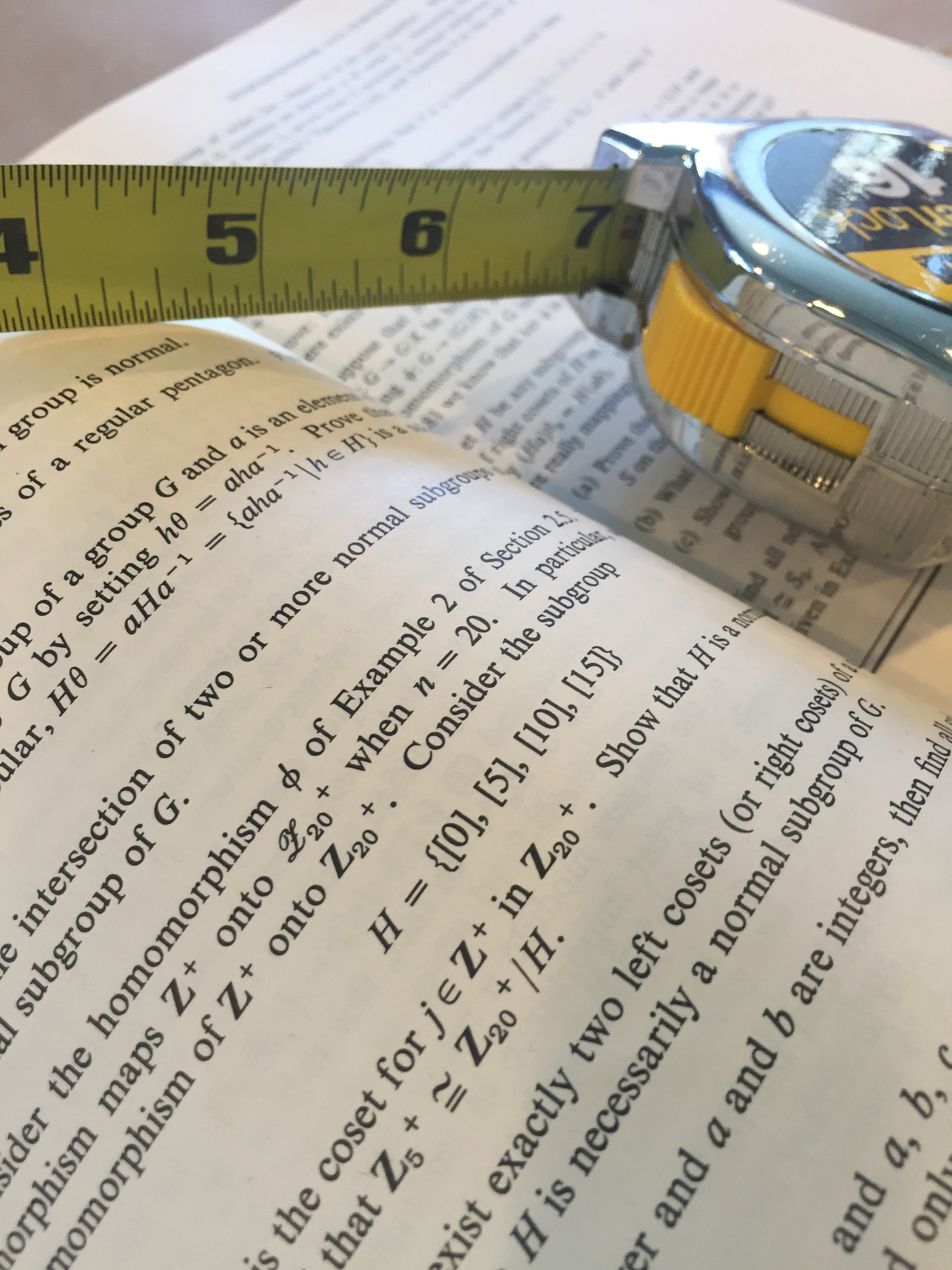
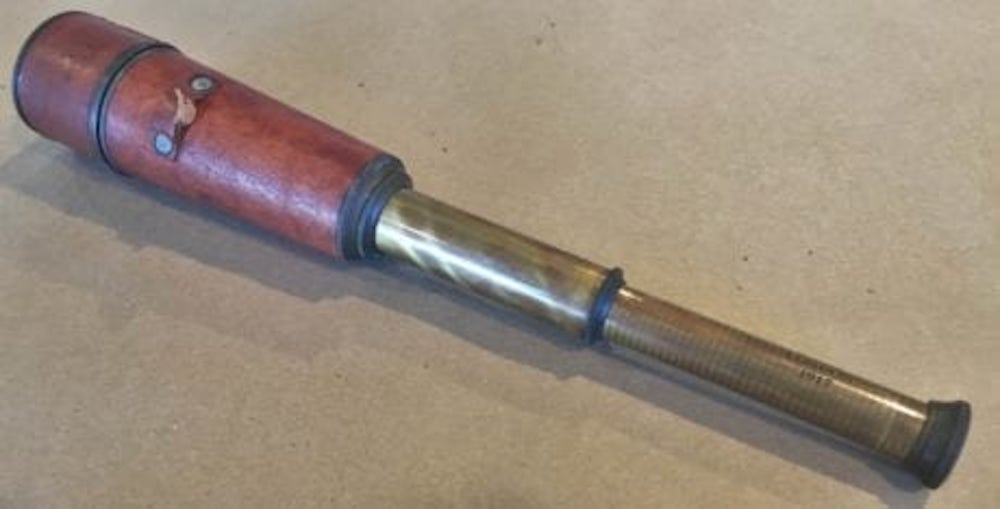
tools of Digitopolis
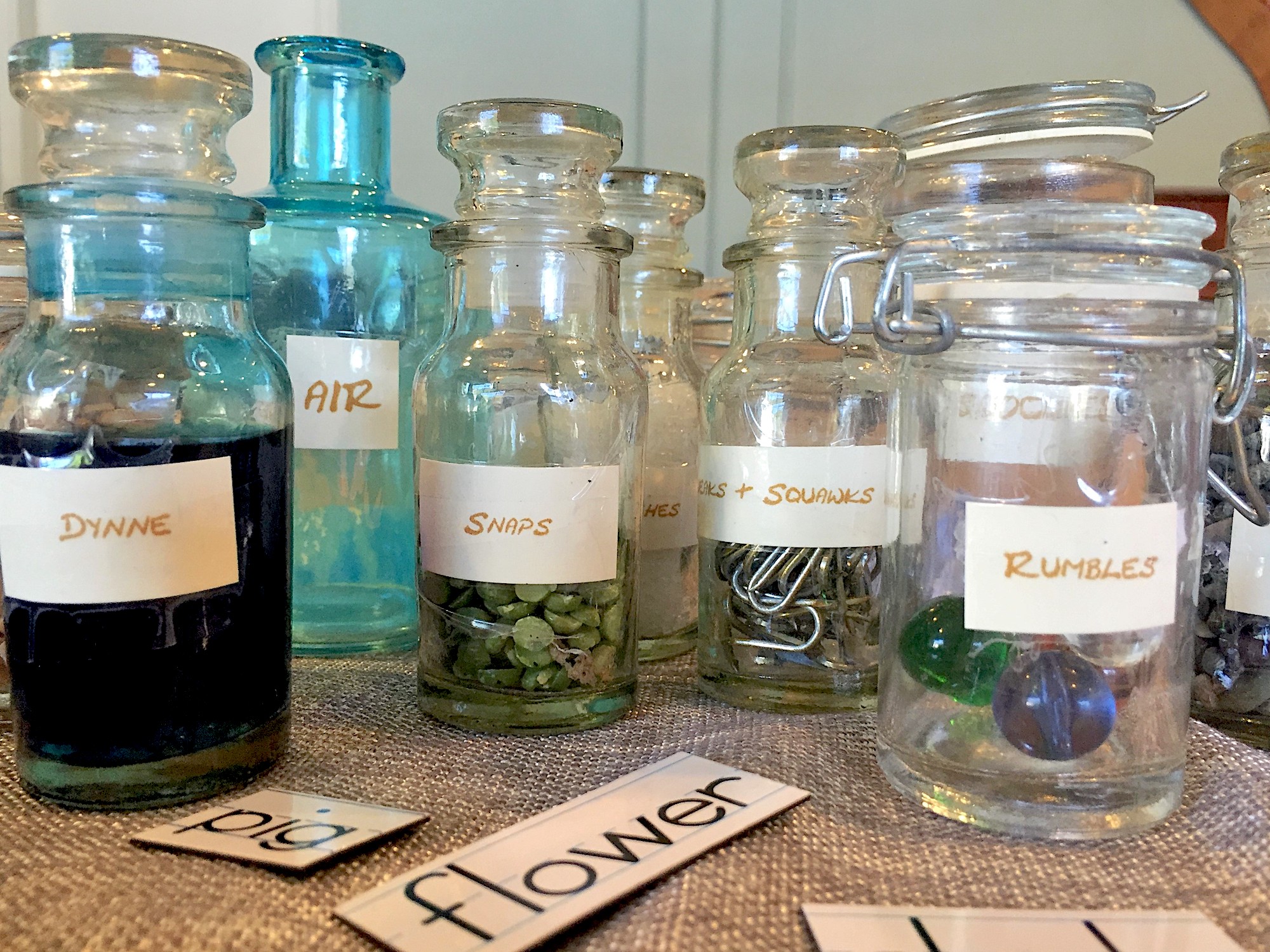
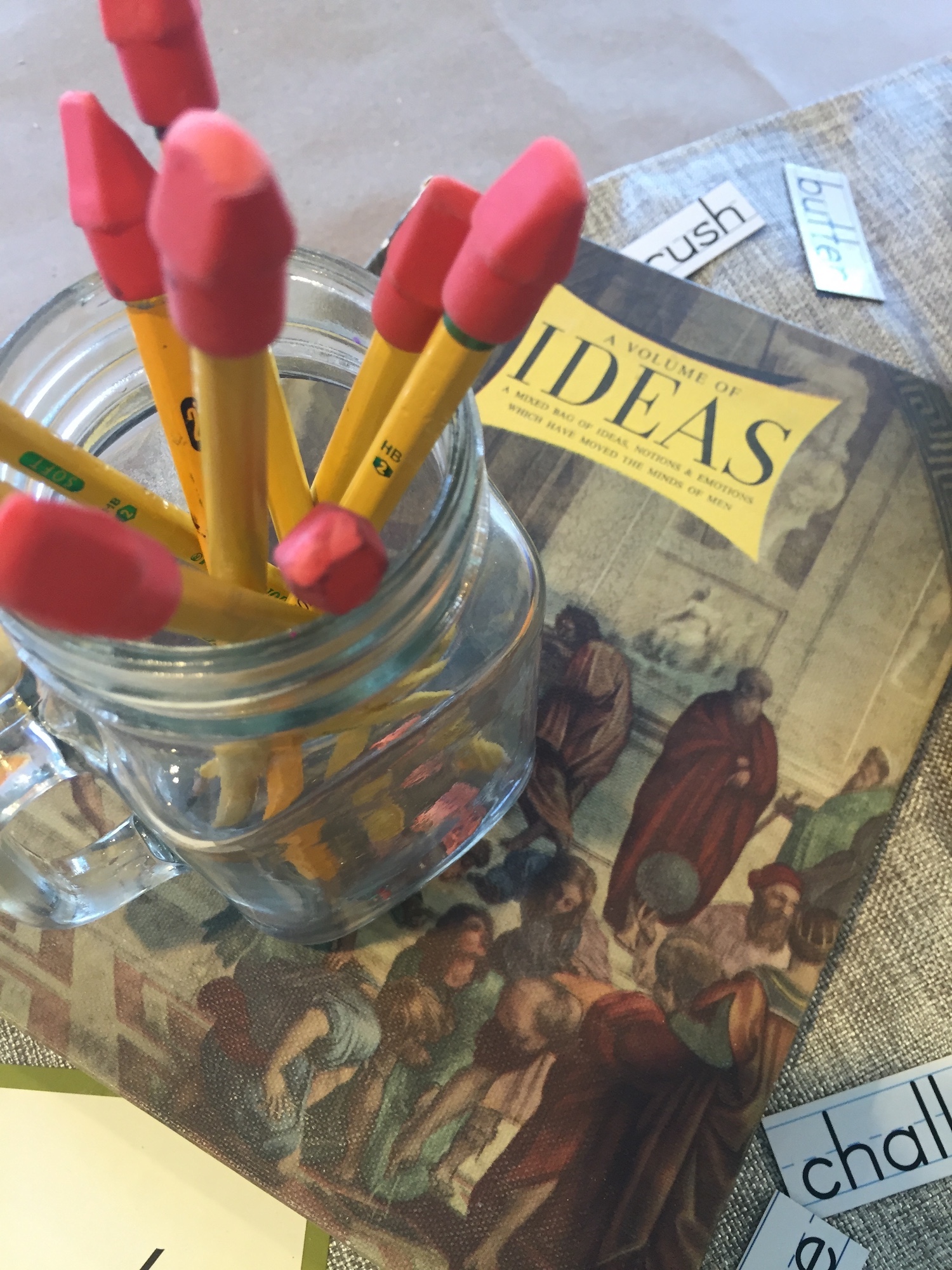
tools of Dictionopolis
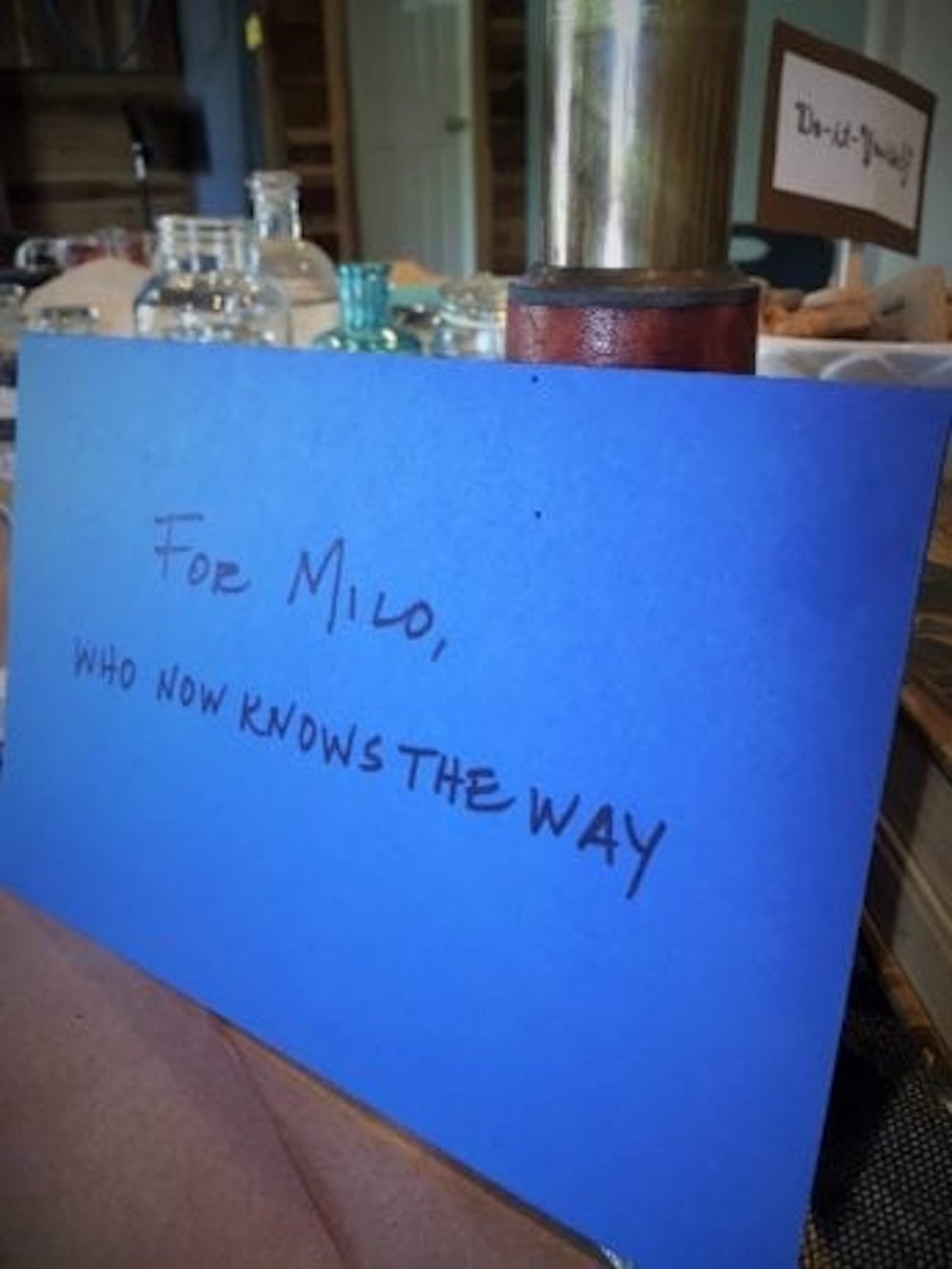
Milo's blue envelope (and note)
LitWits makes a small commission on supplies or books you buy through our Amazon affiliate links.
Creative Teaching Idea #2
We think it's important to know where your books have come from. After all, If Norton Juster hadn't been born, neither would Milo and all the other characters in The Phantom Tollbooth! This activity introduces your kids to the author through a video that shares kid-friendly, interesting aspects of his life, and lets them practice some note-taking, too.
Norton Juster, Scholastic (on NPR: www.npr.org/2021/03/09/975214782/phantom-tollbooth-author-norton-juster-dies-at-91)
Start your experience of this story by introducing the kids to Norton Juster through this short video, which shares kid-friendly, interesting aspects of his life (this clip start at 1:42).
You’ll find a worksheet for author note-taking and conversation-starting in our printables set.
For further information
We encourage you to read through the interviews and biographical articles about Norton Juster in our Learning Links at the bottom of this page.

Creative Teaching Idea #3
Chapter 1
It's always a good idea to have one's destination in mind, as the tollbooth sign says, so Milo picks Dictionopolis from the "beautiful map." In this activity, kids get to create their own map, work out their destination decision in writing, and draw themselves heading out in a little car, just like Milo.
SUPPLIES
plain paper for drawing
ruled paper or better yet, the worksheet in our printables set
DIRECTIONS
Have the kids draw and color their own "beautful map" of the Lands Beyond. For inspiration, show them, in print or onscreen, the end-papers of The Phantom Tollbooth and/or some artists' renditions of the map, like this one:
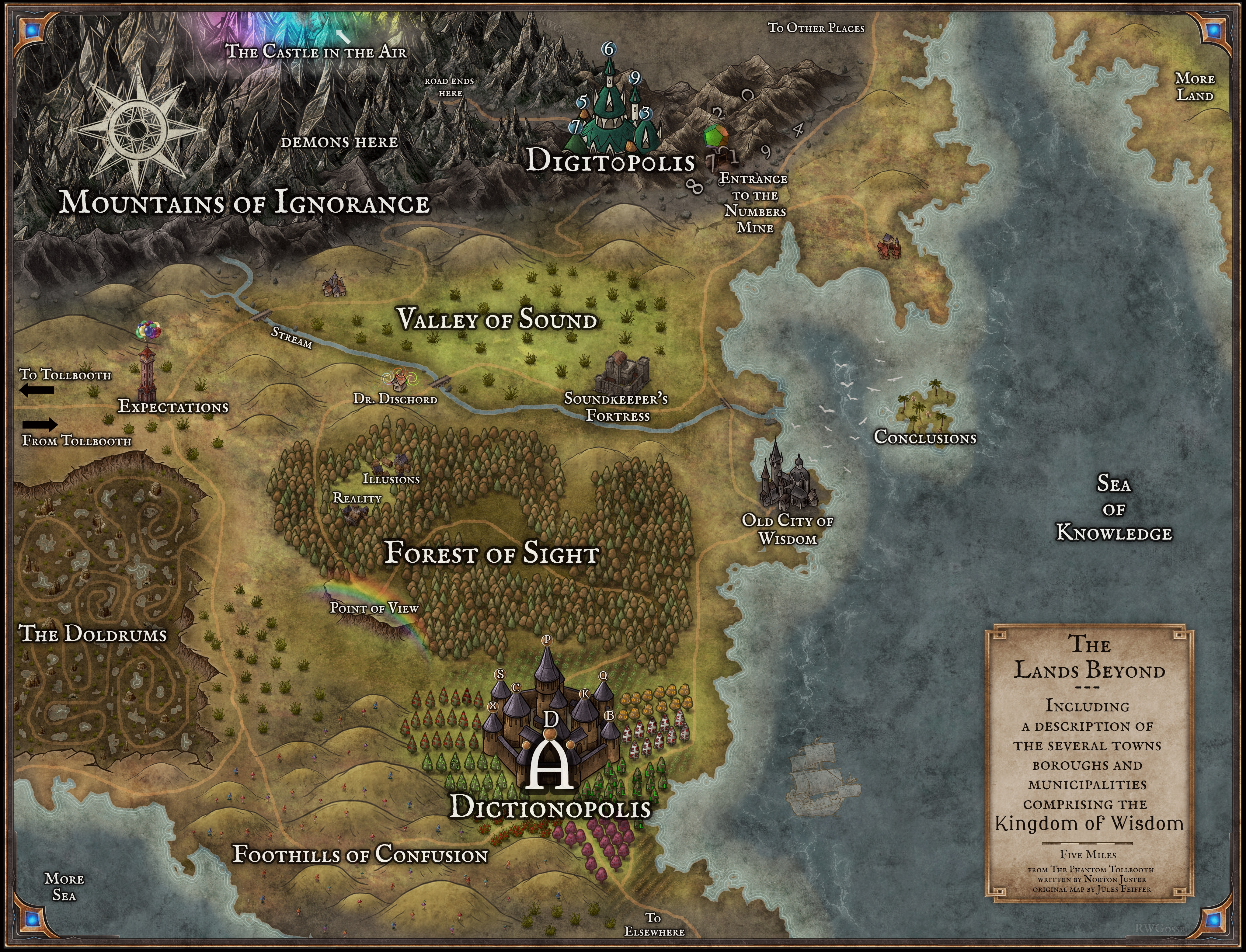
by r/inkarnate on Reddit
Once they've embellished it and colored it in as described in Chapter 1, have them think about which destination they'd choose first, and why. Our worksheet walks them through this decision-making process and helps them justify their choice in writing.
DISCUSSION
How does Milo choose his first destination?
What does he hope for as he deposits his coin in the tollbooth?
What does this tell you about his expectations?
What do his expectations tell you about him?
LitWits makes a small commission on supplies or books you buy through our Amazon affiliate links.

Creative Teaching Idea #4
Chapter 2
In The Phantom Tollbooth, many ideas show up as places, beginning with Expectations ("the place you must always go to before you get where you're going") and then the Doldrums ("where nothing ever happens and nothing ever changes.") In this activity, kids get to use their own imaginations to do the same.
If you have kids who listen best when their hands are busy, this simple activity gives them something to do while they're learning.
SUPPLIES
pencil
plain paper for drawing, or use the worksheet in our printables set
DISCUSSION & DIRECTIONS
Talk about what it means to "get what you expect," and how expectations affect one's experiences. Point out that this idea sets the theme for the entire book—that if you expect life (and school) to be joyful and interesting and full of chances to both give and receive, well, it WILL BE.
On the other hand, if you don't expect the best, and pay attention to opportunities, it's easy to end up in the Doldrums—or jump to Conclusions that cause more problems. But as Milo learns, we don't have to go there—we can choose a better place!
Have the kids imagine, name, and draw a better "idea place," to visualize the impact of personal choices.
LitWits makes a small commission on supplies or books you buy through our Amazon affiliate links.
Creative Teaching Idea #5
Chapters 3-4
Kids love tasting unfamiliar foods from a story—in this case, their very own words! The sensory Word Market provides lots of choices. In this "BookBites" activity, kids "buy" an assortment of goodies using the currency of language arts. (Puns, of course, have the highest value).
Choose the kit for no-prep, open-and-go teaching!
SUPPLIES (any or all)
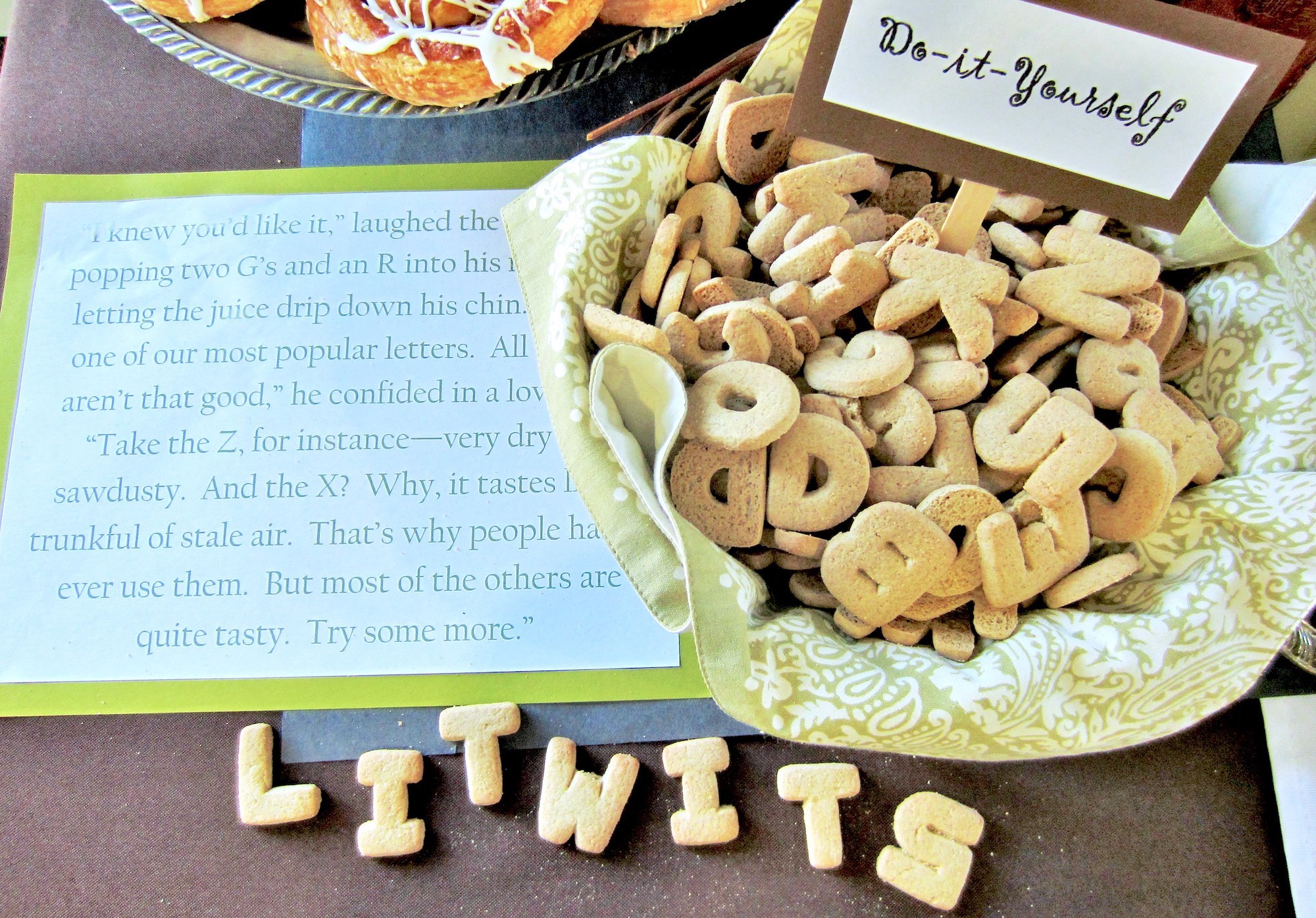
for DIY letters: alphabet cookies
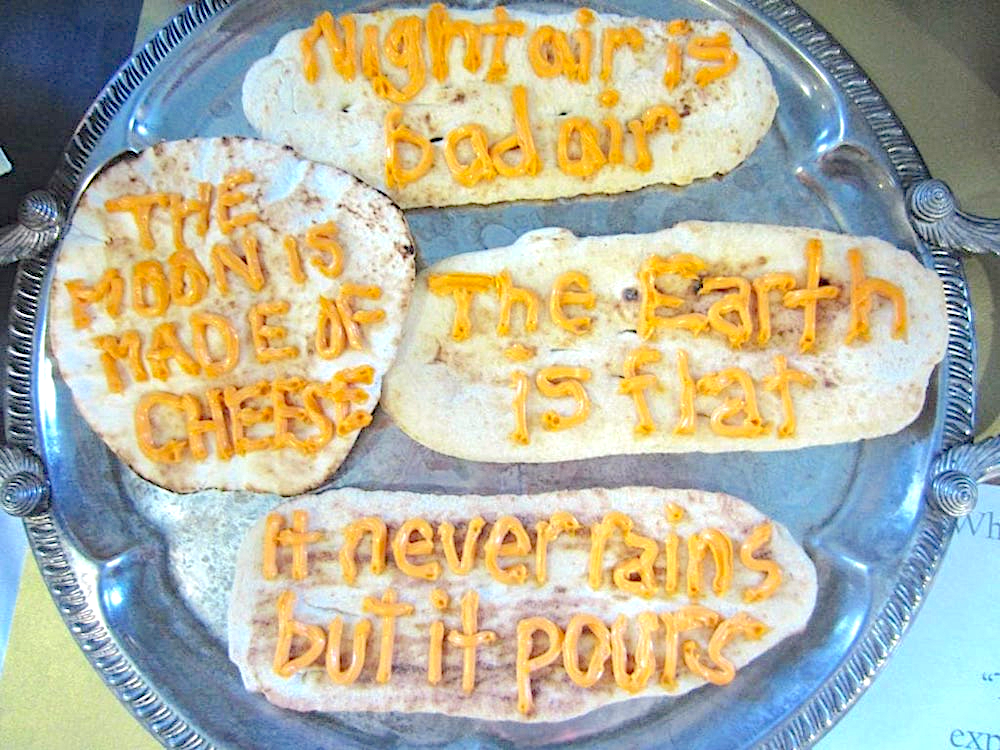
for half-baked ideas: squirtable cheese for writing on any flatbread
for ragamuffins, muffins
for synonym rolls: cinnamon rolls
for rigamorales: dinner rolls
for punctuation marks: yogurt-or chocolate-covered seeds or raisins
DIRECTIONS
Set up a booth at the Dictionopolis Word Market, and "sell" an assortment of goodies to your kids. Accept whatever verbal currency you'd like to collect—homonyms, synonyms, homophones, or Norton Juster's very favorite, PUNS!
You might offer Aunt Faintly Macabre’s sugar-coated punctuation marks, and some synonym buns from the royal banquet. Rigamaroles and ragamuffins are other fun options, and cheesy half-baked ideas are always just a little too consumable for our taste, so to speak.
Sell DIY letters and have the kids describe how they taste. Is X really stale? Is Z sawdusty? Is C extra crispy and crunchy? There are so many delicious ways to eat your words!
Sign and quote are not included in our printables set
If you'd like to package up individual BookBites for your kids, you might like our fun labels for wrapping synonym buns and punctuation marks. (The box wrapper fits around a little box of Nerds candy, which word nerds will find quite appropriate as punctuation marks.)
Label included in our printables set
LitWits makes a small commission on supplies or books you buy through our Amazon affiliate links.
Creative Teaching Idea #6
Chapters 10-11
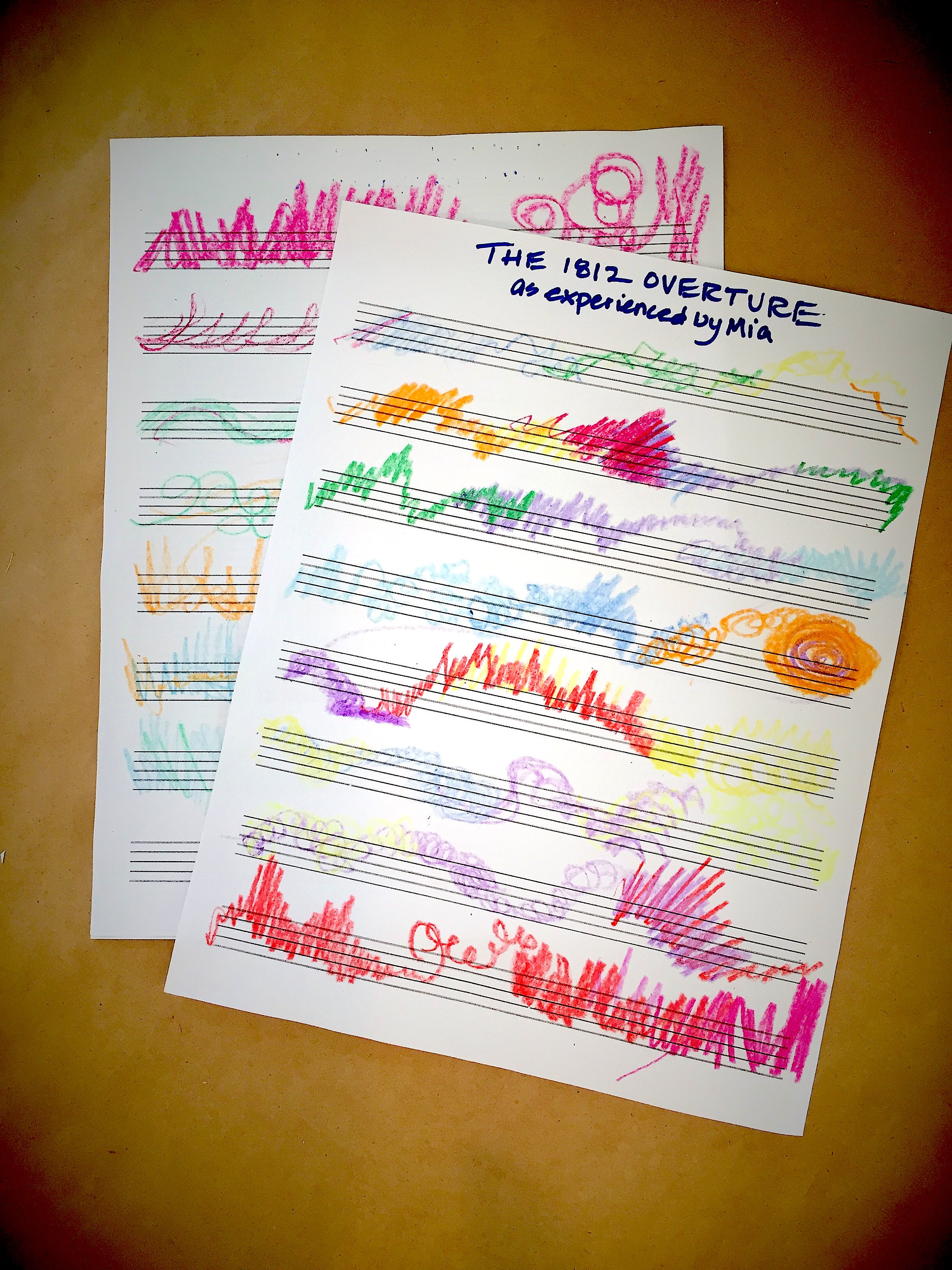
We can’t blame Milo for trying to conduct the sunrise—who wouldn’t want a chance to orchestrate such colors? This activity allows kids to thoughtfully interpret one art form into another, in a way that not only demonstrates but engages them in the personal, individual meaning of art.
SETUP
We all love the idea of conducting color as if it were sound. You can play with that idea a little, and have the kids compose a conductor’s sound in color! Kids will feel the pleasure of responding to art, and of simultaneously creating art themselves. Because it’s “guided” by existing music, it’s not intimidating for anyone.
SUPPLIES
loose assorted crayons piled in front of each child
a stack of staff paper for each child, included in our printables set
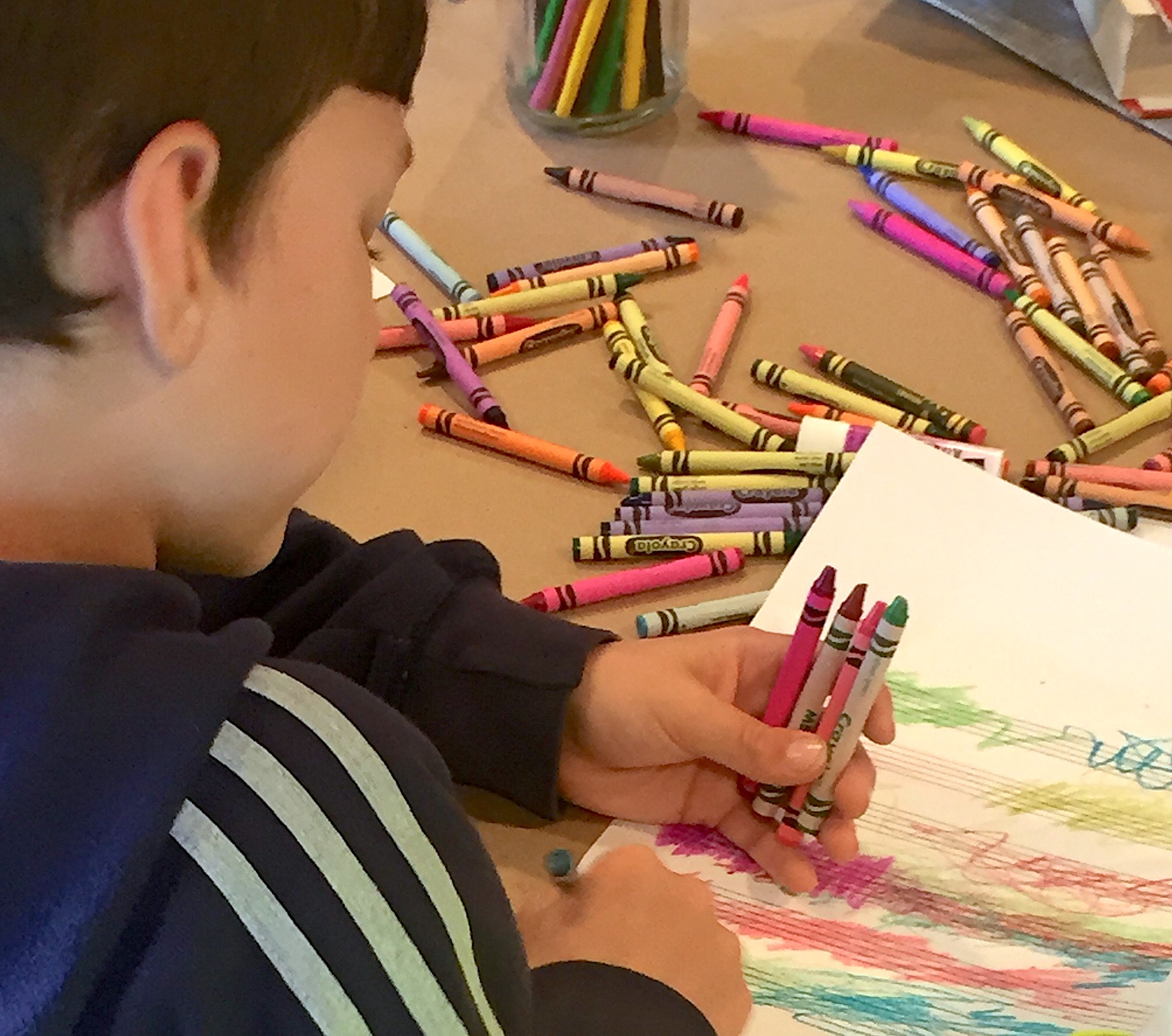
Tip: You might want stacks of extra staff paper within easy reach, as some kids’ compositions are much longer than others--it all depends on how they “see” the sound!
DIRECTIONS
1. Read the description of Chroma the Great as he conducts and concludes the sunset. (If you have an extra few minutes, you might want to share what a conductor does.) Then tell the kids they get to play Chroma the Great — but instead of creating color in the sky with musical instruments, they’ll recreate music on paper with color instruments.
2. Pass out the staff paper and have the kids write the title of the music and their name at the top.
3. Explain that they’re going to listen to another conductor’s music, and translate what they hear into color. They’ll want to listen deeply and thoughtfully, grabbing whatever crayon (or multiple crayons) seem the color of the sound at the moment. The color will change very often! Sometimes they’ll want to compose with two crayons at once.
Color won’t be their only way of expressing the music, either. Sometimes the color will be pressed down dark and sometimes hardly at all. It can run high or low on the staff, continuous or separate in places, swirly or speckled or loopy or sharp or wavy or jagged or flat. It will probably be ALL of those things at one point or another! The color and the way it is colored will depend on the sound — and how the listener hears it.
Put the kids at ease about the “no wrong way” nature of this. It doesn’t matter what the person next to them is doing. The “key” to this musical art is the listener. Each person will hear the same music, and yet interpret it differently. That’s the beauty of art!
4. Play any recording of symphonic music. Here are a few recognizable pieces:
Rossini’s William Tell Overture, Finale 2:05
Rimsky-Korsakov’s Flight of the Bumblebee 3:21
Tizol’s Caravan 3:31
Bizet’s Farandole 3:50
Mozart’s Eine kleine Nachtmusik 6:24
Beethoven’s Symphony No 5, First movement 7:59
Shostakovich’s Symphony no. 5, Allegro non troppo 10:53
Liszt’s Hungarian Raphsody No. 2 11:12
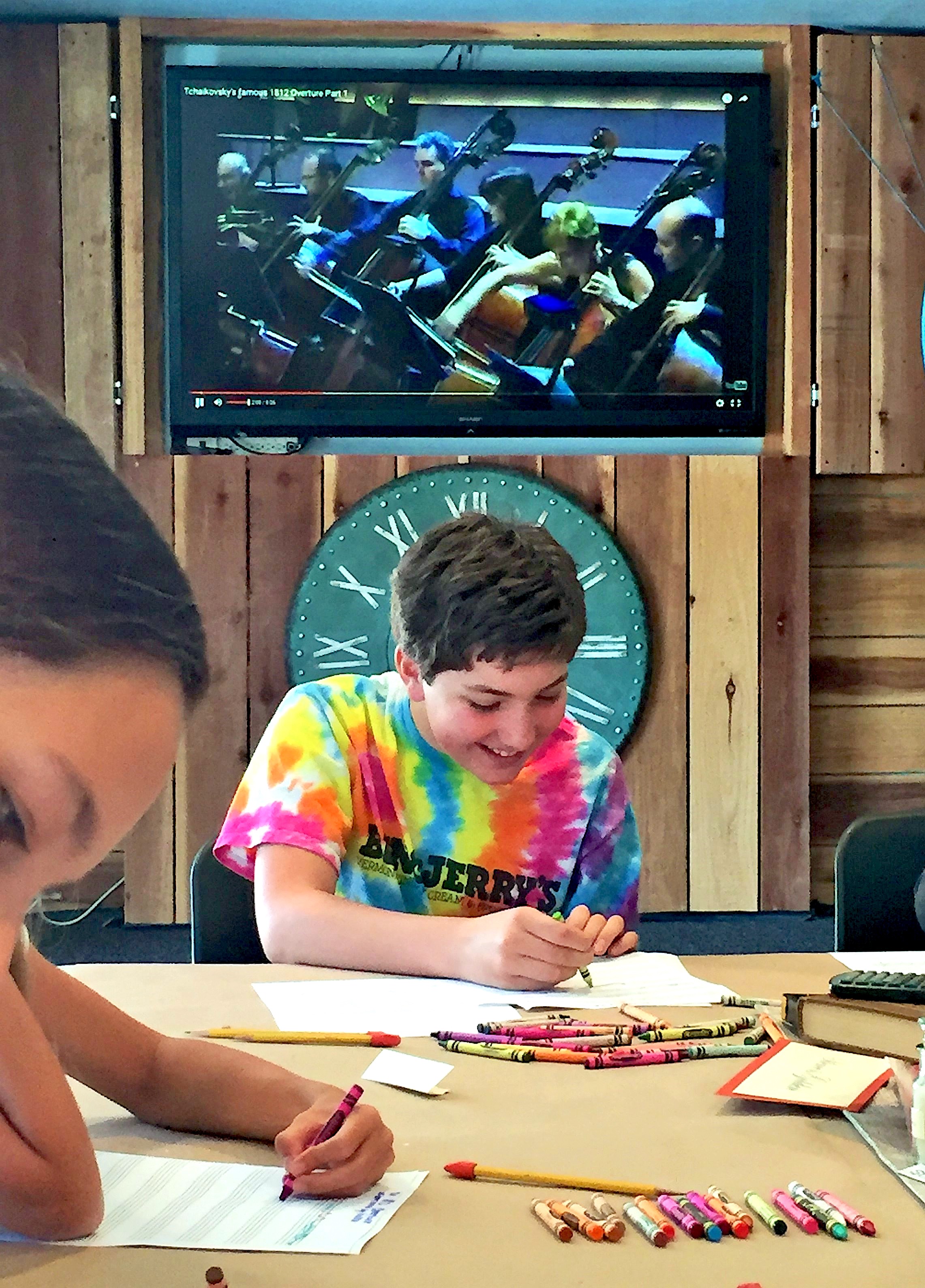
Tip: It’s fascinating to keep an eye on the conductor and orchestra, but also too distracting for some. You might choose to use audio only, or have the kids turn their backs on the screen.
LitWits makes a small commission on supplies or books you buy through our Amazon affiliate links.
Creative Teaching Idea #7
Who doesn't love a great pun? Or a really bad one? For that matter, the worse the better. This activity lets your kids create their own characters out of puns, Norton Juster style—and learn about homophones while they're at it.
Choose the kit for no-prep, open-and-go teaching!
Instructions
Start by having the kids come up with pairs of homophones like "cellar/seller," "reign/rain," "bare/bear," etc. Use that list to find familiar phrases, like "storm cellar" or "light rain" or "bare minimum."
Then turn those phrases into people or creatures, with a little more detail for fun. For example:
The Storm Seller sells thunderclouds to kings who reign over dry kingdoms.
The Bear Minimum is a tiny lazy bear from Justenuff.
We could go on . . . really, we could. But you get it—and if you'd like a worksheet that spells this out for your kids, you got it.
Creative Teaching Idea #8
Chapter 11
Dr. Dischord’s delight in noises is infectious. In this fun activity, kids “echo” his unique descriptions of the sources of noises, which gets them thinking about cause and effect relationships, stretching their imaginations, and picking up on Norton Juster's creative writing skills.
This fun activity is easy and free—just play some weird sounds and let the kids guess what's causing them!
SUPPLIES
You'll need a way to play some recorded or online sounds. Here are a few suggestions from Freesound:
DIRECTIONS
1. Read aloud the three “Have you ever heard?” questions Dr. Dischord asks Milo in “Dischord and Dynne,” about the slippered ant, blindfolded octopus, and square-wheeled steam roller.
2. Tell the kids they’re going to hear some strange sounds and identify their causes creatively, beginning with “Have you ever heard?” just like Dr. Dischord. Warn them that they’ll be tempted to name the literal sound (the effect), when what we want is the imaginative source (the cause). Not “that’s someone breaking glass!” but “Have you ever heard a hundred elves hacking icicles off the eaves of Santa’s workshop?”
3. Then play the sounds you've selected and have the kids guess what's causing them! Point out that they're putting their imaginations to play (not work) and coming up with clever connections—just like the author did.
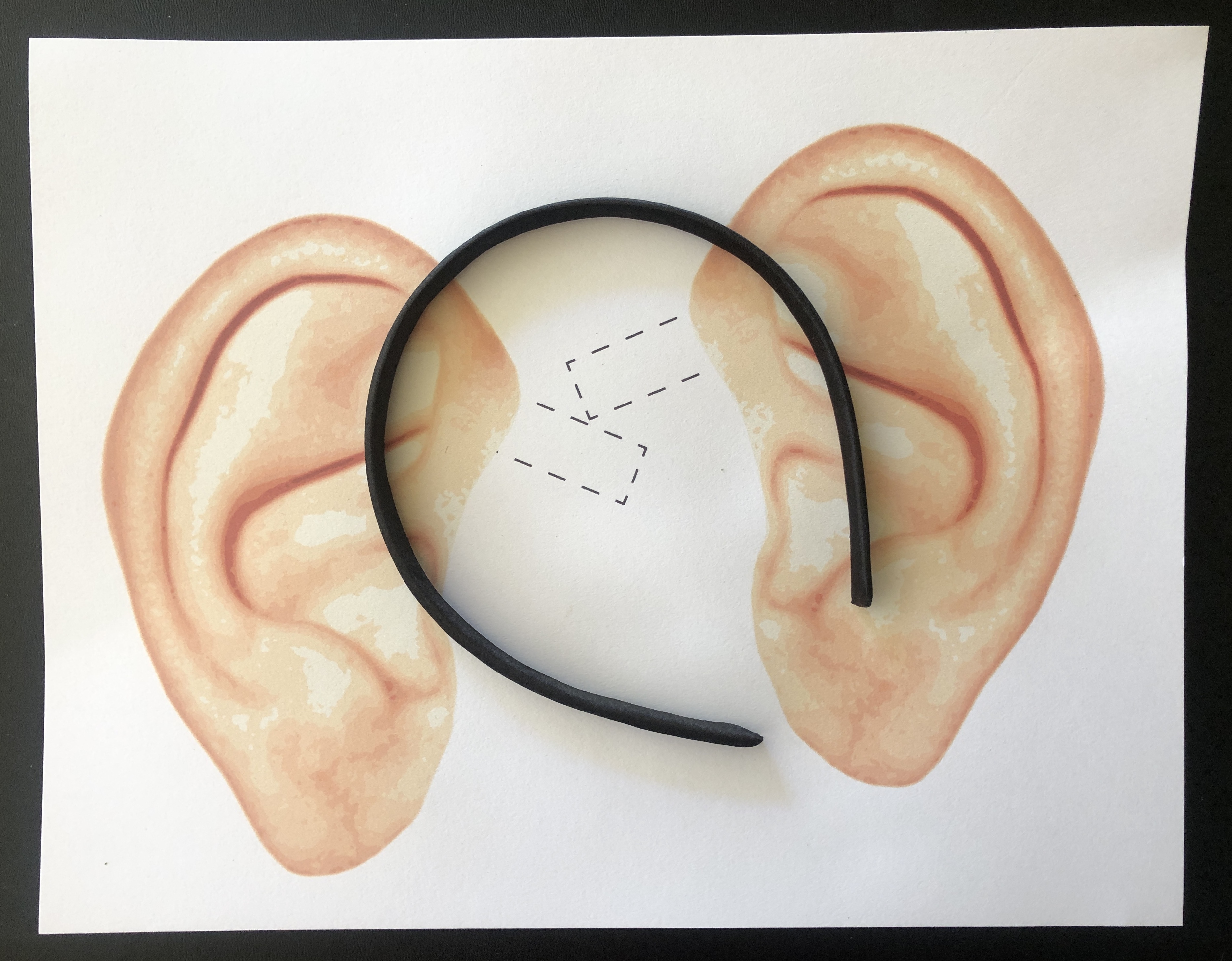
They will, of course, hear MUCH better if they're wearing a pair of Dr. Dischord ears. You'll find those in our printables set, just waiting to be cut out and taped to a plastic headband.
HAVE FUN!!!!
LitWits makes a small commission on supplies or books you buy through our Amazon affiliate links.
Creative Teaching Idea #9
Chapter 11
Everyone loves the Awful Dynne, who collects noises, and his big-eared boss Dr. Dischord, who labels and uses them. In this activity kids exercise their listening skills and imaginations as they do the work of both men.
Choose the kit for no-prep, open-and-go teaching!
Dr. DIschord sends the Dynne out to collect unpleasant sounds, and then labels them to use as medicines. Kids love doing the Dynne's dirty work, and stuffing each noise in a sack! Then, as Dr. DIschord, they get to stretch their imaginations as they decide on labels for each sound.
SUPPLIES per child
collection sack (brown paper bags or these burlap sacks)
3 lab containers (empty household bottles or these lab bottles)
black marker
blank labels (or copies of the lab label in our printables set)
optional: the Dr. Dischord's giant ears in our printables set
DIRECTIONS
1. Distribute the sacks and tell the kids they get to be the Awful Dynne and collect sacks of noises for Dr. Dischord. When they get back to the lab, they'll turn into Dr. Dischord and think up words to label those noises.
Tip 1: Dr. Dischord's giant ears are in our printables set, for use with the activity "Guess what's making that sound," but kids love to sport them for this activity, too. If you use the ears, have them prepare for the transformation from Dynne-to-Dischord now, by cutting out the giant ears, taping them to a headband, and setting them aside.
3. Tell the kids that on your count they'll head out to "wherever the noise is" (as the Dynne says), and listen and look for three different things that can make sounds—they're supposed to be unpleasant, but as that's a matter of opinion, anything goes.
These might be items that can cause noise individually: a jingle bell, whistle, clicking pen, piece of foil. Or they might only make noise as a group: paper clips, dry rice or beans, gravel, broken crayons.
Tip 2: If you're short on noisy items, tell the kids to think of a sound first, and then look for something that might make it—or just look like it. For instance, squeak might take them to a cat toy or a piece of chalk, and poof could lead to a cotton ball.
Another option: Depending on your teaching situation or how hard this is for your kids, you might want to provide an assortment of items ahead of time. If you don't want your kids to leave the room, you might prepack a muffin tin, call it the Sound Shop, and let your little Dynnes pick or pinch from your collection for the price of a pun.
4. Count backward from five, and on zero be sure to yell "RELEASE THE DYNNE!" to get them going!
5. Once they return, they'll don the giant ears to become Dr. Dischord, then bottle the sounds. By shaking the bottles and listening, they'll be able to imagine a name for what they hear—or don't.
LitWits makes a small commission on supplies or books you buy through our Amazon affiliate links.
Creative Teaching Idea #10
In The Phantom Tollbooth, Norton Juster uses or alludes to a lot of idioms—words that don't mean what they literally say but are used to make a point. In this fun, get-up-and-move activity, kids get to act out a (very clever) idiom, and learn its meaning in the process.
Choose the kit for no-prep, open-and-go teaching!
Kids will hear idioms the rest of their lives, so enhance their cultural savvy by helping them understand some common ones.
For instance:
don't count your chickens until they're hatched
once bitten, twice shy
don't make a mountain out of a molehill
make hay while the sun shines
lots more right here
Then ask for volunteers to act out their favorites. The rest of the class should call out "Break a leg!"
If you'd like your kids to work out some idioms on paper, we've got a worksheet for that in our printables set.
Creative Teaching Idea #11
Chapter 12
All teachers and parents can relate to the Soundkeeper’s reverence for silence, and her appreciation of the different kinds! Kids can, too. This quiet activity teaches them to notice and discern, and to express that discernment creatively.
DIRECTIONS
Ask the kids to be perfectly quiet and identify the type of silence they’re creating. Is it an expectant hush, a nervous tension, or merely a lull in the laughter?
Then ask them to describe the way they feel in the silence that follows these moments:
you’ve just woken up, and it’s still dark outside
your mom or dad has just called you by your full name, in a serious tone
it’s been pouring on the roof of your house, and the rain very suddenly stops
you’re in a parking lot, and you hear a screech of brakes
you and your friends have been laughing so hard you cried, and the last laugh has just trailed off
you’ve just removed the lid from a gift box, and what’s inside is horribly disappointing
You can choose to have them verbalize or write their responses.
Creative Teaching Idea #12
As Maurice Sendak says in his 1996 “Appreciation” for The Phantom Tollbooth, not many artists are able to draw ideas—to make a threadbare excuse or an awful din something we can see. In this drawing activity, kids get to try their hand at making his clever, scratchy characters.
Choose the kit for no-prep, open-and-go teaching!
We celebrate Norton Juster in this project, too, by recreating his title. Doing so with mismatched letters bought at the “Word Market” lets kids experience a key scene.
SUPPLIES
glue
scissors
pencils
First, to make this a drawing AND "wording" activity, have the kids cut up the title letters in our printables set (or from magazines), and mix them up.
If it's easier and more fun for your learners, you can cut up the letters ahead of time and stash them in bags for each child, labeled with the Word Market label in our printables set.
DIRECTIONS
Ask them to make as many words as they can from those letters, keeping a list. You can use a timer to pick up the pace, or let them take their time. (Sorry, Tock!) You can turn it into a contest, or let it be a thoughtful exercise.
When they're done with that wordplay, have them glue the letters at the top of our template (or a piece of white card stock) to correctly spell the title.
Finally, have them emulate a favorite Jules Ffeifer's iilustration under the title. Here's a video we made to help walk your kids through that process:
You might want to also give the kids 2-3 minutes to draw an idea not pictured in this book. What would Jargon say and do? What would Nostalgia look like? Here’s a list of abstract nouns for more ideas!
LitWits makes a small commission on supplies or books you buy through our Amazon affiliate links.
Creative Teaching Idea #13
Chapter 14
Without Tock’s math skills, we know for a fact we’d never have made it to Digitopolis without the Dodecahedron. This project teaches a little Greek, a geometry idea, and the concept of silent communication. We’re always sending a message — whether we speak up or not!
Choose the kit for no-prep, open-and-go teaching!
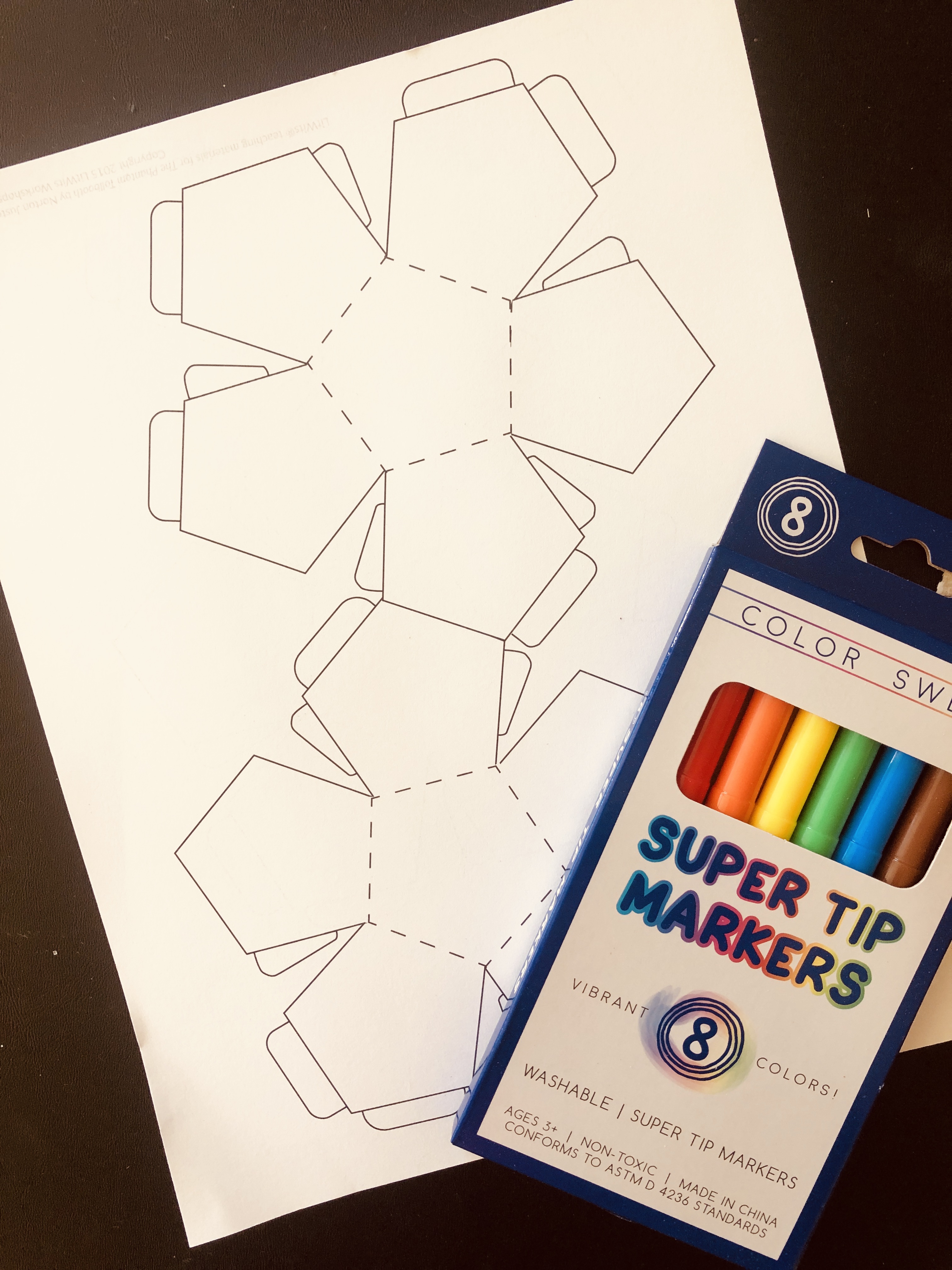
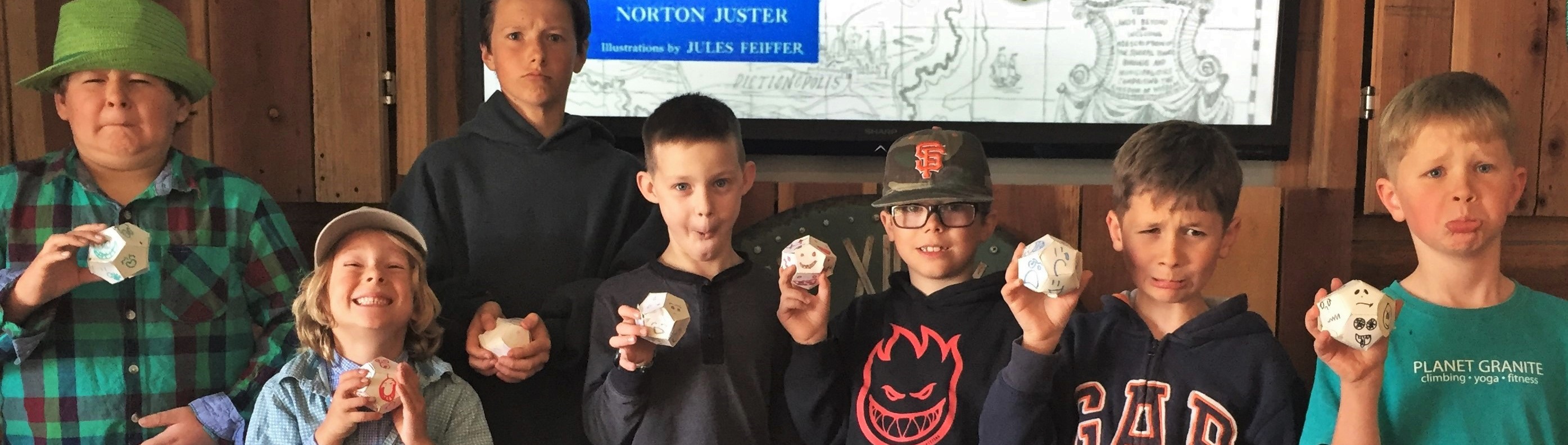
Read the description of the Dodecahedron in Chapter 14, then tell the kids they get to make one that will say at least twelve things without speaking a word!
SUPPLIES
scissors and tape (tip: ear off tape strips ahead of time, and line them up on the edge of a table or desk)
expressions to copy, included in our printables set
the dodecahedron template is in our printables set
DIRECTIONS
1. First, talk about the definition of dodecahedron. Tell the kids that dodeka is Greek for twelve. (You can break this down further by pointing out that duo means two, and deca means ten, as in decade.) Hedron comes from the Greek for “the face of a geometric solid.” A dodecahedron, then, is a twelve-faced geometric solid.
2. Next, talk about the different expressions the Dodecahedron wore. Ask the kids how many they can name beyond happy, sad, and angry, then ask them to draw twelve faces on the template form. (Here are some examples, if they need prompting. There's also a sheet of cartoon expressions in our printables set.)
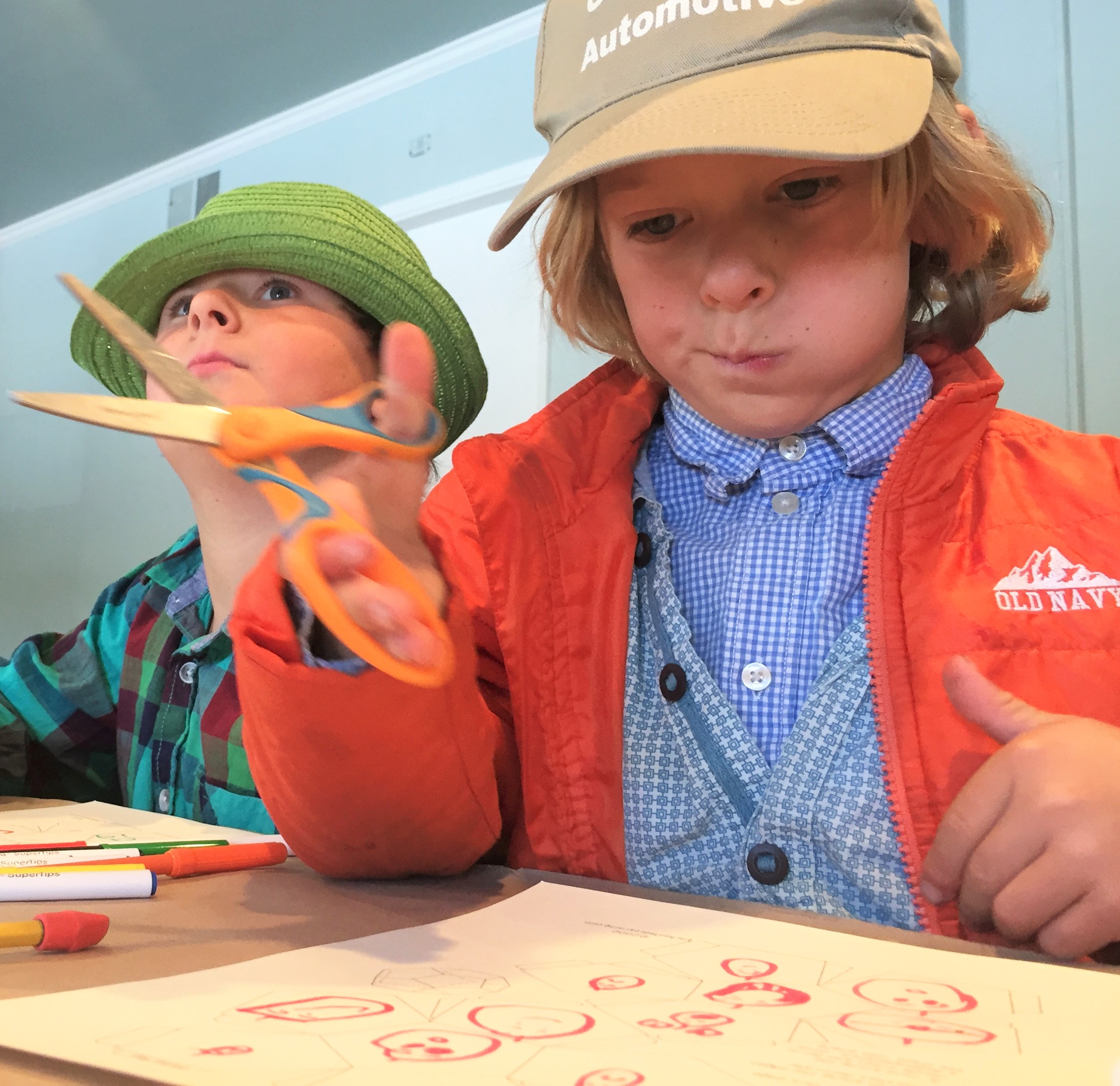
3. Have the kids carefully cut out the whole shape, being careful not to cut off the tabs. This part can seem kind of daunting, but it’s doable if they take it slowly!
4. Fold the tabs back and bring each pair together, then tape across the front (on the outside). The taping will be easier if they work with a partner – one holds the two edges in place, the other does the taping.
Here's a little video you can show the kids:
When they’re finished, tell them to practice making (with their OWN faces) each expression they’ve created! Our kids had fun rolling their dodecahedrons like dice, then trying to replicate the expression that landed “face up”.
Creative Teaching Idea #14
Chapter 15
In Digitopolis, Milo's impressed (and encompassed!) by the Mathemagician's office and its abundance of measuring tool—and learns that numbers are powerful. In this activity, kids put one of the wizard's tools to use, along with his ever-magic pencil, to measure certain aspects of real life.
Choose the kit for no-prep, open-and-go teaching!
SUPPLIES
one surveyor form per student, in our printables set
measuring tape or sewing tape one per child
regular or oversized pencils
optional: clipboards
DIRECTIONS
1. If you like, arrange students in pairs or small teams.
2. Briefly revisit the Digitopolis scenes where Milo meets the Mathemagician and learns that numbers
are mined
have weight and meaning
are used to measure the world
You might also mention how in Dictionopolis, words are traded and weighed — showing that in this world, even abstract things are treated as measurable.
3. Now, tell the kids they are official Surveyors for the Office of Weights and Measures and that their job is to measure not only ordinary things… but extraordinary things. Some of these are easy to measure. Some seem impossible. But in The Phantom Tollbooth, even impossible things can be counted, weighed, or measured if you think creatively!
Tell your students to work carefully and respectfully, and to record measurements clearly.
Depending on the ages of your kids, you might want to show how to read the tape and explain what the different markings mean.
Have them start with the concrete measurements, reminding them that the Mathemagician would insist on precision!
For the abstract items, tell them they can invent a unit. They might measure in inches, seconds, steps, decibels, giggles, or dramatic groans, but they must justify their choice! For instance, a sigh can be measured in seconds, excitement in jumps or claps, and despair the distance a person slumps when they are sad. Encourage creativity — but require explanation. This mirrors how Milo learns that numbers represent ideas, not just quantities.
LitWits makes a small commission on supplies or books you buy through our Amazon affiliate links.
Creative Teaching Idea #15
Chapter 16
The half-child (.58, actually) teaches Milo about averages, which is a good concept to teach your full-size kids. In this worksheet activity, they'll get to help Milo figure out how many goodies to plan on for his welcome-home party.
Averages are so useful for figuring out what to expect, or how to plan ahead!
For instance, let’s say Milo is throwing himself a “welcome home” party, and wants to serve all-you-can-eat juice popsicles. He’s going to invite all 20 of his classmates, but he knows some kids might not eat any, some might eat one or two, and a few might eat a LOT more than that. He’s asked his five cousins how many juice popsicles they would eat if they got the chance, and he’s written down their answers.
All YOUR kids have to do is give the cousins some silly names, add up the total, divide by 5 to get an average, then multiply that average by 20 classmates to find out how many popsicles Milo should freeze for his classmates.
Tips
We've got a worksheet for doing this word problem, in our printables set.
To make this word problem more sensory, bring it to life by serving popsicles when it's finished!
Creative Teaching Idea #16
Order, order! Without it, there's no story—just jumbled miscellaneous parts. In this activity kids learn the important concept of the narrative arc (useful for all communications!), and understand how Norton Juster arranged The Phantom Tollbooth.
Choose the kit for no-prep, open-and-go teaching!
You can discuss the narrative arc in any of these three ways; we've found the first to be the most engaging, because it breaks up the discussion into bite-size chunks.
Introduce the concept of the narrative arc up front, but save the story's scenes to discuss as you go, pausing to "do what the characters did" in fun hands-on ways, while weaving in discussions and other worksheets.
OR introduce the concept and complete the worksheet before the activities, so kids have a review of the story fresh in their heads first, and you can remind them "where we are" on the arc as you go.
OR at the end of your activities, introduce the concept, then help kids figure out where the different parts of this story fit on it.
The narrative arc worksheet in our printables set summarizes the story by plot point, and has kids fill in some blanks.
Creative Teaching Idea #17
Chapter 20
When you're done teaching and experiencing The Phantom Tollbooth, give each of your kids a blue envelope containing the note Milo received at the end of the story, sealed with a Tockish sticker. This memento reminds the kids that they KNOW THE WAY to educate and entertain themselves, and need never be bored (or boring) for long!
SUPPLIES
copies of your handwritten version of the note to Milo in Chapter 20 (it's fun to embellish or paraphrase it in your own words)
clock labels (in our printables set) (To print 12 at a time on label paper, use Avery #22807.)
DIRECTIONS
Write the note that was left for Milo in Chapter 20, and make a copy for each of your kids. (We don't offer it in our printables set for copyright reasons.) Put each note in an envelope and address it:
FOR [CHILD'S NAME], WHO NOW KNOWS THE WAY.
Seal it with a sticker, and leave it where each child might find it serendipitously—in a desk, under a book they're reading or paper they're writing, or under a pillow.
LitWits makes a small commission on supplies or books you buy through our Amazon affiliate links.
Creative Teaching Idea #18
We all love collecting souvenirs that remind us of remarkable places we've been. Give your kids a travel sticker commemorating their literary journey through The Lands Beyond and your field trip through The Phantom Tollbooth.
Printable: travel sticker image to print on label paper
In the kit: die-cut adhesive sticker
Choose the kit for no-prep, open-and-go teaching!
Give the kids the souvenir travel sticker included in our printables set, or have them design their own.
Kids might like to add their sticker to a reading kit, like an old briefcase (or faux vintage) or a suitcase that can hold a book, bookmark, glasses, snack, blanket, journal, pen, and whatever!
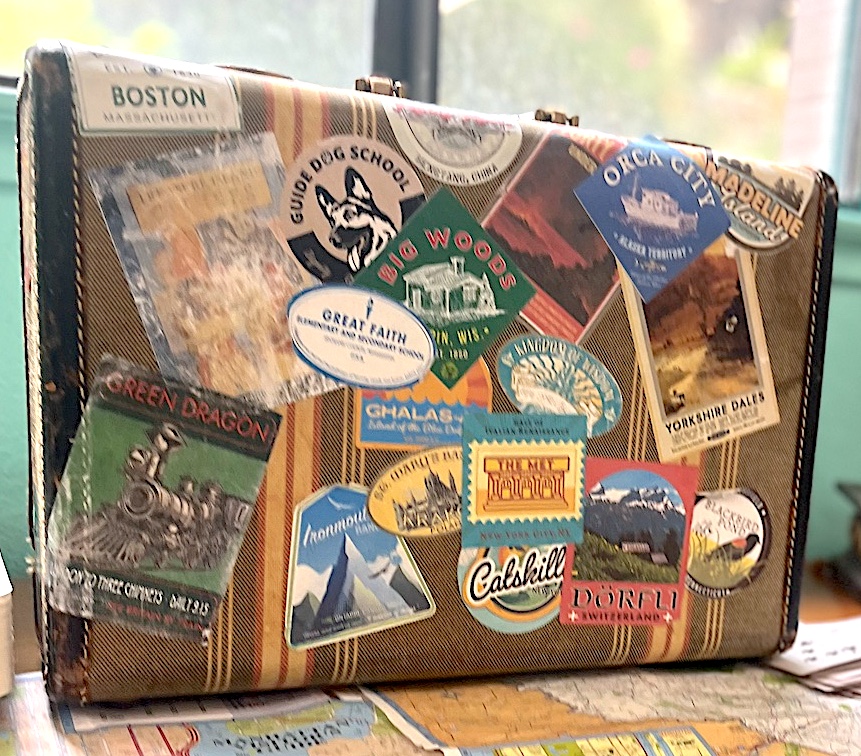
Or they might want to put it on a binder or water bottle. No matter where they see their sticker later, it will remind them of this wonderful journey they've taken with you!
LitWits makes a small commission on supplies or books you buy through our Amazon affiliate links.
Here are three ways we can help!
Prepped supplies & printables & more!
Your LitWits Kit for The Phantom Tollbooth holds prepped supplies, printed printables, a teacher's guide, story souvenirs, and more for teaching one child, with the option to add more sets for additional kids. You can even add the book! Kits ship quarterly.
See this kit in our Shopify store.
Instruction & all needed printables
We do the teaching—you print the printables, and gather and prep the supplies. Our 42-minute video workshop on The Phantom Tollbooth delivers several of the activities on this page (some in slightly different form), along with prep directions and all the relevant printables and worksheets.
Activity printables & worksheets
Some of our activity ideas need printables or worksheets. Don't spend hours coming up with your own—we've already made you a complete set for The Phantom Tollbooth! You gather supplies, prep, and print—and have fun teaching in hands-on, memorable ways.
for teaching The Phantom Tollbooth by Norton Juster
Borrow or buy The Phantom Tollbooth, if you don't already have it; you can also listen to an audio version, read by Norton Juster himself. Reading on a screen should be a last resort. The sensory feel of the pages in your hand, or the sound of someone reading to you, is the first important step in sinking into the sensory experience of this story.
This book is best for ages 9-12. (You can read reviews on Amazon). Here's our short summary of the story:
When a tollbooth mysteriously shows up in Milo's room, he only drives through it because he's bored—as he ALWAYS is. But when he emerges on the other side, some very unboring adventures await him. He jumps to the Island of Conclusions, then learns about time from a ticking watchdog named Tock, and even rescues Rhyme and Reason!
The Phantom Tollbooth is a fun, easy read—but it’s densely packed with hilarious wisdom. It gently drives home the value of education—and the joy of life.
LitWits makes a small commission on supplies or books you buy through our Amazon affiliate links.

You can have them read or listen to it on their own, or you can enjoy it together as a class. Most importantly, read only for fun! Tell the kids to simply enjoy the book, without any assignments in mind. It's hard to get caught up in a story if you're supposed to be looking for something that takes you out of it.

It's helpful to know this book's big teaching points ahead of time, and explore some fascinating links to add to your lessons. We already found those for you, so you too could enjoy reading the book without an assignment in mind. :) Our teaching ideas connect to these takeaway topics:
Language Arts & Wordplay
The joy of wordplay dominates this book, even in Digitopolis! Puns abound, and in a variety of forms. The first step to getting these jokes is to know the original words and phrases, and be aware of double meanings. This knowledge is essential to social, school, and job success—wordplay is all around us, and it’s no fun to be in the dark or put your foot in your mouth! The more connotations kids know, the better they’ll be able to read between the lines, and be privy to allusions, too.
The Value of Education
The main conflict in the story is boredom, or, more importantly, Milo’s failure to appreciate life. But, kids might say (or just think) — isn’t “education” boring? Certainly not the way Norton Jester does it, and not the way Miles embraces it as he travels. The author himself was a man who used (and filled) both sides of his brain, a creative person who worked in a structured field, as an architect. We need numbers and letters constantly — they're never really separate in anything we do. If we open our minds like Milo, the world is twice as rich, and half as full of cheesy, half-baked ideas.
Visualizing Ideas
Norton Juster describes abstract ideas in ways that make them easy to visualize: a Gross Exaggeration is truly gross, with rows of teeth for mangling truth; the Humbug actually jumps to Conclusions by making a decision without a good reason. But Jules Feiffer’s scribbly-style art makes these abstract ideas even easier to "see" (and inspires kids to try it themselves). Together Norton and Jules, who were friends and neighbors, manage to make invisible concepts into very visible characters.
Additional topics
We encourage you to explore the supportive Learning Links at the end of this page, especially if you have older or more advanced kids. Make notes as you go, so you’ll remember what you want to share, and when.

Once you've read the book and have a feel for its big ideas, decide which activities to do. Don't feel you need to do them all! Choose one or two or whatever you think will best suit you and your kids. Having said that, here's a sample agenda for a 3-hour "field trip" through a great book.
This sample agenda can be followed in part or in whole, all at once or over weeks—whatever works for you.
Set the tone. Ask the kids how this book made them feel, and why, and what it made them want to do. Point out that the author intended to make readers feel, think, and act—that literature is never just entertainment.
Introduce the author. Next, introduce the author through the biography video provided, to pay tribute to the story’s creator and recognize how his/her life story shows up in the book.
Introduce the arc. Give a brief overview of the concept of the narrative arc (here's our explanation for kids). Assure the kids you'll go through it in detail together.
Find the setting. Get your bearings before you set off! Explore the setting through audiovisual aids, and talk about any setting-specific props,
GET HANDS-ON ! Do the activities you've chosen (we do them in story order, for the most part, but do whatever holds your kids' interest.) Talk about the meaning(s) embedded in each project. Pass around props at relevant points to give the kids a tactile, sensory engagement with a significant item, including food and sounds. Look for moments to pop in an audiovisual—hear that medieval chant! watch that Friesland horse run!
Worksheets: If you're using our worksheets, we suggest weaving them in between activities, to keep the writing light and energy high. This woven blend of doing, talking, and writing is what helps lessons stick, and makes this book more meaningful and memorable for your kids.
Timing: This means you're doing a new activity every 10-20 minutes, so things move quickly and the energy stays high. Of course, if your kids would benefit from a slower pace, by all means take your time. The point is to keep everyone relaxed and having fun—so they're better able to learn. Do whatever best serves your teaching needs, in the order and at the pace that keeps your kids respectfully, happily engaged.
Gather and/or buy your supplies, do the activity prep, and make copies of all the printables you're using, whether you made your own or bought our set.
We can make this LOTS easier for you . . .
Prepped supplies & printables & more!
Your LitWits Kit for The Phantom Tollbooth holds prepped supplies, printed printables, a teacher's guide, story souvenirs, and more for teaching one child, with the option to add more sets for additional kids. You can even add the book! Kits ship quarterly.
See this kit in our Shopify store.
Instruction & all needed printables
We do the teaching—you print the printables, and gather and prep the supplies. Our 42-minute video workshop on The Phantom Tollbooth delivers several of the activities on this page (some in slightly different form), along with prep directions and all the relevant printables and worksheets.
Activity printables & worksheets
Some of our activity ideas need printables or worksheets. Don't spend hours coming up with your own—we've already made you a complete set for The Phantom Tollbooth! You gather supplies, prep, and print—and have fun teaching in hands-on, memorable ways.
Be sure to let us know how it goes! In fact, if your kids have a blast with this book, we'd love your help spreading the word about our resources for teaching children's literature.
Tag and follow us on social media—and please leave a review!
for teaching The Phantom Tollbooth by Norton Juster
Aw, you’re just the right age, whatever that might be! Just kidding—we know what you mean. We find that 8-12-year-olds are consistently “ready to LitWit.” Generally speaking, their reading level is high enough to take on the vocabulary and syntax of literature, and they’ve acquired enough knowledge to grasp new ideas. Yet they’re still full of wonder, and are highly responsive to the “check this out!” nature of sensory immersion.
However, we often have mature kids of 6-7 in our experiential workshops, and sometimes fun-loving kids of 13-14. As a teacher or parent, you know best what your kids are ready for and interested in.
Yes. Our methods and ideas are adaptable to a wide range of abilities—kids particpate at their own level. The point isn't to come up with a stellar work of art or a perfectly polished project, but to have the experience of doing something the characters did, or a spin on it. After all, those characters were of mixed abilities, too!
This is true of mixed levels of enthusiasm as well. Kids who already love reading are thrilled to get the chance to extend the story, and kids who don't yet believe that stories are fun end up wanting to read (or listen to) more great books.
LitWitting is a flexible, fun way to teach, adaptable to all ages and abilities, so there isn't "one way to do it" —every educator's circumstances and children are different. Having said that, we suggest you follow the narrative arc, and we've provided an example of a simple plan above, under Prep Tips.
But the truth is, if you and your kids are having fun, and when it's over they want more (which means reading another great book), you’re doing it right!
Absolutely—but when you're finished, they'll probably ask if there's something else you can do, or have a suggestion of their own! And that's GREAT! It shows they're liking this kind of learning, and seeing that books can be experiences for them too, not just for the people in the story.
Get your feet wet with a project you think they'll like best, never mind how deep and meaningful it is—even if they're "over" this book, if they know you'll be LitWitting other books, they'll want to read them!
In our workshops, the very most reluctant readers are the ones who, when their mom comes to pick them up, are tugging at her sleeve and saying "sign me up for the next book they're doing!" (We love that they always say "doing!").
They're right here on this page! Just click the "Read more" under each activity for all the details.
You can right-click to print this page, if you'd like a hard copy—be sure to open all the drop-downs first, so the hidden contents will print too.
We keep all this info online so we can include helpful links, make updates in real time, add new ideas, and let you use our materials on a screen.
Sure you can, for your noncommercial use in your family, classroom, library, book club, or wherever! As long as you’re not calling your fun time a “LitWits” event or charging a fee, you can use our ideas and printables to do lots of wonderful things!
Please don’t forward your printables or make copies for people who haven’t paid for them, of course, out of courtesy and to honor our copyright, and per our Terms of Service.
Did you find what you were looking for? Do you still have a question? Are you feeling inspired, but maybe also somewhat overwhelmed? Never fear—we're glad to help! You're literally on our page about inspiring kids to read more, and we'd love to support you as you change the world, one book at a time.
Happy teaching,
Becky and Jenny
Sisters, best friends, and partners
for teaching The Phantom Tollbooth by Norton Juster
Like all children's literature, this book is chock-full of many subjects to explore. Browse these curated links to supplement your reading experience, research points of interest, and prompt tangential learning opportunities.
About the Book & Author
The Phantom Tollbooth by Norton Juster - read reviews/buy on Amazon
The Annotated Phantom Tollbooth - for sale on Amazon
Beyond Expectations (video documentary about the book) – link via Building a Library
"The Phantom Tollbooth' and the Wonder of Words" bv Michael Chabon - The New York Review of Books
"Broken Kingdom" - The New Yorker, on the 50th anniversary of The Phantom Tollbooth
Summary – Wikipedia
“My Accidental Masterpiece” by Norton Juster – NPR
Video of interview with Norton Juster – Reading Rockets
Great quotes by Norton Juster – BrainyQuote
Article about illustrator Jules Feiffer – Wall Street Journal
"How Phantom Tollbooth Readied Us to Be Adults" - Bustle
Story Supplements
About the right brain and left brain – Healthline
Right brain/left brain poster - Mercedes
"5 Reasons Imagination is More Important than Reality" - Huffington Post
Meet Tock (video) - PT Documentary
David Hyde Pierce reading "The Doldrums" from The Phantom Tollbooth - PT Documentary
Common English Idioms and Expressions - Education First
Beyond the Book
See our Pinterest board for The Phantom Tollbooth
Synonyms galore + a fascinating story by Jen Bryant, with mesmerizing illustrations by Melissa Sweet: The Right Word: Roget and His Thesaurus - for purchase on Amazon
