Creative Teaching Ideas for
by Scott O'Dell (1960)

On this page, we share our creative, hands-on activity ideas for teaching Island of the Blue Dolphins. They're perfect for homeschoolers, co-ops, classrooms, libraries, book clubs, and families! We've been helping kids experience literature in memorable ways since 2010, and we'd love to help you engage and inspire your readers, too.
When kids step into the story and do what the characters did, books come alive. Hands-on experiences help them better understand the story's events, themes, and secret meanings—and discover how clever and fun great books can be.
Free creative teaching ideas
Explore all the activities, discussion prompts, supply lists, teaching notes, and learning links on this page.
Printables
Many of the activities use LitWits worksheets, project templates, maps, and other printable resources, available separately.
The LitWits Kit
Want to skip the prep work? Our LitWits Kit includes printed printables plus curated activity supplies for hands-on, open-and-go teaching.
for teaching Island of the Blue Dolphins by Scott O'Dell
LitWits makes a small commission (at no extra cost to you) on supplies or books you buy through our Amazon affiliate links.
Creative Teaching Idea #1
A table of objects pulled “straight from the story” can lead to all sorts of wonderful discussions and wide-eyed, “aha!” moments. Throughout your teaching experience of Island of the Blue Dolphins, pause to discuss and/or pass around relevant props. Items unique to the setting help kids understand “what that was like,” and those symbolic of themes help kids literally grasp big ideas.
Story props for bringing Island of the Blue Dolphins to life:
Chest of jewelry
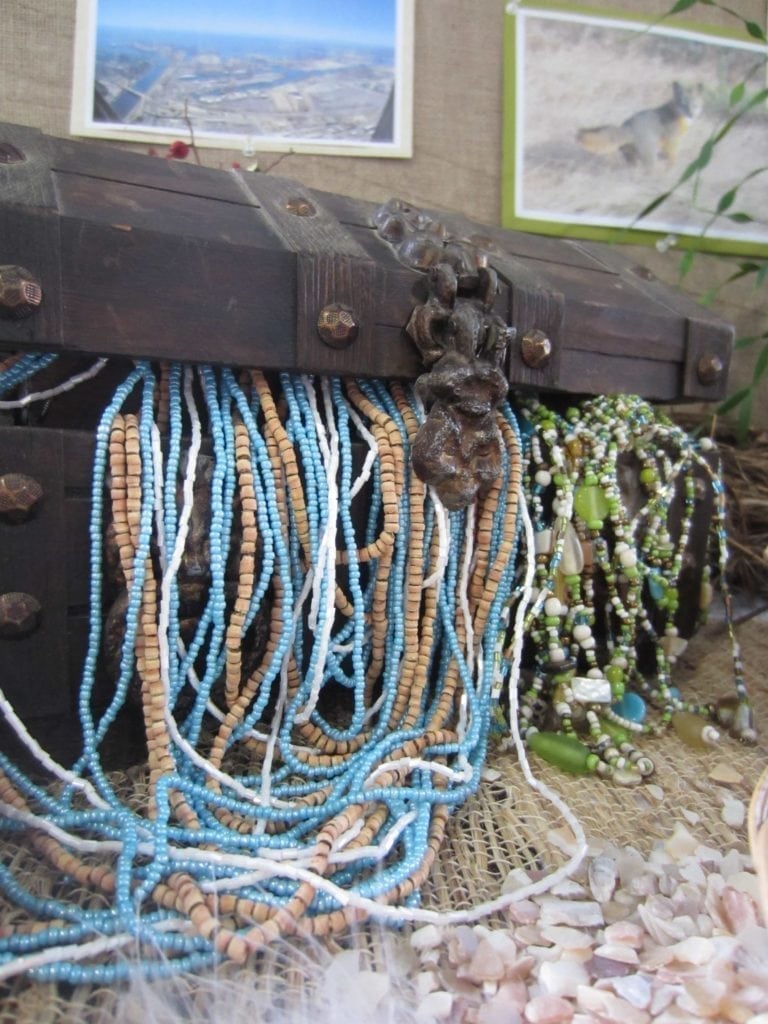
Bead jewelry (available at thrift stores) in a chest like the one the hunters left behind.
Beach gleanings
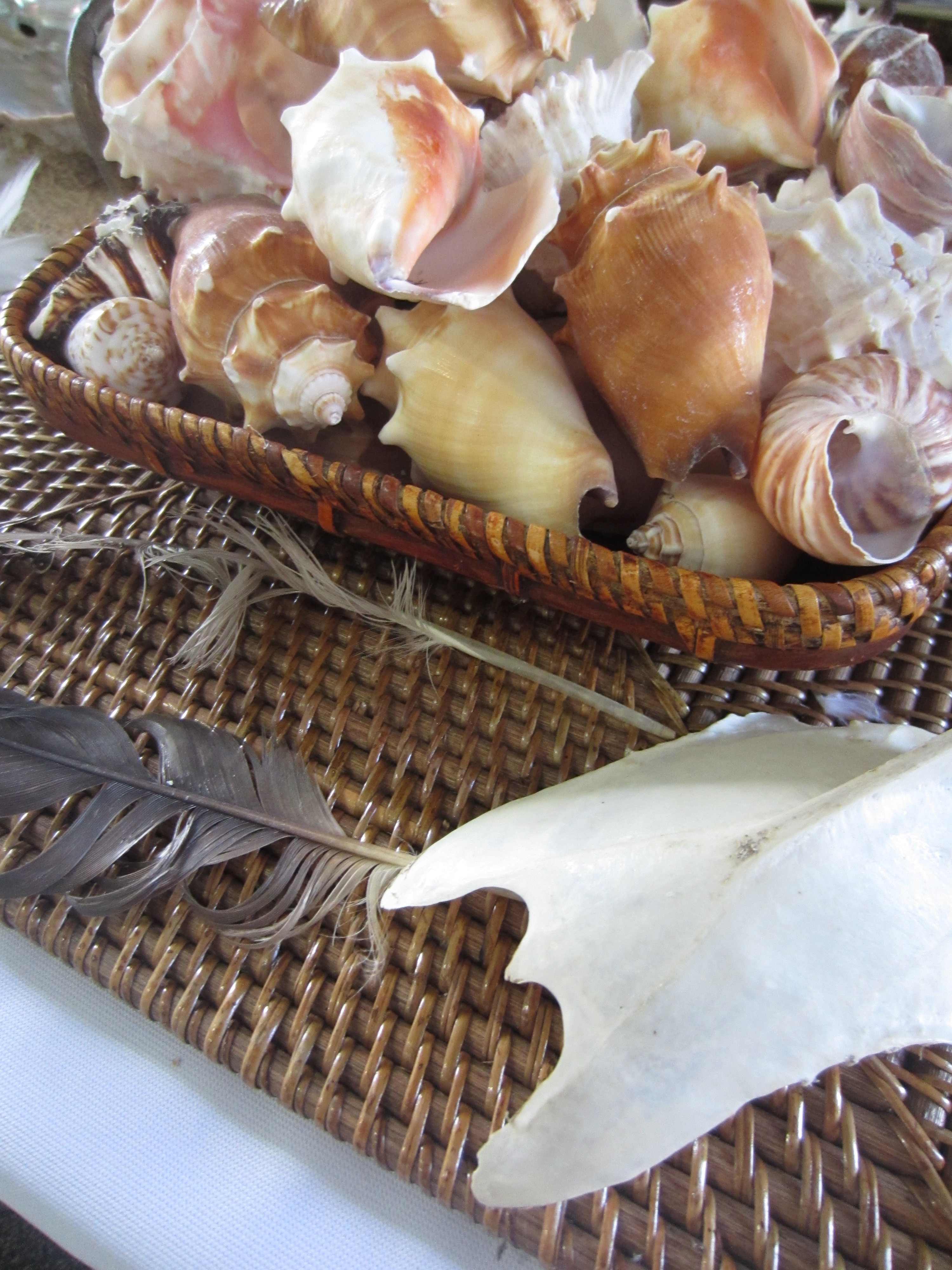
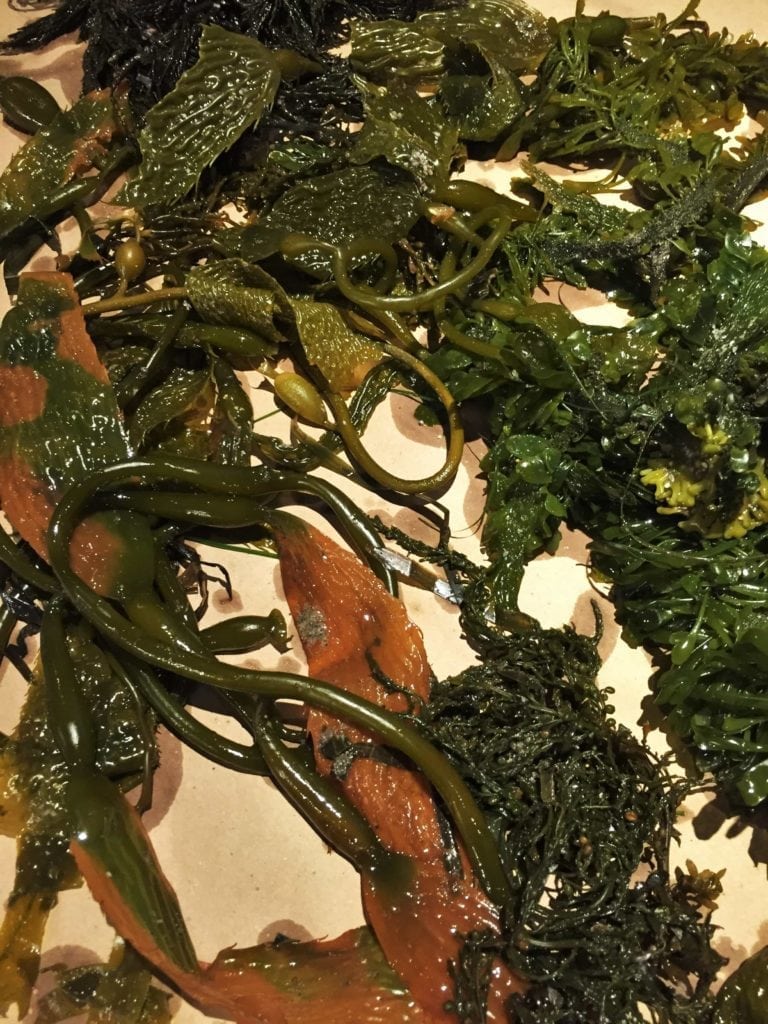
Sand, pebbles, feathers, and a seagull sternum we found at the beach, along with seashells - you can buy those by the bag - and seaweed we gathered and kept wet in a jar until "showtime."
Cactus & octopus
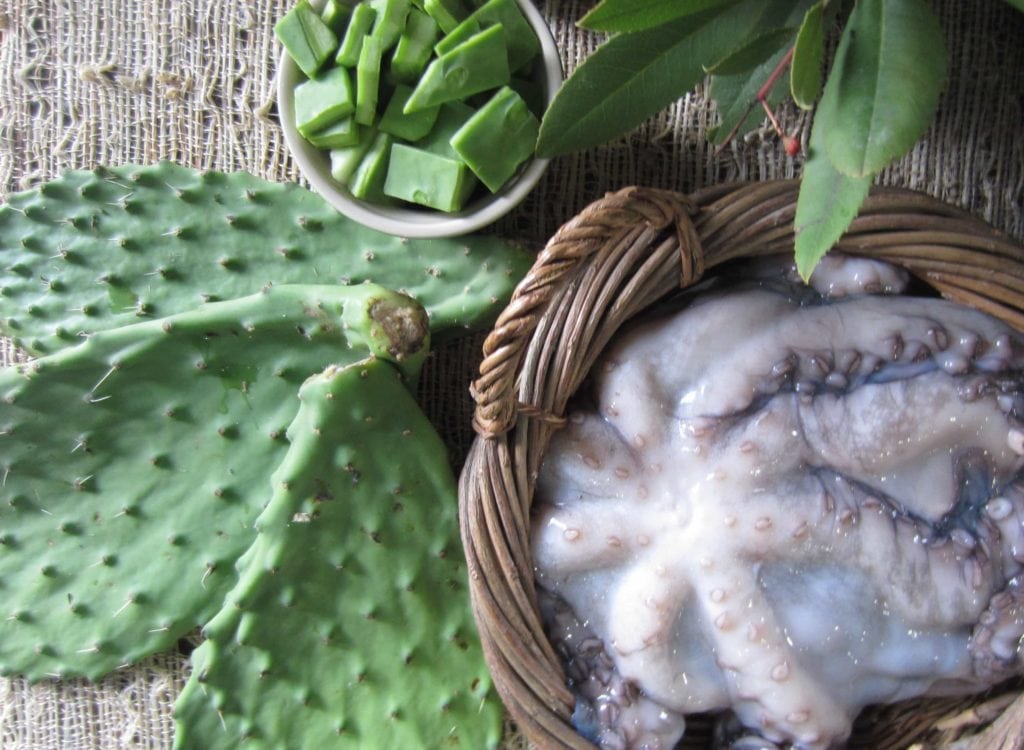
Cactus paddles from the Mexican market and. . . . an octopus. Yes, it made us sad too, but when we saw it at the market we thought . . . well it’s already dead, and though it’s hardly Karana’s monstrous devilfish it does appeal (or not) to several senses, which is what we're all about.
It was an enormous hit with the kids, of course—and led to lots of discussion about the intelligence of this remarkable creature. When the workshop ended, we took it to the Santa Cruz wharf and fed the fishes with it. If you'd like, you can actually catch one in the Amazon.
Toyon
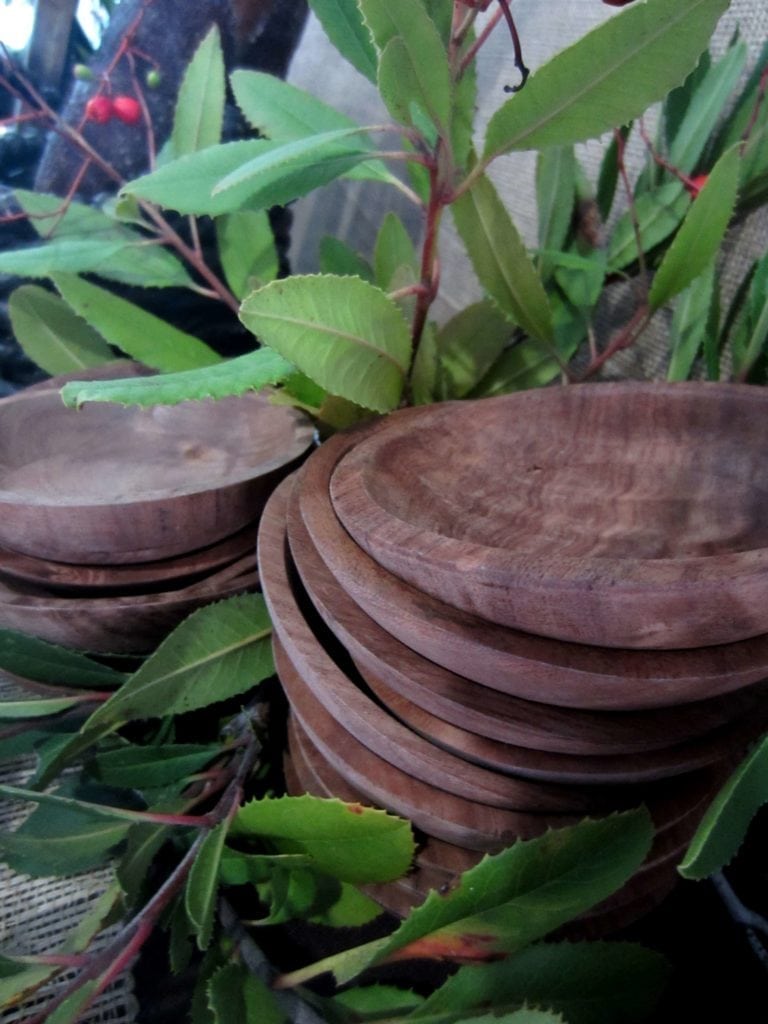
Toyon clippings from local hills, and small wooden bowls for BookBites.
Yucca
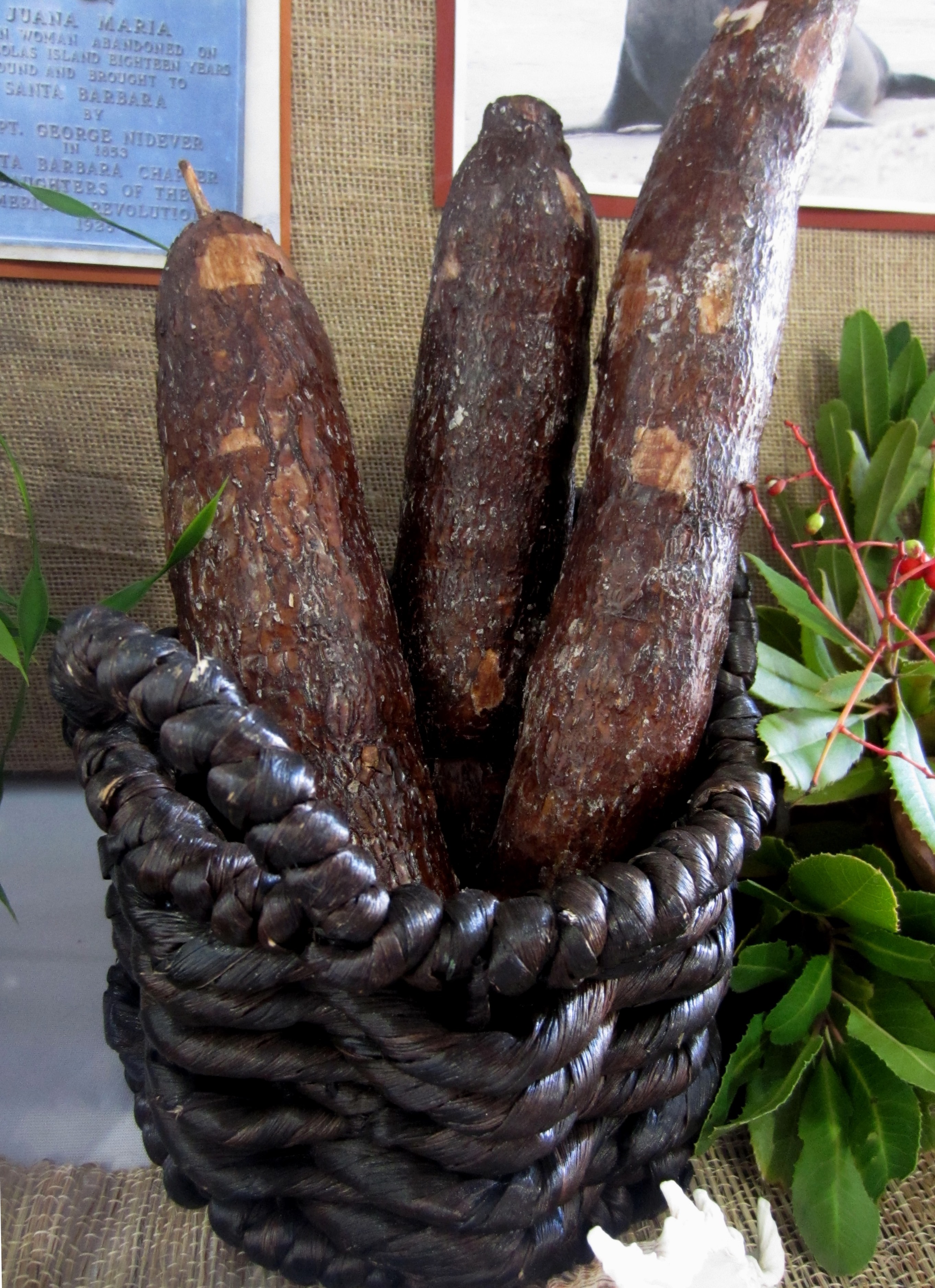
Yucca roots from the grocery store or a Mexican market.
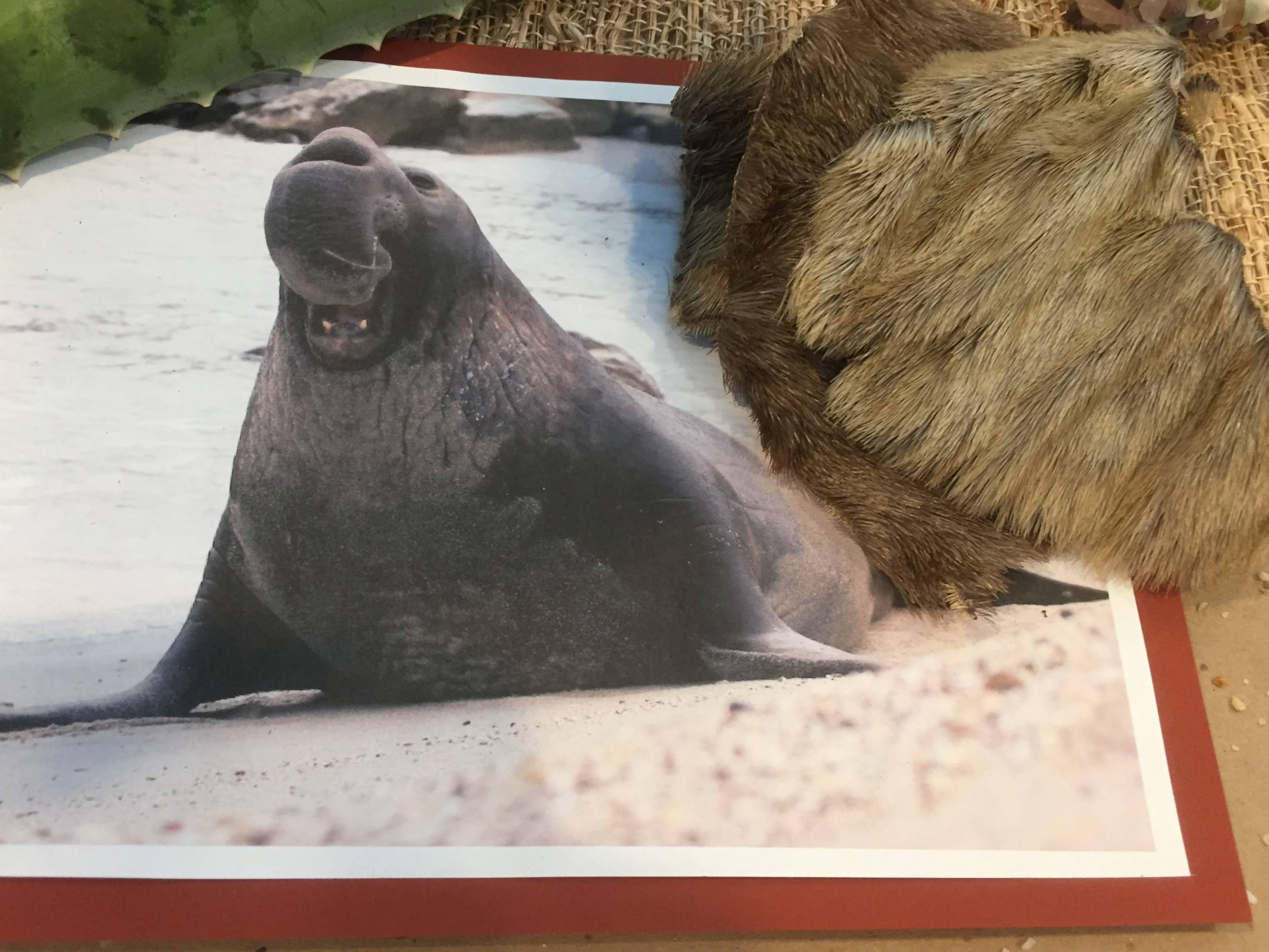
Elephant seal pelts
"Cormorant" feathers
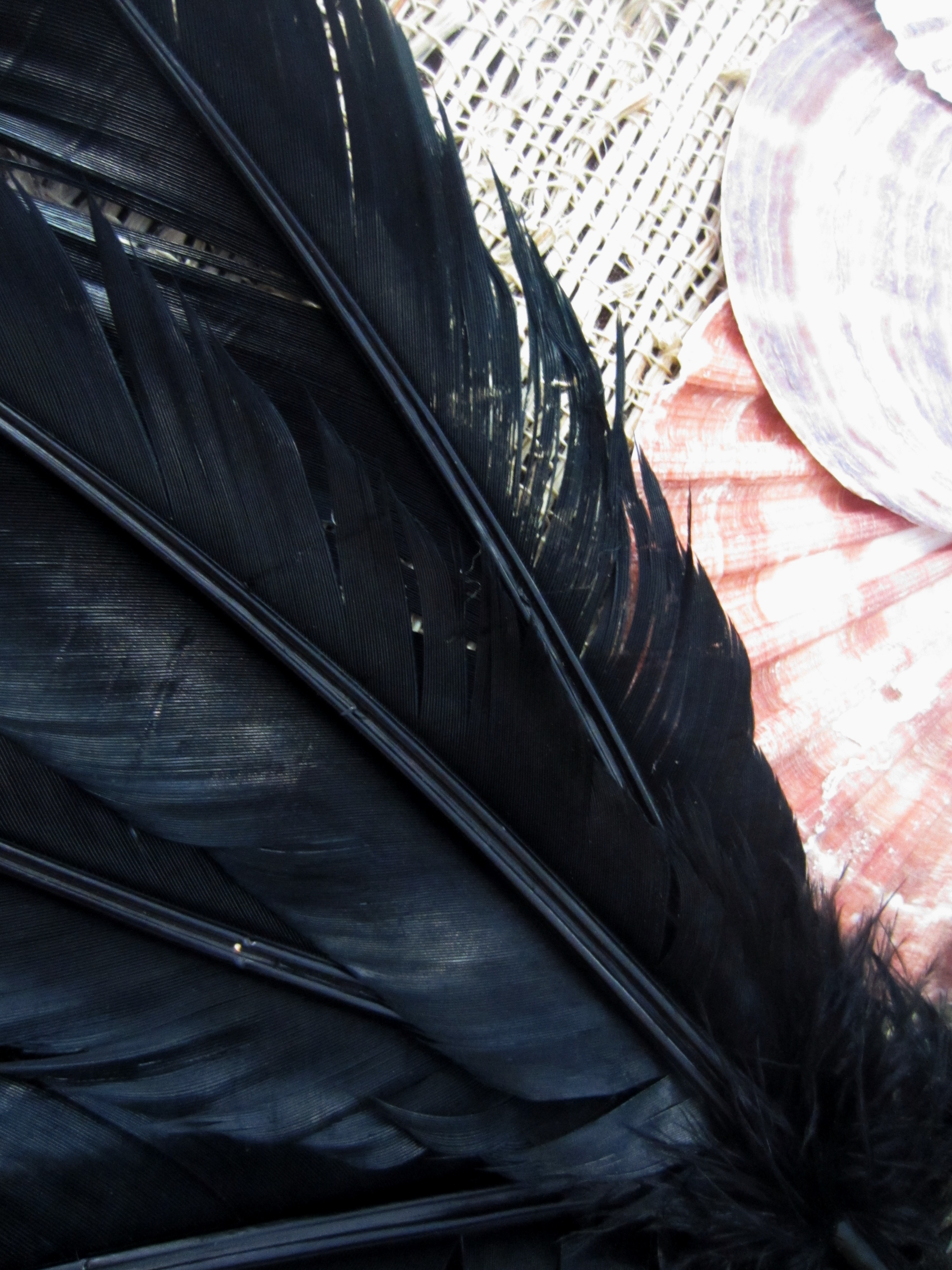
These (goose) feathers, like the shells, make a good take-home/memento for each student.
Shell jewelry & abalone
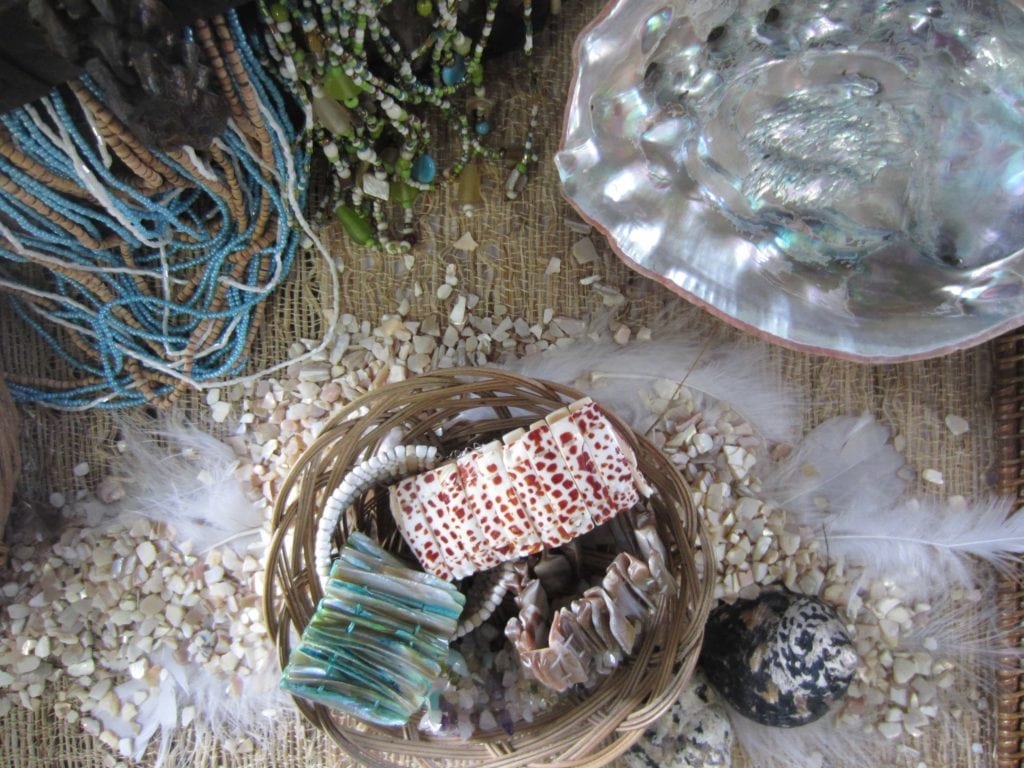
We used our own bracelets, and an abalone shell we got from our scuba-diving brother, but you can one buy one here.
Photo of Juana Maria
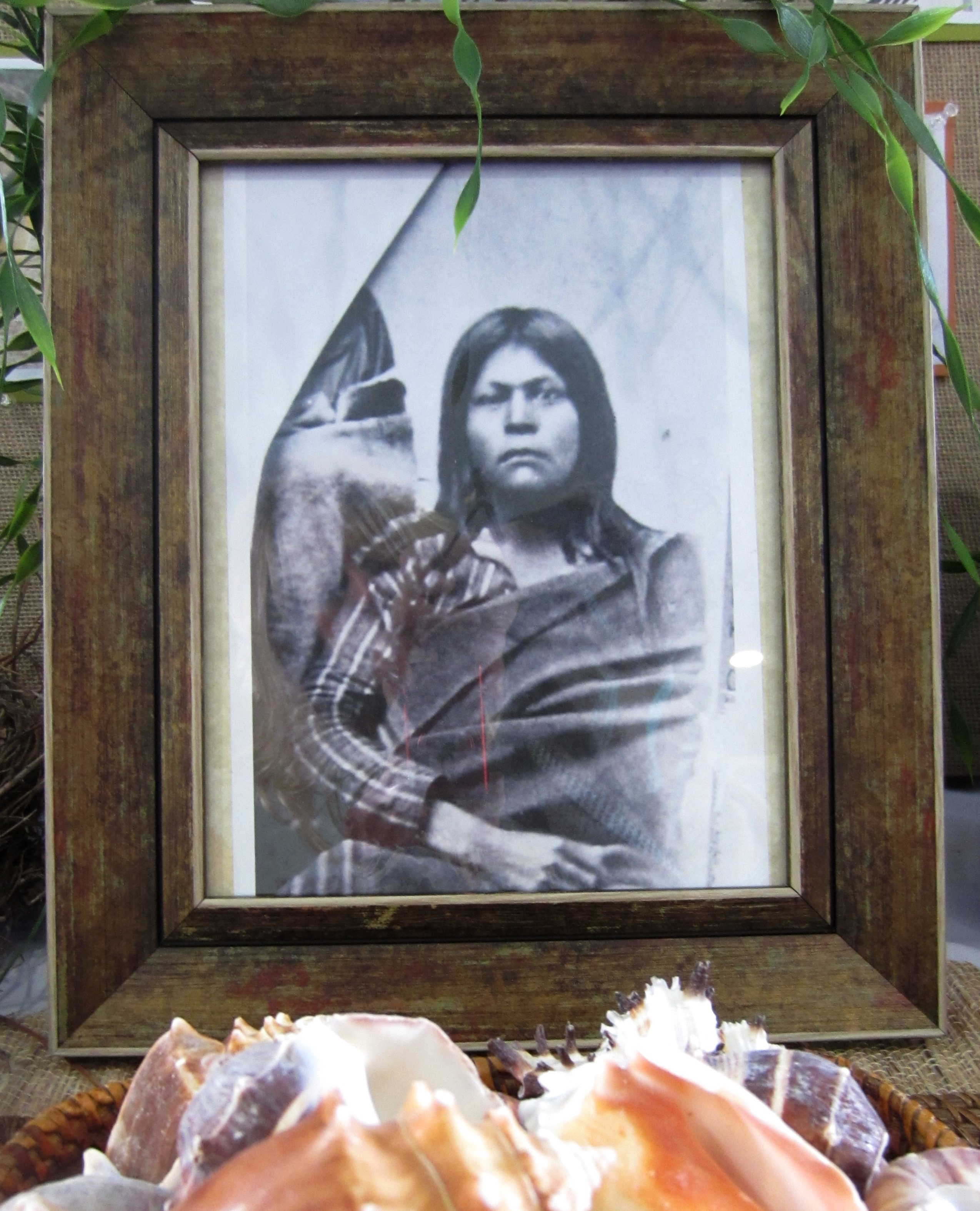
An 1853 photo of the woman whom scholars had once believed to be the real Karana. It is not, per the conclusion of NPS, but it does make for a good conversation about the evolution of knowledge and therefore history.
LitWits makes a small commission on supplies or books you buy through our Amazon affiliate links.
Creative Teaching Idea #2
We think it's important to know where your books have come from. After all, Island of the Blue Dolphins exists not only because the author existed, but because he had the heart, mind, values, diligence, and talent to write it. This activity introduces your kids to Scott O'Dell through a video that shares kid-friendly, interesting aspects of his life, and lets them practice some note-taking, too.
Photo by Jim Collison, donated to the Santa Monica Public Library Image Archives; via Calisphere only for educational purposes.
Choose the kit for no-prep, open-and-go teaching!
There are many connections between Scott O'Dell and his book, even though it's about a girl from the distant past. Of course, all authors show up in their stories, and all characters show up in ours, making authors and their stories inextricably connected to us, across cultures and eras.
But some of Scott O'Dell's experiences, values, and feelings are especially evident in Island of the Blue Dolphins: his childhood on an island off the coast of southern California, for instance, and the second (if not secret) name he adopted in his twenties; his anger at the treatment of Indigenous peoples, and at the actions of indiscriminate hunters. And when his ashes were scattered over the Pacific Ocean, a pod of dolphins, in a final moment of connection, leaped beside the boat of mourners all the way back to the bay.
Talking about these connections helps kids understand that stories are as real as their makers, and that each of them, too, has a story growing inside.
DIRECTIONS
You can introduce your kids to Scott O'Dell through this short video, which shares kid-friendly, interesting aspects of his life. You’ll find a worksheet for author note-taking and conversation-starting in our printables set.
https://youtu.be/HIjtUxbLmxEf
For further information
We encourage you to read through the interviews and biographical articles about Scott O'Dell in our Learning Links at the bottom of this page. You can read his biography by Professor David Russell free on the Internet Archive.

Creative Teaching Idea #3
Chapter 1
Anyone who reads Island of the Blue Dolphins imagines going there and seeing the places mentioned. What a fantastic field trip that would be! In this activity kids get there virtually, take an online tour, and learn the features and history of San Nicolas Island.
Choose the kit for no-prep, open-and-go teaching!
Island of the Blue Dolphins is historical fiction, based on real incidents that happened in a real setting. Point out that this doesn't mean every single thing in the story is true.
Good fiction, though, always leads us toward important, interesting non-fiction to explore. New scholarship has emerged since Scott O'Dell's careful research in the 1960s*, and students' questions about what is and what isn't "right" or "real" are wonderful learning opportunities. Encourage them to do their own research and support their findings in writing. That's how new scholarship emerges!
Tell the kids that Scott O'Dell's island setting is based on San Nicolas Island, in the Channel Islands, off the coast of southern California. Have them find San Nicolas, either on the web or on paper. Use these National Park Service interactive maps to explore the island.
To help kids retain this information, use our setting and vocabulary worksheets, which cover the geography and natural features of San Nicolas Island.
DISCUSSION
What tribe did the real Karana belong to? (The real Lone Woman of San Nicolas Island was likely a Nicoleño Indian, but Scott O’Dell names Karana’s village Ghalas-at, which is a Chumash word. Today the Gabrielinos—the tribe most closely connected to the Nicoleños—call the island Haraashngna.)
What was the relationship between the Russians and the Aleuts? (The Russians forced the Aleuts to hunt for them. See NPS Ch. 1 fact-check with primary sources/teacher resources.)
Why did the hunters stop at such a tiny island? (San Nicolas Island had a high number of otters due to its extra clear, deep waters in which grew abundant kelp forests. See a Navy biologist's explanation on the NPS site.)
Why were otters the main target of the hunters? (Their pelts are very dense and warm, so each was valuable. See NPS Ch 3 fact-check with sources; here's a scientific analysis of otters' fur.)
*You might want to read the kids all or part of this Smithsonian Magazine article about that; for a deeper dive with older kids, there's much to be explored at the Lone Woman and Last Indians Digital Archive.
LitWits makes a small commission on supplies or books you buy through our Amazon affiliate links.
Creative Teaching Idea #4
Chapters 1-3
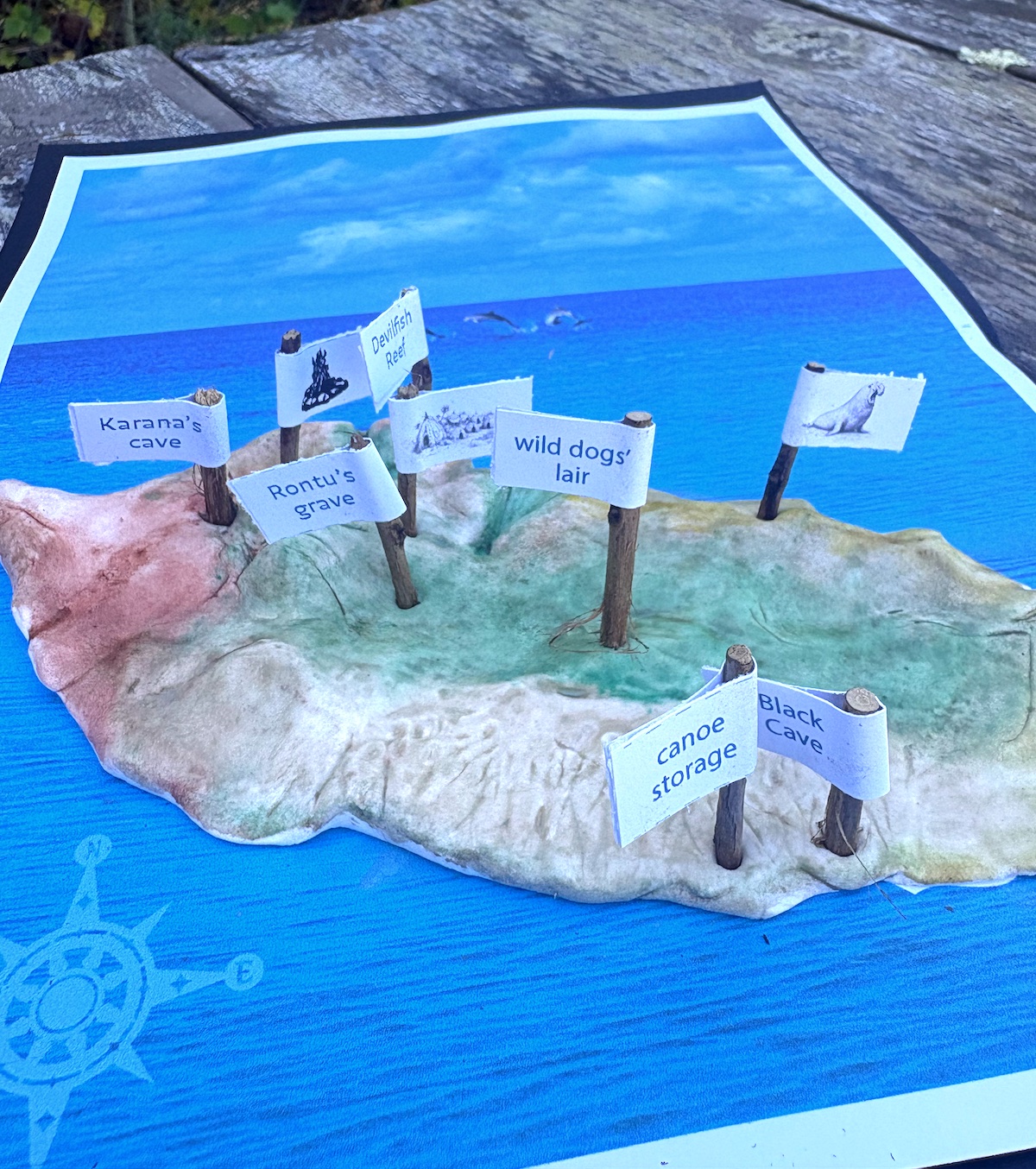
Karana describes the Island of the Blue Dolphins in ways that make us want to SEE it—or better yet, feel it! In this activity, kids get to make their own island, applying the geography and geology they've just learned, and marking Karana's story locations in hand-on, creative ways.
Choose the kit for no-prep, open-and-go teaching!
Our island is two leagues long and one league wide, and if you were standing on one of the hills that rise in the middle of it, you would think that it looked like a fish. [. . . ] The village of Ghalas-at lay east of the hills on a small mesa, near Coral Cove and a good spring. —Ch. 2
Doesn't that description beg for a model-making project? If your kids do our setting and vocabulary worksheets first, which cover the geography and natural features of San Nicolas Island, they'll be well prepared for this hands-on activity.
You can also use these National Park Service interactive maps to explore the island's natural feature and the locations given in the book. (Here's an NPS overview with fact-checks.)
SUPPLIES
Ocean and sky scene printed on white card stock (in our printables)
Island of the Blue Dolphins key printed on white card stock (in our printables)
Island location flags printed on white or ivory card stock (in our printables)
9 x 12” black card stock for mat
Model Magic modeling clay (one 1 oz packet)
Watercolors with water and brush
Nine 1-inch (or so) twigs for flags (these 3+” sticks can be cut or broken into pieces)
Scissors
Not pictured: kitchen shears or garden pruners in case sticks are too difficult to break.
DIRECTIONS
Cut apart location flags and set aside.
Glue the ocean scene to the black card stock.
Fold the whole scene in half, then open it back up.
Use your fingers to push and pull the clay into the form of the island, covering up all the white. Look at the island key to find the land formations marked with blues shadows, and include these on your model. Check the definitions on your worksheet if you aren’t sure what they should look like.
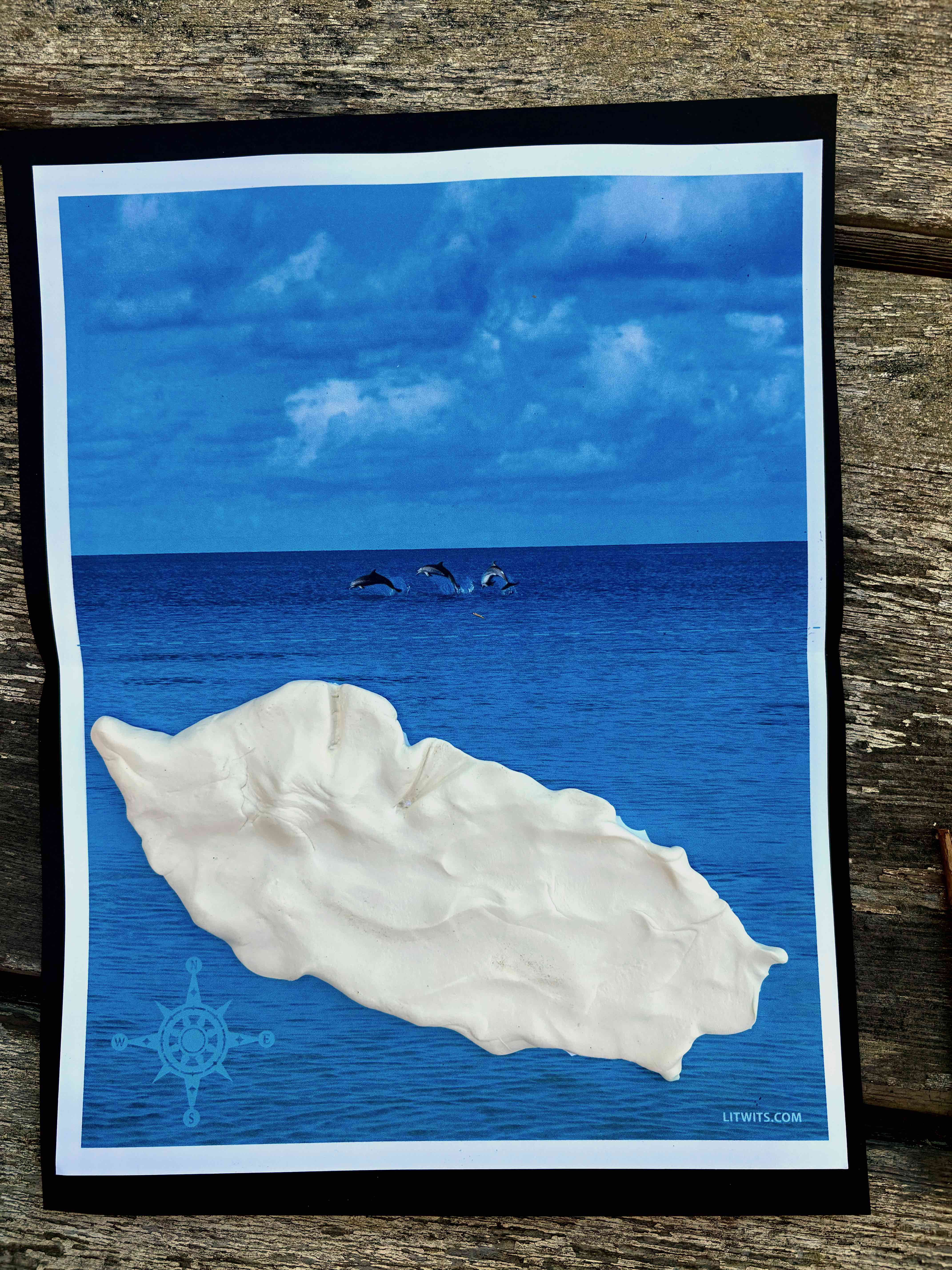
Use a pencil or sticks to create the canyon and ravine, and any other features you would like to include. You will want the clay to be a little thicker where you plan to plant your markers.
Use watercolor paints to color the island. You might use a photograph for reference, or create your own island look.
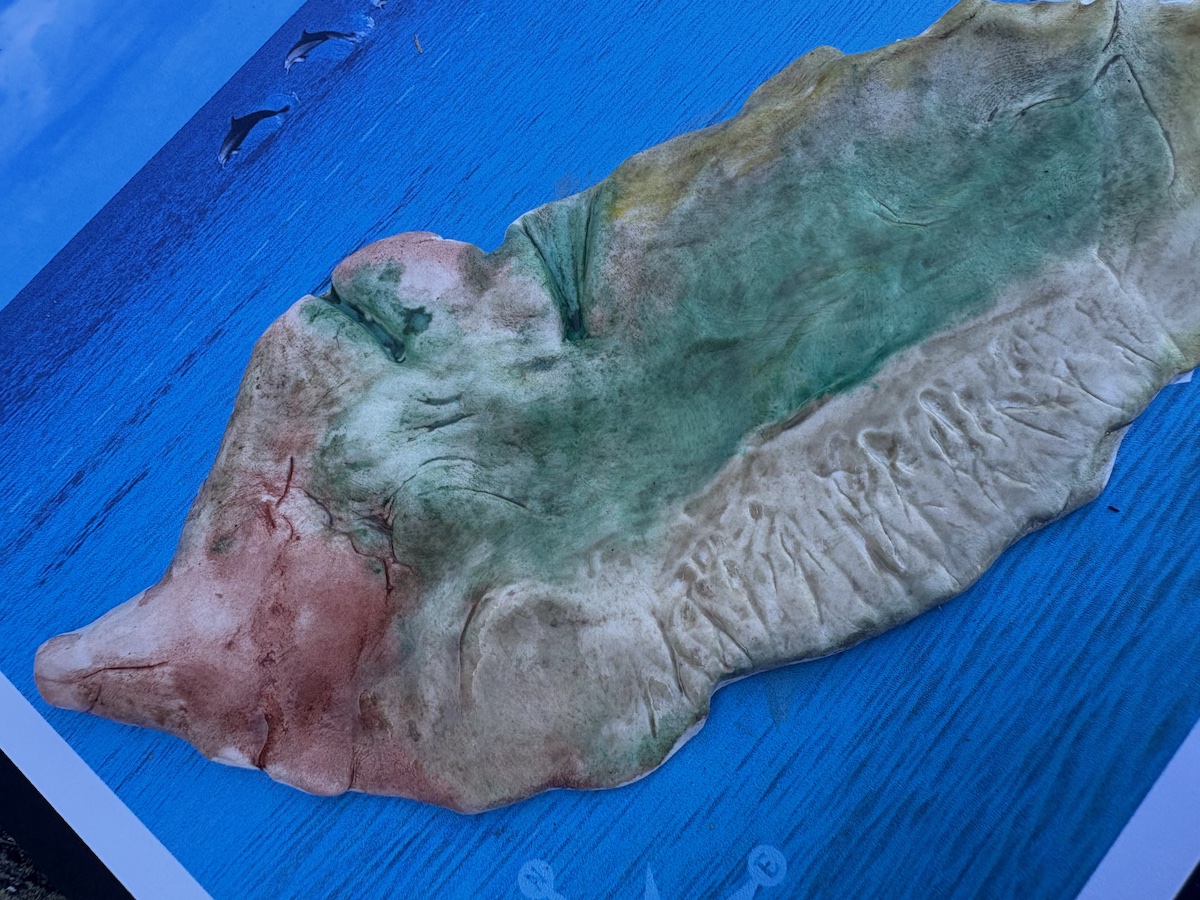
Break or cut each stick into pieces about an inch long. Some will be longer than others and that’s fine.
Fold in half and then glue the marker flags around the end of the sticks, making sure they read right side up.
When the glue is dry, use your map key to plant the flags on your clay island. (Mark locations on the waterline by putting your marker in the clay as near as you can to the shore.)
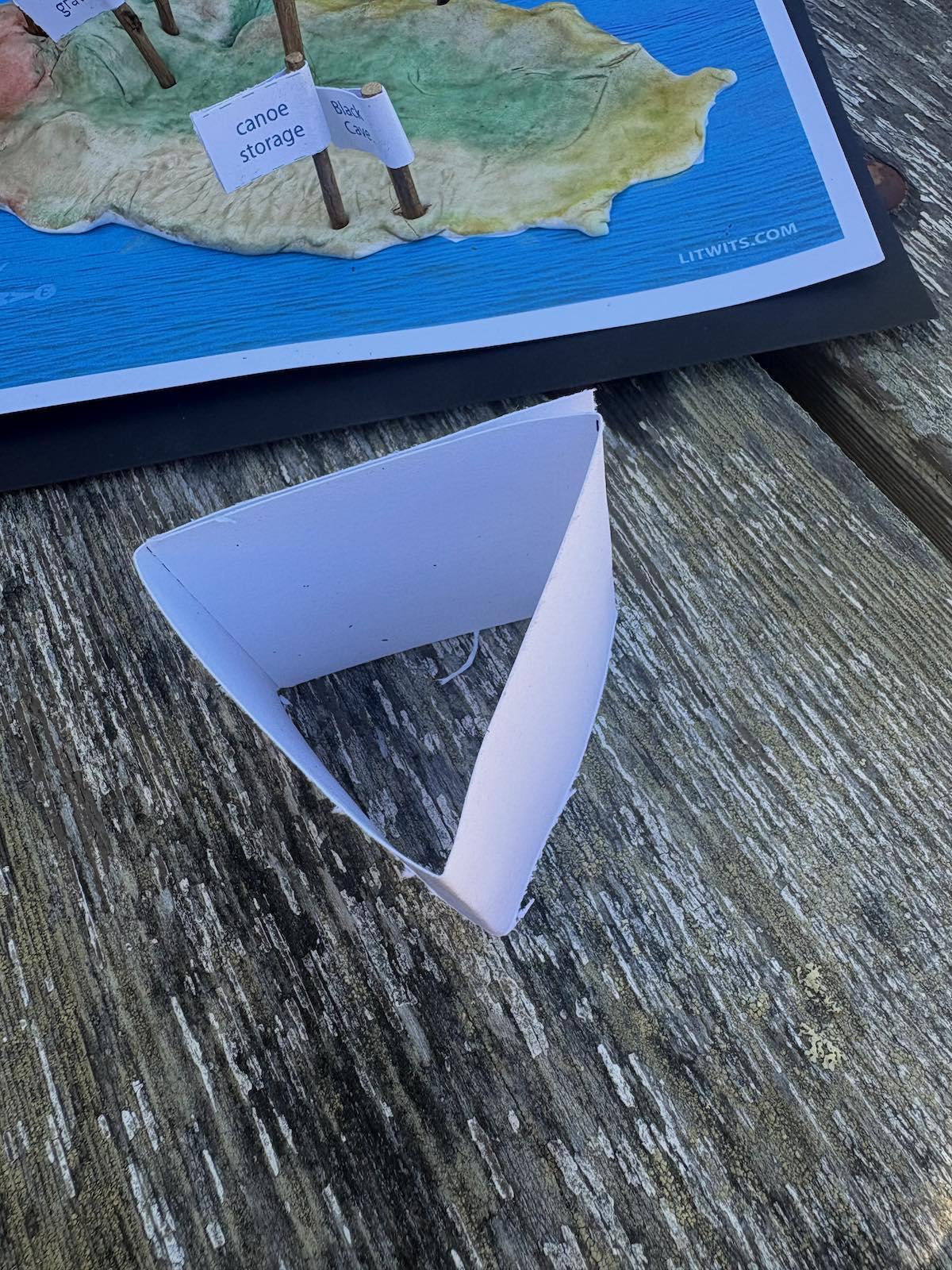
Cut the bottom strip off the island key, and fold inward on the dotted lines. Overlap the end panels and glue together to make a triangle.
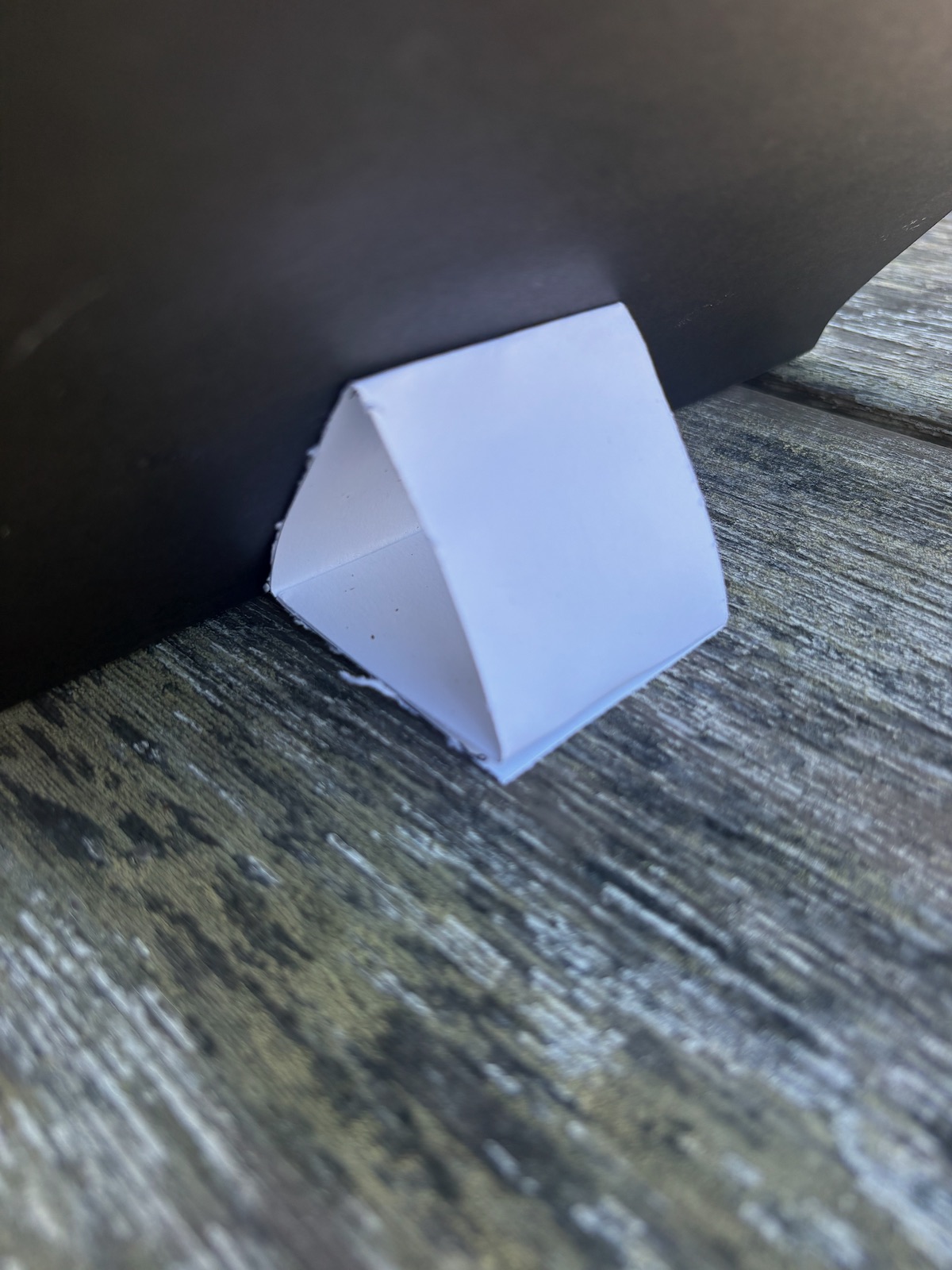
Glue one side of the triangle to the lower back of the project right at the fold so that the project back is supported and can stand up as a backdrop to your island scene.
DISCUSSION
Is the village of Ghalas-at a real place? (There was a village near Coral Cove; watch this 2-minute video for an overview of the Nicoleño people of the island, by the archaeologist who helped discover the Lone Woman's cave.)
See Activity Idea #13, "Learn about the real Karana" for further discussion about "what's real and what's not." As with many works of historical fiction, there are discrepancies between the novel and the history it's based upon. Besides the use of artistic license, new historical and cultural knowledge has been brought to light since the author's careful research was done in the 1960s.
You might also want to read the kids all or part of this Smithsonian Magazine article about that; for a deeper dive with older kids, there's much to be explored at the Lone Woman and Last Indians Digital Archive.
LitWits makes a small commission on supplies or books you buy through our Amazon affiliate links.
Creative Teaching Idea #5
All chapters
What if the Island of the Blue Dolphins had been described as being shaped like a Labradoodle instead of a dolphin? Why wouldn't that work? This writing activity is inspired by Scott O'Dell's adept use of similes and metaphors. It helps kids pick up some excellent writing skills, straight from the author's pen!
Choose the kit for no-prep, open-and-go teaching!
The author often compares one thing to another, starting with a simile in the second sentence (the ship seemed like a small shell afloat on the sea) and a metaphor in the third (the ship was a gull with folded wings.)
Ask the kids why he didn't just write “a ship was sailing closer and closer,” and "its sails were triangular." Explain that a) that would be BORING, and b) Karana had never seen a ship or sails before, so it would have been natural for her to describe them as being similar to things she had seen. The story's much more interesting and believable because it's told from Karana's point of view, not the author's own modern view.
Scott O'Dell's skill is in choosing comparisons that suit Karana's time and place.
What if he had compared the ship to “a wooden salad bowl bobbing on the sea,” or said it “looked like a plastic bottle with a red logo on it”?
What if the elephant seals were "as big as pyramids"?
What if the Island of the Blue Dolphins had actually "looked a lot like a Labradoodle lounging on the lawn"?
Have the kids come up with modern, funny alternatives to other comparisons made in this story, and explain, specifically, why those wouldn't work. (Or you can distribute our creative writing worksheet titled "Comparisons.") The kids can do this individually or in pairs, groups, or teams.
LitWits makes a small commission on supplies or books you buy through our Amazon affiliate links.
Creative Teaching Idea #6
Chapter 8
When Karana jumps off the ship, her basket holding all of her worldly possessions sinks to the bottom of the sea. This critical loss means she has to start from scratch to survive on the Island of the Blue Dolphins. In this activity, kids craft a simple basket that carries the story's central conflict, and a major theme.
Choose the kit for no-prep, open-and-go teaching!
This small, simple basket is packed with the immense, complex problem of survival that Karana has to deal with alone, and the related burdens of fear, loss, and isolation. It also represents her last day with her brother, when the two of them weave a new basket and gather food—their last collaboration.
From seaweed we wove a rough basket which we filled before the sun was overhead. —Ch. 8
Because they made "a rough basket," and because traditional Indigenous basket weaving is a complex, generationally protected art form, we didn't teach or try to copy Native weaving techniques. Instead, our kids used a basic, simple weaving pattern to make a "rough basket"—a paper-and-string container topped with moss. And while they worked, we talked about ideas from the story that this project represents.
SUPPLIES
basket template (in our printables) printed on black cardstock
twine 3 yards per child (as an option, you can add raffia as shown in the photo)
Spanish moss - a small handful per child
black cotton cording- 1 yard per child
burlap - a 3" square per child
DIRECTIONS
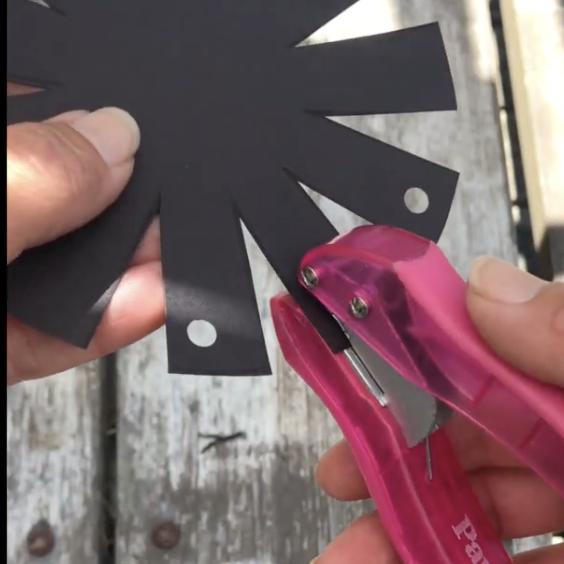
Cut the basket frame from the template, and cut out the spaces between the "spokes."
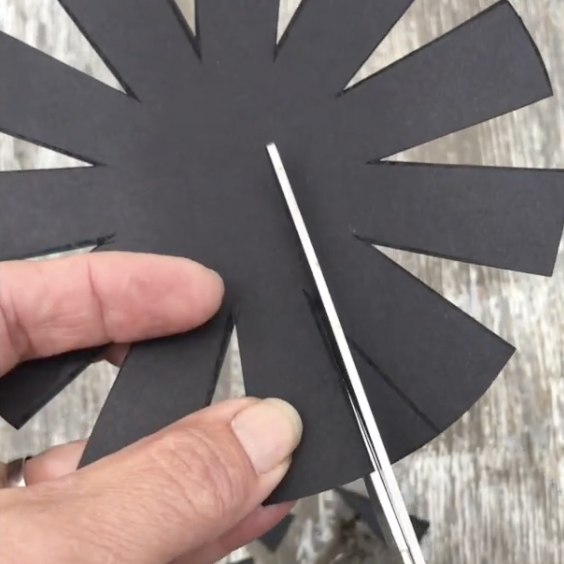
Punch a hole at the end of each spoke.
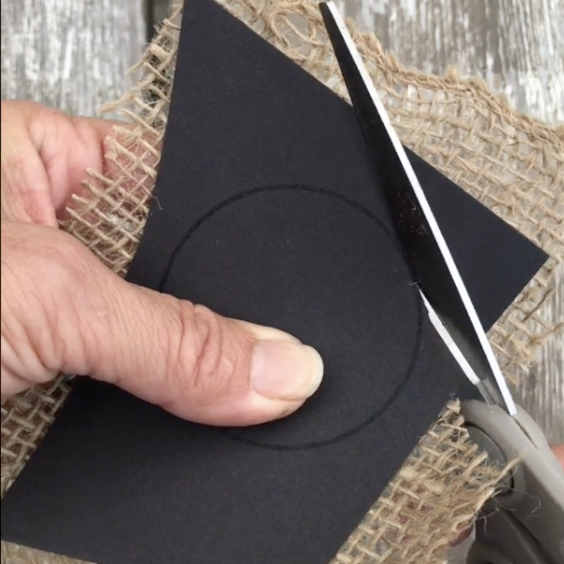
Rough-cut the base from the template, and glue it to the burlap. Press down to help them stick together, then cut the circle from the cardstock and burlap at the same time.
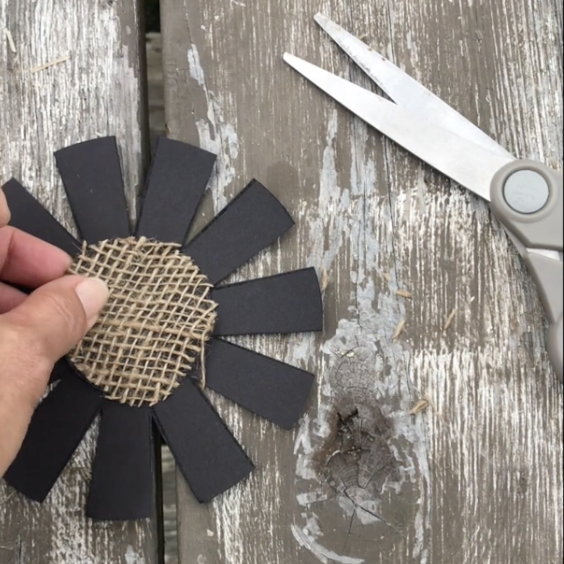
Glue the paper side of the base to the center of the "wheel."
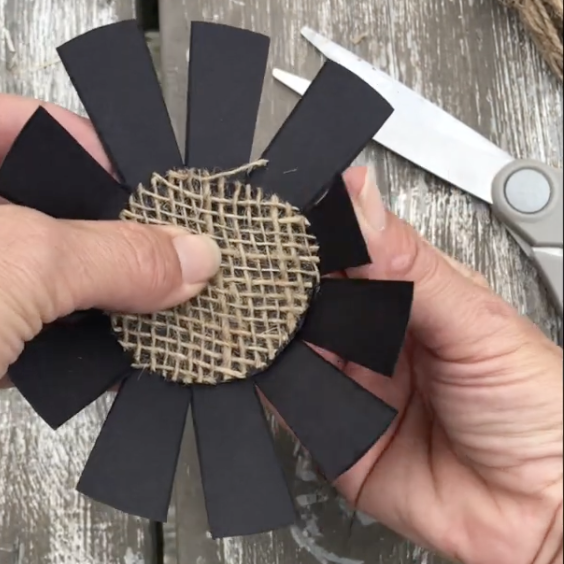
Fold up each spoke to loosely form a bowl-shape; they won't stay, but in the next step, the weaving will hold them in place.
Tie the end of the twine to one of the spokes, to anchor it.
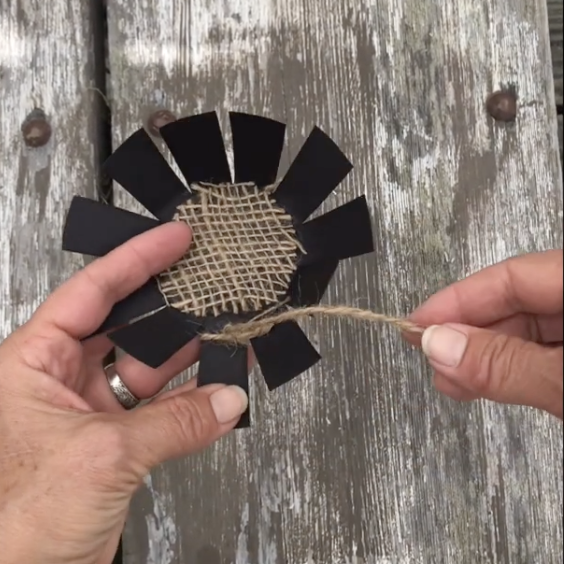
Wind the twine in and out of every spoke, loosely holding the spokes in a bowl shape as you weave. (Because there are an odd number of spokes, eventually the twine will cover all of them.) As you go, gently push down the strands from the outside, so they stack up tightly.
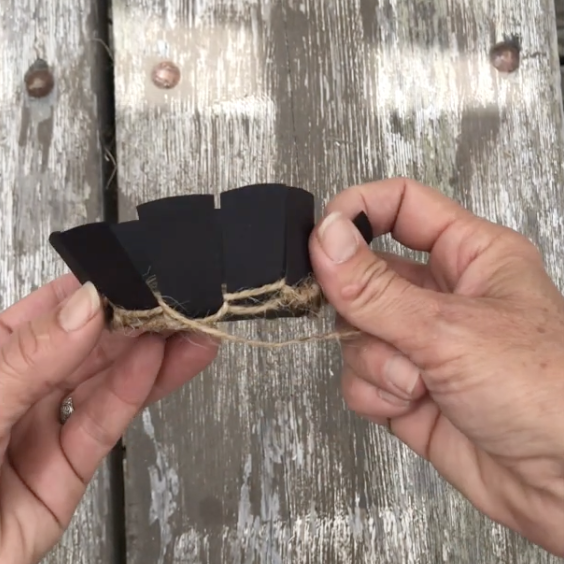
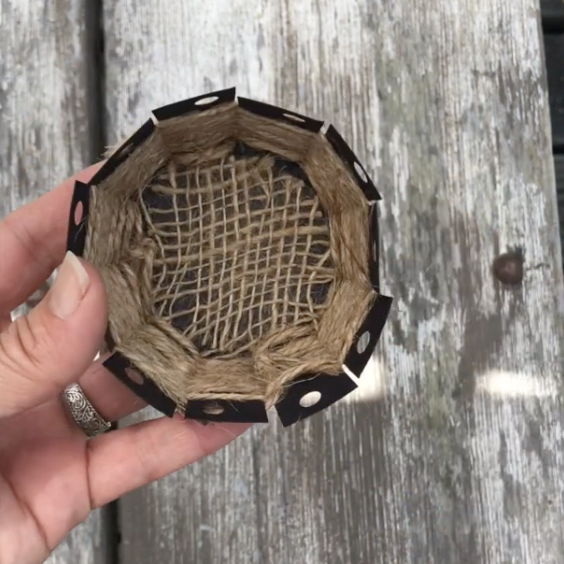
Roll your "seaweed" (moss) between your hands to form a long, loose wad and lay it around the top edge of your basket.
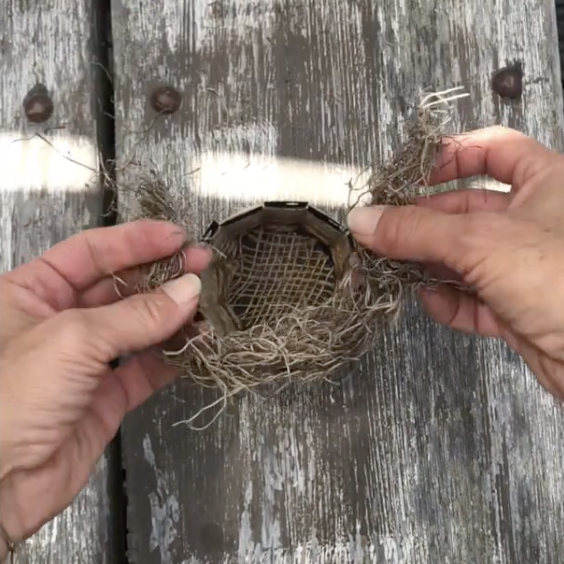
Push the black cord through one of the holes from the outside and pull half of it through. Then weave one length of the cord over the top, to bind the moss to the edge of your basket. Then weave the other length of cord to the left. When the two ends meet, tie them together.
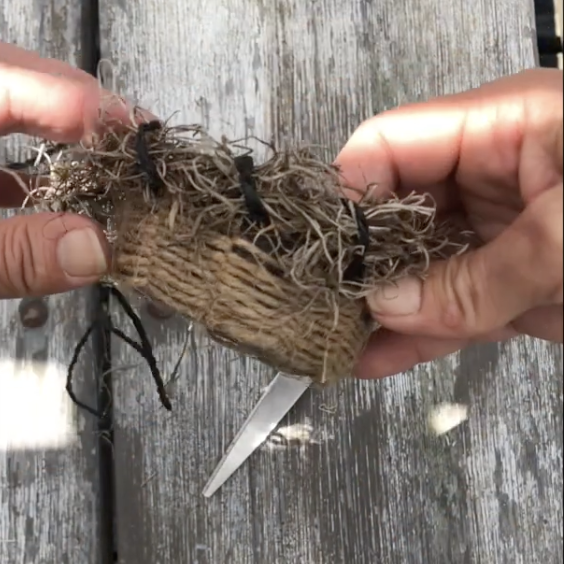
Here's a step-by-step instructions video, if that's easier for your setup or kids:
DISCUSSION
Ask these questions to help them understand what this project represents.
Why didn't they use the basket Karana had when she jumped off the ship? (It was too heavy to swim with, so she had to let it go and it sunk to the bottom of the sea.)
What was in that basket? (It held all her possessions.)
How did that loss make it harder to survive? (She lost everything she had.)
The loss of her basket triggers the main conflict of this story. Why is this moment more important than the conflict with the Russians or the killing of the chief or the loss of her brother? (The earlier conflicts were hers to witness, but losing her basket means she'll need to take action to survive without her possessions.)
Without her basket of important items, what will she have to do? (She'll have to start over from scratch, make the best of what she has, and learn new skills.)
And that's what our little basket project represents: Karana's resilience, resourcefulness, and survival skills. It also represents her last day with her brother, when the two of them weave the new basket and gather food—their last collaboration. It'll be packed with all kinds of meaning!
LitWits makes a small commission on supplies or books you buy through our Amazon affiliate links.
Creative Teaching Idea #7
Chapter 10
The night Karana sets out in her canoe to try and reach the mainland and her people, the sea and sky are so black she can’t tell the difference between them. She's scared, but a familiar constellation calms her and leads to a critical decision. This activity captures a literal turning point in Karana's journey—on the sea, in her heart, and in the story. And it adds some astronomy, too!
Choose the kit for no-prep, open-and-go teaching!
Karana's fears calm when a green star appears in the east, “in the figure that we call a serpent.” Focusing on that familiar star keeps her from getting lost, and leads to her calm decision to turn around. She accepts that she must go home, and not try to leave again.
This is the night she conquers fear, practices acceptance, and acquires more wisdom.
This scene so beautifully captures the essence of Karana’s story—both her intense solitude and her indomitable spirit—that we immediately envisioned this textural, black-on-black rendition of sky and sea, lit up by Karana’s “green star” and its constellation. The project is contemplative to do, too, and the finished art inspires contemplation.
SUPPLIES
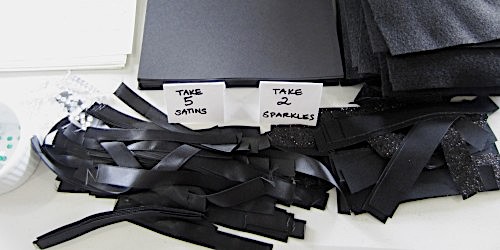
black 8.5×11 cardstock, one per child
black 6×9 felt (a half-sheet)
copies of the constellation (in our printables), one each or to share
DISCUSSION & DIRECTIONS
Begin by reading the powerful Chapter 10 passage aloud before beginning the project. (You may want to type it up and have the kids glue it to the back; we can’t provide it here for copyright reasons). Then give the kids this introduction:
This project draws us closely into that beautiful, important scene in the story. There isn't a lot of color in it; in fact, it's mono-chromatic. Does anyone know what that means? (It means it's all made up of one color.)
Karana says that there was "no difference between the sky and the sea"—yet she could tell which was which. Why? (Because the water reflected the light that shone from the stars.)
The sky is soft and black, the stars are bright and clear, the sea is shiny and reflective. We're going to represent that scene in an art piece that lets us think about what that moment would have been like, and learn a little bit about astronomy and navigation, too.
1. Glue the black felt to the black card stock.
2. Trim satin and sparkle ribbons to the width of the felt, then glue to the bottom of the felt in your own pattern, representing the black shiny/sparkly sea.


3. Create the constellation out of rhinestones, using the image on the template as a guide (the green star is circled). Although it's not to scale, we added the North Star in the upper left part of the sky.

Star Facts to Share
Our planet spins under the sky once each day. Earth’s spin causes the sun in the daytime – and the stars at night – to rise in the east and set in the west. But the North Star, because it lies almost exactly above Earth’s northern axis, is a special case. Instead of appearing to move, it stays put, like the hub of a wheel, in the northern sky. This makes it useful for navigation.
By the time Karana’s green star had risen, the North Star had appeared, and by keeping this star on her left hand, she was able to keep moving eastward. Humans can’t actually see stars as green, because of the way our eyes work. (NASA provides a good explanation of this.) Karana’s green star could have been a planet crossing the constellation, but the author makes it sound like it’s a familiar part of the constellation, and the only planets that would be bright enough (Venus, Mars, Jupiter and Saturn) aren’t green either.
For our purposes, it makes the most sense to assume that the constellation is Serpens, one that was known to many ancient world cultures, including China and the Middle East. The “green” star then is Unakalhai, since it has the brightest apparent magnitude. We can surmise that O’Dell is using poetic license when he describes this pale yellow star as being green.
4. Finish by setting the North Star in the upper left-hand corner of the black felt sky. Tell the kids its placement is not to scale! It's just there to remind us of its place in the story, and of what we learned about its use in navigation.
For more about the astronomy, see our Learning Links section.
LitWits makes a small commission on supplies or books you buy through our Amazon affiliate links.
Creative Teaching Idea #8
With every move Karana makes, we see her humanity, intellect, and skills, all marks of a true leader—especially impressive considering she’s only twelve! This activity helps kids identify patterns to understand how the author developed one of his major themes.
DISCUSSION
You might also/instead use our theme worksheet, which focuses on the theme of leadership.
Ask the kids what leadership qualities and traits are shown by Karana's actions:
her leap into the sea (selflessness, courage, love)
her forgiveness of Ramo (ability to forgive, love, selflessness)
her conversations with him about becoming a man , and her decision to let him take risks (awareness of what someone else needs to grow and be useful, even if she might lose him; selflessness)
After Ramo dies, Karana vows to kill all the wild dogs, burns the village houses to the ground, flings the Aleutian jewelry far into the sea, and breaks village rules to build weapons. What do each of these actions show us about her?
Her vow to kill the dogs shows her anguish over losing Ramo, her human desire for revenge, and her strategy for protecting herself.
Her need to burn the houses says she knows the psychological and emotional importance of looking forward, not back at the past, or at loss.
Her refusal to wear (or even keep) the jewelry lets us know she grasps the power of symbolism—she knows she would always associate the jewelry with the death of her people.
Her willingness to break village rules tells us she has the mental strength and ability to do what she must to survive.
Again, these actions show us that Karana has, or is acquiring, the qualities of an effective leader—and a very good friend. The author is skillfully giving us reasons to believe in her—and to feel with her.
What are some other examples of new leaders emerging in this story?
After Chief Chowig is killed, Chief Kimki is chosen to succeed him.
Rontu fights the leader of the wild dog pack to become the new leader.
The younger sea elephant fights the old one to take his place.
LitWits makes a small commission on supplies or books you buy through our Amazon affiliate links.
Creative Teaching Idea #9
Chapter 19
When Karana discovers a water cave containing a devilfish (octopus)—“the best food in the seas”— she makes a special spear to kill it. In this activity, kids rename and describe another familiar creature as Karana might, and learn what Scott O'Dell's "devilfish" does for his story.
Choose the kit for no-prep, open-and-go teaching!
The devilfish is, of course, an octopus. To get the kids thinking like authors, who have to get inside a character’s head and see things as someone else would, we asked them to describe a well-known animal as if they had never seen or heard of it before, and then give it a name. We allowed about ten minutes for free-flow writing, then invited volunteers to read aloud.
There's a creative writing worksheet for this in our printables set.
FOR DISCUSSION
Karana makes her spear from the teeth of a sea elephant killed by a younger one. What does that fight represent? (That clash between old and young represents yet another change in leadership—like the shift from chief to chief, and later from dog to dog. It also represents the clash between Karana’s old and new ways of looking at women’s roles: she needs to put aside old beliefs so she can survive.)
Karana's fight with the devilfish (in Chapter 19 is the Climax of this story's arc. How do we know that?
Agency: It’s the moment when the Conflict (survival) is put to its greatest test—and (very important) she has the power to pass that test, thanks to the weapons she's made and the skills she's learned.
Karana has already saved Rontu once, and she feeds and shelters him too. He owes her one, doesn't he?! So why doesn’t the author have the dog save her?
Agency: Again, Karana must be the solver of her own Big Problem, the need to survive. Rontu is not the hero of this book.
Dramatic tension: As readers, we’re pretty confident the author won’t kill off the protagonist, but he just might kill off the dog—so Rontu’s desperate situation boosts the excitement.
Characterization: Karana’s willingness to jump into the water and tackle the devilfish in hand-to-arm combat shows she’s willing to risk death for someone else. This kind of selflessness is a mark of a true leader.
Growth: Karana’s hunting skills have come a long way since she jumped off that ship!
Creative Teaching Idea #10
Chapter 19
In recognition of Karana's leadership and survival skills, serve up some devilfish and a side of seaweed! These dried marine munchies are extra delicious when packaged with Karana and Rontu's specimen label. In this activity, kids join the feast while following leads to find out what makes a real leader.
Choose the kit for no-prep, open-and-go teaching!
BookBites is the part of our literary experience when we get to “taste the story.” We choose food that:
is important to a plot point
has thematic significance
is unfamiliar for reasons of culture, era, or location
Our choices for this book hit on all three. In honor of Karana's leadership and survival skills we served:
dried devilfish, aka squid
dried seaweed, known as nori
You might want to package up these marine munchies with Karana and Rontu's specimen label, shown below—our kids loved that. It's included in our printables set.

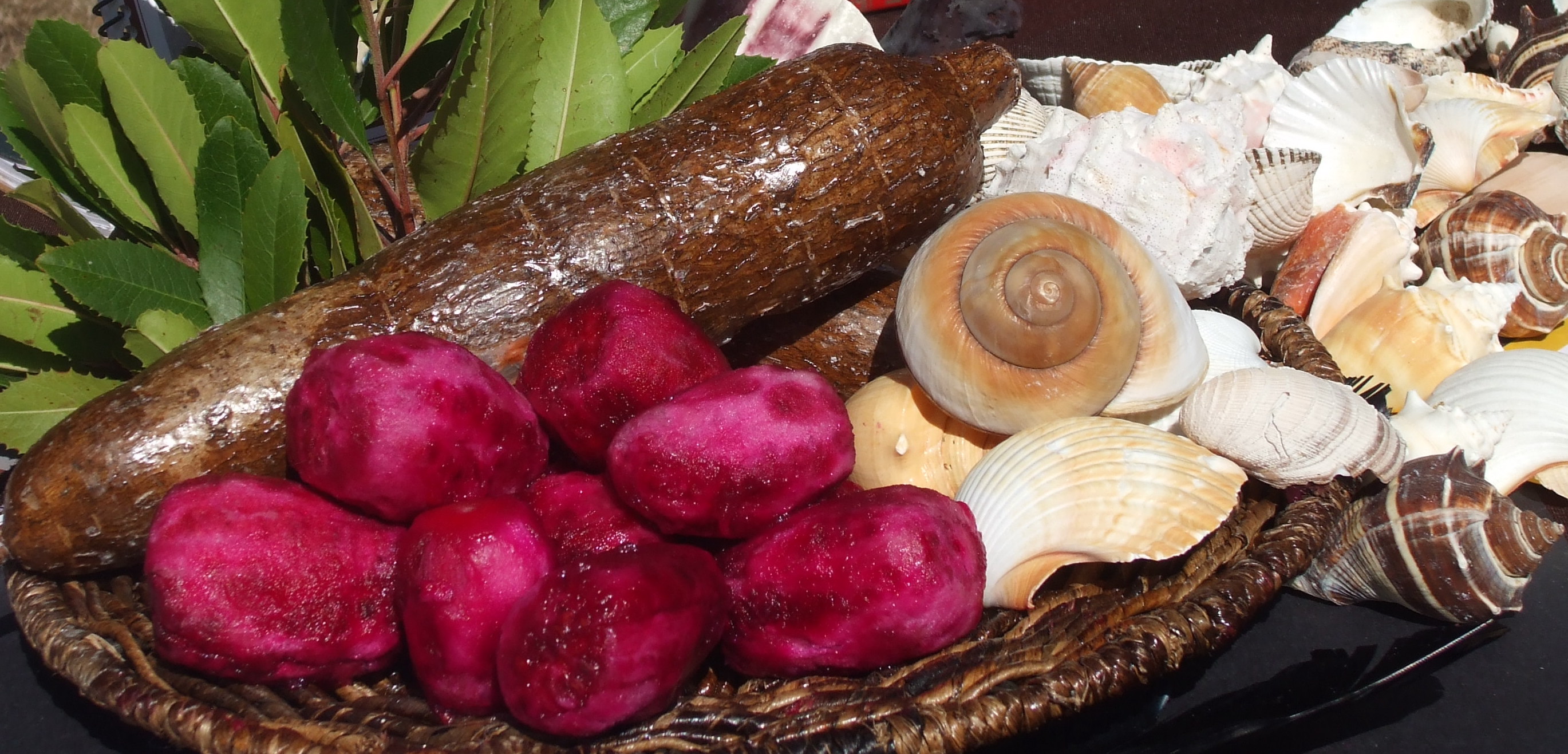
In another workshop, we served fresh cooked squid along with these items from a local Mexican market:
“tunas apples,” or prickly pears
yucca we had cooked the night before.
pieces of cactus paddle


FOR DISCUSSION
Rontu's a very important part of this devilfish-hunting scene—but he almost wasn't around for it, was he! Karana's leadership qualities of respect, compassion, and courage come through in her interactions with Rontu. And it's her weapon-making and hunting skills that save his life a second time... and catch that delicious devilfish.
Why do you think Karana saved the leader of the dogs that had killed her little brother? (She realized she wanted a companion—a universal human need.)
What makes a good companion? (Mutual respect and affection.)
How does Karana earn the leader dog's respect? (She had the power, opportunity, and motive to kill him, but she didn't.)
What makes a good leader? (Intelligence and ability, but more importantly, respect and compassion for those with much less power.)
When does Karana save Rontu again? (When she risks her own life to save him from the devilfish.)
How do you feel about their relationship, from beginning to end? (Responses will reveal the author's talent in making readers feel empathy for both characters—an empathy to carry forward into "real life.")
You might want to do the theme worksheet or creative writing worksheet during BookBites; they're in our printables set.
LitWits makes a small commission on supplies or books you buy through our Amazon affiliate links.
Creative Teaching Idea #11
Chapter 14
The art Karana saw in Black Cave was made by her ancestors, who were telling their story. In this activity, kids use pastels on sandpaper to retell Island of the Blue Dolphins without using words. As they condense big ideas and events into images, they learn the art of symbolism too.
Get the kit for no-prep, open-and-go teaching!
Rock and cave art are found all over the world! Scott O'Dell’s fine work of historical fiction gives us a chance to learn about Indigenous art and culture, and explore the universal idea of telling stories with images.
But though the cave artistry in the story inspired this activity, we didn't want the kids to use or emulate actual Indigenous images—they carry deep, protected historical and tribal meanings, and we didn't want to be inadvertently disrespectful.
Instead, we asked them to use their own creative, original symbols to illustrate events and emotions from the story.

SUPPLIES
heavy card stock or pocket folders to store notes and worksheets
DIRECTIONS
Point out that long before written alphabets, humans all across the globe drew on cave walls and rocks. Tell the kids their goal is to act as a graphic storyteller. They'll get to condense key scenes from Karana’s life into their own, original symbols—no words allowed!
To choose a scene, think of big turning points in the book—the arrival of the Russian ship, the fight with the wild dogs, Tutok's arrival, the earthquake—events that brought her grief, loneliness, compassion, or joy.
If you had to describe each event using only one simple shape or object, what would it be? Strip away all the tiny details and use that image, without any words.
Use bold colors and press your pastels firmly onto the sandpaper, so your symbol pops against the dark, grainy background. (Remember to use only your own art, and not any Indigenous images you've seen or read about.)
Have volunteers narrate their symbolic sequence of major events from the story—and describe how their symbols express the feelings of that special scene.
DISCUSSION
Why did so many humans across the globe use drawings to record history? (Pictures are a universal language—anyone from any tribe or time period can look at a drawing of a boat, a whale, or a sun and instantly understand what it means, even if they don't speak the same language or know how to read words.)
Why is it easier to draw thick, simple lines on a rough surface? (You can't create narrow, complex details if the surface is bumpy, as were most writing and drawing surfaces long ago.)
How did you make the emotion or action come through in one single image?(E.g., a simple jagged line for an earthquake.)
What are the advantages of "reading" symbols instead of words? (Symbols are understood across languages; symbols work whether you can read or not; symbols can communicate faster than words because our brains recognize shapes and colors instantly.)
LitWits makes a small commission on supplies or books you buy through our Amazon affiliate links.
Creative Teaching Idea #12
Chapter 22
Karana's gift to Tutok is one of handmade jewelry, but more importantly, of kindness and affection. This activity celebrates their brief friendship as well as the broader human need for connection. It also explores the significance of gift-giving, and how people can build trust without words.
Get the kit for no-prep, open-and-go teaching!
Karana and Tutok didn't speak the same language, but they formed a deep bond by exchanging gifts. A genuine gift is a universal expression of peace and goodwill, so we had the kids make one of their own.
While the gift exchange inspired us to use authentic coastal materials (abalone and cowrie) from the story's setting, we weren't trying to copy a specific tribal artifact. Instead, we left the design up to the kids, and focused on the idea of handmade gifts as a way to show affection and build trust.
SUPPLIES
faux sinew approx. 7' per child
cowrie shells 10 per child
shell button 3 per child (Gift-making is a lot easier when you don't have to grind holes in abalone with thorns and sand!)
small linen bags (to distribute supplies and for the kids to use as a gift bag)
DIRECTIONS
Begin by reading the description of Karana’s gift to Tutok in Chapter 22.
Tell the kids they'll be using natural materials from the story's setting to craft a unique friendship token of their own, meant to build trust or say "thank you" to a friend without using any written words.
Lay out your craft cord, cowrie shells, and abalone buttons on your desk. Experiment with different arrangements before tying anything.
Decide whether you want this gift to be worn around a wrist, as a necklace, a circlet, or to hang as a keepsake. Cut a length of cord equal to twice the finished length plus an extra 15-20 inches for knots.
Attach the shells by folding the sinew in half first, then threading the ends through each shell or button from opposite directions, sliding the first one to within several inches of the end of the folded cord. Tie a knot on both sides of it, and then continuing to add shells and buttons, knotting the sinew in between each item. This keeps them from sliding around on the cord.
Place your token in the linen bag and give it to a friend or someone you'd like to know better, as an act of connection.
Here's a craft instruction video, if you'd like the kids to see how the sinew is threaded and knotted:
DISCUSSION
You might want to show this 3-minute NPS video about the exciting discovery of 200+ artifacts in two redwood boxes discovered on San Nicolas Island, including jewelry, which may have belonged to the real Karana or other Nicoleño Indians.
Karana and Tutok come from groups with a history of conflict and don't share the same spoken language. How do small, physical gifts help bridge the unknown between them? (By giving gifts that show lots of care and time, without asking for anything in return, they show that they like and respect each other.
Why do you think Karana deeply values the physical tokens of her friendship with Tutok long after Tutok leaves the island?(The island became lonely again after Tutok left, and it was comforting to remember she wasn't really alone in the universe—her memories of her connection with another human being kept her company.)
Why do you think physical objects help humans across all time and cultures feel connected? (We're sensory creatures; we like to touch and see things. A physical object makes an abstract feeling—like love or friendship—feel permanent and real, especially when the person we care about is far away.)
How does Karana’s relationship with Tutok change her way of looking at isolation and other people? (Before, Karana saw the Aleuts as dangerous enemies to hide from. Her friendship with Tutok reminded her of how wonderful human companionship is, and made her realize she didn't want to live alone forever.)
LitWits makes a small commission on supplies or books you buy through our Amazon affiliate links.
Creative Teaching Idea #13
Scott O'Dell's fictional story of Karana is based on the true story of the Lone Woman of San Nicolas, who was discovered and brought to the Santa Barbara mission in 1853. This discussion shares some important historic facts about the inspiration for Karana in Island of the Blue Dolphins.
Historically accurate oil painting of the Lone Woman, based on descriptions by people who actually saw her when she was brought from San Nicolas Island to Santa Barbara, California, in 1853. © Holli Harmon, 2018. Used by permission.
What we know about the Lone Woman, and what really happened
The history below is shared to provide facts and nurture empathy. As you go through these key points drawn from scholarship, ask the kids:
how each real event compares to the fictional version;
how they would feel if that event had happened to them or someone they love;
what each event makes them want to DO.
In 1814, otter hunters from the Russian American Company were responsible for a massacre of the Nicoleños on San Nicolas Island.
In November 1835 the Mexican ship Peor es Nada ("Better than Nothing") took the remaining Nicoleño Indians from San Nicolas to San Pedro on the mainland, where many became servants for non-native, Catholic families. One Nicoleño woman and her son were left behind on the island; she would remain there, alone after her son died, for the next 18 years.(NPS)
In 1852 Captain Nidever, an American hunter and rancher, was paid by a priest to search for the Lone Woman on San Nicolas. He and his crew spotted small footprints, but a storm forced them to head back to the mainland before they could search. When Nidever went back that winter, he and his men found footprints and a woven basket with tools, but another storm forced them off again.
Finally, in May 1853, Nidever returned to hunt sea otter, and his companion Carl Dittman found the Lone Woman (or she revealed herself to him), who was "well-mannered and hospitable;" despite the language barrier, Nidever believed he understood her that wild dogs had eaten her baby.
The crew took her to Santa Barbara, where she lived with Captain Nidever and his Spanish wife. She became known as The Lone Woman of San Nicolas Island. She would sit on the back porch and stretch her arms toward the sea and talk in her language constantly, but no one understood her, not even the local Indians. Visitors would give her presents, which she would give to children.
The new food and exposure to diseases made The Lone Woman sick. The captain’s wife brought her the seal meat she loved, but she couldn’t eat it, and soon she died. The priest baptized her as Juana Maria and buried her in an unmarked grave at Mission Santa Barbara.
The things that belonged to her were sent to the Vatican in Rome, including a duckskin cloak, two feather capes, a shell fishhook, shell necklace, grass sandal, bone knife and awl. Unfortunately, the Vatican has no record of them.
*All points are based on research by scholar Travis Hudson of the Santa Barbara Museum of Natural History ("Recently Discovered Accounts Concerning The 'Lone Woman' of San Nicolas Island," Journal of California and Great Basin Anthropology, Dec 1981) and more current research aggregated and summarized on the National Park Service site, which is largely dedicated to exploring the places, people, and events described in Island of the Blue Dolphins. See their Timeline for further details relevant to the story's events, along with many teacher's resources for Island of the Blue Dolphins, including a link to the Lone Woman Digital Archives—a valuable resource for teachers, scholars, older students, and any readers wishing to explore this history much more deeply.
For other scholarship and extensive teaching resources for this book, see our Learning Links.
Creative Teaching Idea #14
Order, order! Without it, there's no story—just jumbled miscellaneous parts. In this activity kids learn the important concept of the narrative arc (useful for all communications!), and understand how Scott O'Dell arranged Island of the Blue Dolphins.
Choose the kit for no-prep, open-and-go teaching!
You can discuss the narrative arc in any of these three ways; we've found the first to be the most engaging, because it breaks up the discussion into bite-size chunks.
Introduce the concept of the narrative arc up front, but save the story's scenes to discuss as you go, pausing to "do what the characters did" in fun hands-on ways, while weaving in discussions and other worksheets.
OR introduce the concept and complete the worksheet before the activities, so kids have a review of the story fresh in their heads first, and you can remind them "where we are" on the arc as you go.
OR at the end of your activities, introduce the concept, then help kids figure out where the different parts of this story fit on it.
The narrative arc worksheet in our printables set summarizes the story by plot point, and has kids fill in some blanks.
Creative Teaching Idea #15
We all love collecting souvenirs that remind us of remarkable places we've been. Give your kids a travel sticker commemorating their literary field trip through Island of the Blue Dolphins.
Printable: travel sticker image to print on label paper
In the kit: die-cut adhesive sticker
Choose the kit for no-prep, open-and-go teaching!
Give the kids the souvenir travel sticker included in our printables set, or have them design their own.
Kids might like to add their sticker to a reading kit, like an old briefcase (or faux vintage) or a suitcase that can hold a book, bookmark, glasses, snack, blanket, journal, pen, and whatever!
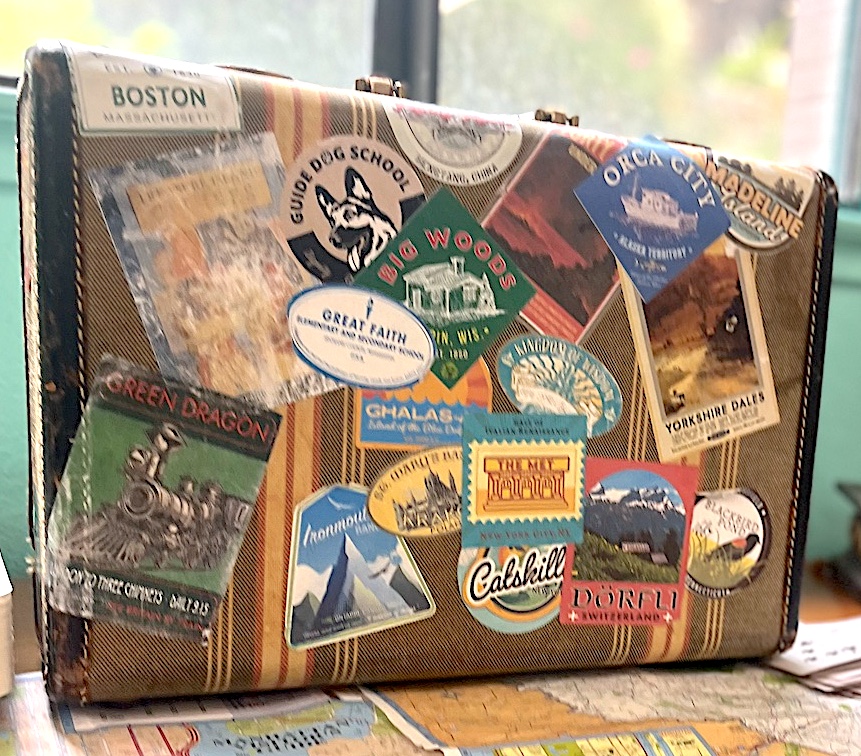
Or they might want to put it on a binder or water bottle. No matter where they see their sticker later, it will remind them of this wonderful journey they've taken with you!
LitWits makes a small commission on supplies or books you buy through our Amazon affiliate links.
Here are two ways we can help!
Prepped supplies & printables & more!
Your LitWits Kit for Island of the Blue Dolphins holds prepped supplies, printed printables, a teacher's guide, story souvenirs, and more for teaching one child, with the option to add more sets for additional kids. You can even add the book! Kits ship quarterly.
See this kit in our Shopify store.
Activity printables & worksheets
Some of our activity ideas need printables or worksheets. Don't spend hours coming up with your own—we've already made you a complete set for Island of the Blue Dolphins! You gather supplies, prep, and print—and have fun teaching in hands-on, memorable ways.
for teaching Island of the Blue Dolphins by Scott O'Dell
Borrow or buy Island of the Blue Dolphins, if you don't already have it; you can also listen to an audio version, read by Tantoo Cardinal (depending on your kids, you might want to slightly speed up the reading; we liked it best at 1.1x or 1.2x). Reading on a screen should be a last resort. The sensory feel of the pages in your hand, or the sound of someone reading to you, is the first important step in sinking into the sensory experience of this story.
This book is best for ages 9-12. (You can read reviews on Amazon). Here's our short summary of the story:
Left alone for years on an island while waiting to be rescued and reunited with her people, a young girl learns how to survive on her own. building shelters, seeking food, fighting off the wild dogs and eventually befriending one—Rontu, whose trust she earns, and who earns hers too.
But Island of the Blue Dolphins is not about hardship or abandonment — it’s about the discoveries Karana makes, about life and the natural world, only because she must figure things out for herself..
LitWits makes a small commission on supplies or books you buy through our Amazon affiliate links.

You can have them read or listen to it on their own, or you can enjoy it together as a class. Most importantly, read only for fun! Tell the kids to simply enjoy the book, without any assignments in mind. It's hard to get caught up in a story if you're supposed to be looking for something that takes you out of it.

It's helpful to know this book's big teaching points ahead of time, and explore some fascinating links to add to your lessons. We already found those for you, so you too could enjoy reading the book without an assignment in mind. :) Our teaching ideas connect to these takeaway topics:
The Lone Woman of San Nicolas
This book is historical fiction, but it's based on a true story. In brief, in 1835 Spanish missionaries requested the removal of the Nicoleño Indians from San Nicolas Island, and when the ship departed, a woman was left behind. In 1853 a Russian otter hunter found her, much as described in the book. He took her back to the mainland, where she became known as Juana Maria, or The Lone Woman of San Nicolas Island. As was so often the case after European contact, the new food and exposure to new microbes made her sick. Shortly after arriving, she died, and was buried in an unmarked grave at the Santa Barbara mission.
Her important story, shared in dramatic ways by a talented author, highlights the power and art of historical fiction. It also gives us a model, in Karana herself, of courage, forgiveness, resourcefulness, grace under pressure, patience, ingenuity, and compassion.
Conservation
Scott O'Dell's indignation at the treatment of Indigeneous peoples and his desire to tell Juana Maria's story were supplemented by his love of wildlife. "Island of the Blue Dolphins," he wrote, "began in anger, anger at the hunters who “invade the mountains where I live and who slaughter everything that creeps or walks or flies." Throughout Island of the Blue Dolphins we see that anger channeled not only into descriptions of the Russians' indiscriminate hunting, but into Karana's growth. To physically survive, she needs to get past her tribe's taboo against women hunting, but to mentally survive, she needs to look at wildlife as fellow creatures. From her healing of the wild dog that became her companion, to her eventual sense of oneness with the animals and her decision not to kill them any more, Karana cares for the creatures of "her" island.
This story of Karana's survival, which depends on killing creatures, is also very much about the survival of the creatures around her, which depends on humans not taking more than they need. It's about respect--even love--for wildlife. It may even move your students to speak up for animals.
Leadership
From Karana's selfless leap into the sea to her willingness to break village rules, we see a long chain of decisions that exemplify leadership. We learn something new about her potential as a leader, of herself and others, with every move she makes. She has courage, compassion, and good judgment. She's willing to let Ramo and later Rontu risk death to prove their leadership worthiness; by allowing them to do that without interference, Karana proves hers as well. When Ramo dies we see her humanity in her anguish and desire for revenge, and her intellect in her strategies for protecting herself, even though it means breaking taboos. Later we see her intuitive awareness of symbolism and her decision to not look back, proving to us that she has the mental strength and ability to do what she must to survive. Karana has all the marks of a leader at just 12 years old.
There's a defining clash between her old and new ways of looking at women’s roles. Like the shift from old chief to new, the succumbing of the old sea elephant to the younger, and the replacement of the leader of the pack by Rontu, her old beliefs need to be retired so she can survive. But this "step up and take charge" transition isn't just about survival; it's about becoming a leader. She's putting herself in charge of her own destiny.
Additional topics
We encourage you to explore the supportive Learning Links at the end of this page, especially if you have older or more advanced kids. Make notes as you go, so you’ll remember what you want to share, and when.

Once you've read the book and have a feel for its big ideas, decide which activities to do. Don't feel you need to do them all! Choose one or two or whatever you think will best suit you and your kids. Having said that, here's a sample agenda for a 3-hour "field trip" through a great book.
This sample agenda can be followed in part or in whole, all at once or over weeks—whatever works for you.
Set the tone. Ask the kids how this book made them feel, and why, and what it made them want to do. Point out that the author intended to make readers feel, think, and act—that literature is never just entertainment.
Introduce the author. Next, introduce the author through the biography video provided, to pay tribute to the story’s creator and recognize how his/her life story shows up in the book.
Introduce the arc. Give a brief overview of the concept of the narrative arc (here's our explanation for kids). Assure the kids you'll go through it in detail together.
Find the setting. Get your bearings before you set off! Explore the setting through audiovisual aids, and talk about any setting-specific props,
GET HANDS-ON ! Do the activities you've chosen (we do them in story order, for the most part, but do whatever holds your kids' interest.) Talk about the meaning(s) embedded in each project. Pass around props at relevant points to give the kids a tactile, sensory engagement with a significant item, including food and sounds. Look for moments to pop in an audiovisual—hear that medieval chant! watch that Friesland horse run!
Worksheets: If you're using our worksheets, we suggest weaving them in between activities, to keep the writing light and energy high. This woven blend of doing, talking, and writing is what helps lessons stick, and makes this book more meaningful and memorable for your kids.
Timing: This means you're doing a new activity every 10-20 minutes, so things move quickly and the energy stays high. Of course, if your kids would benefit from a slower pace, by all means take your time. The point is to keep everyone relaxed and having fun—so they're better able to learn. Do whatever best serves your teaching needs, in the order and at the pace that keeps your kids respectfully, happily engaged.
Gather and/or buy your supplies, do the activity prep, and make copies of all the printables you're using, whether you made your own or bought our set.
OR . . .
We can make this LOTS easier for you!
Prepped supplies & printables & more!
Your LitWits Kit for Island of the Blue Dolphins holds prepped supplies, printed printables, a teacher's guide, story souvenirs, and more for teaching one child, with the option to add more sets for additional kids. You can even add the book! Kits ship quarterly.
See this kit in our Shopify store.
Activity printables & worksheets
Some of our activity ideas need printables or worksheets. Don't spend hours coming up with your own—we've already made you a complete set for Island of the Blue Dolphins! You gather supplies, prep, and print—and have fun teaching in hands-on, memorable ways.
Be sure to let us know how it goes! In fact, if your kids have a blast with this book, we'd love your help spreading the word about our resources for teaching children's literature.
Tag and follow us on social media—and please leave a review!
for teaching Island of the Blue Dolphins by Scott O'Dell
Aw, you’re just the right age, whatever that might be! Just kidding—we know what you mean. We find that 8-12-year-olds are consistently “ready to LitWit.” Generally speaking, their reading level is high enough to take on the vocabulary and syntax of literature, and they’ve acquired enough knowledge to grasp new ideas. Yet they’re still full of wonder, and are highly responsive to the “check this out!” nature of sensory immersion.
However, we often have mature kids of 6-7 in our experiential workshops, and sometimes fun-loving kids of 13-14. As a teacher or parent, you know best what your kids are ready for and interested in.
Yes. Our methods and ideas are adaptable to a wide range of abilities—kids particpate at their own level. The point isn't to come up with a stellar work of art or a perfectly polished project, but to have the experience of doing something the characters did, or a spin on it. After all, those characters were of mixed abilities, too!
This is true of mixed levels of enthusiasm as well. Kids who already love reading are thrilled to get the chance to extend the story, and kids who don't yet believe that stories are fun end up wanting to read (or listen to) more great books.
LitWitting is a flexible, fun way to teach, adaptable to all ages and abilities, so there isn't "one way to do it" —every educator's circumstances and children are different. Having said that, we suggest you follow the narrative arc, and we've provided an example of a simple plan above, under Prep Tips.
But the truth is, if you and your kids are having fun, and when it's over they want more (which means reading another great book), you’re doing it right!
Absolutely—but when you're finished, they'll probably ask if there's something else you can do, or have a suggestion of their own! And that's GREAT! It shows they're liking this kind of learning, and seeing that books can be experiences for them too, not just for the people in the story.
Get your feet wet with a project you think they'll like best, never mind how deep and meaningful it is—even if they're "over" this book, if they know you'll be LitWitting other books, they'll want to read them!
In our workshops, the very most reluctant readers are the ones who, when their mom comes to pick them up, are tugging at her sleeve and saying "sign me up for the next book they're doing!" (We love that they always say "doing!").
They're right here on this page! Just click the "Read more" under each activity for all the details.
You can right-click to print this page, if you'd like a hard copy—be sure to open all the drop-downs first, so the hidden contents will print too.
We keep all this info online so we can include helpful links, make updates in real time, add new ideas, and let you use our materials on a screen.
Sure you can, for your noncommercial use in your family, classroom, library, book club, or wherever! As long as you’re not calling your fun time a “LitWits” event or charging a fee, you can use our ideas and printables to do lots of wonderful things!
Please don’t forward your printables or make copies for people who haven’t paid for them, of course, out of courtesy and to honor our copyright, and per our Terms of Service.
Did you find what you were looking for? Do you still have a question? Are you feeling inspired, but maybe also somewhat overwhelmed? Never fear—we're glad to help! You're literally on our page about inspiring kids to read more, and we'd love to support you as you change the world, one book at a time.
Happy teaching,
Becky and Jenny
Sisters, best friends, and partners
for teaching Island of the Blue Dolphins by Scott O'Dell
Like all children's literature, this book is chock-full of many subjects to explore. Browse these curated links to supplement your reading experience, research points of interest, and prompt tangential learning opportunities.
About the Book & Author
The author’s website: www.ScottODell.com
Biography by Prof. David Russell Biography (book by Prof. David Russell) - free on the Internet Archive
1983 interview with author (video, 15m)
The author's grave (FindAGrave)
Scott O'Dell author page - National Park Service (NPS)
Interactive “Island of the Blue Dolphins” page - NPS
Photo of Rattlesnake Island, where Scott O’Dell grew up, officially renamed Terminal Island in 1891.
Video of dolphins leaping beside a boat (After Scott O’Dell died and his ashes were scattered over the Pacific Ocean, a pod of dolphins leaped beside the boat of mourners all the way back to the bay.)
Story Supplements
History & Culture (see also The Lone Woman)
Highly recommended "Follow the Story" with audiovisual media, fact checks and primary/secondary evidence about the true story - Channel Islands National Park Site
"Visiting San Nicolas Island" - a (rare) visitor's blog and beautiful photos - Nightborn travel blog
Gorgeous photos of the island by William Reid at Stormbruiser.com
The history and culture of the Channel Islands - NPS
The Russian fur trade in the Channel Islands - NPS
History of the Santa Barbara mission
The Nicoleño Indians - NPS
Geography
Interactive maps of San Nicolas island - NPS
San Nicolas Island map and information (PDF) - NPS
Extensive teacher resources about the book's setting and basis in history - NPS
Visit the Channel Islands - NPS
Nature
Discovery of wild dogs’ bones on Channel Islands - Smithsonian
Wildlife conservation on San Nicolas Island
Toyon
Cactus (“tunas”) fruit
Kelp
Sea otters eating, playing, grooming (video)
Channel Island fox
Mi Pueblo markets for cactus pear, yucca, dried ginger, fresh and cooked octopus
How to cook yucca root
Astronomy
Serpens Caput - Constellations of Words
History of Unukalhai - Constellations of Words
Why green stars are rare - Live Science
The Lone Woman
"Juana Maria . . . of San Nicolas Island" - about the moment the Lone Woman was discovered - PBS SoCal
Beautiful art of the Lone Woman by Holli Harmon - HolliHarmon.com
The Lone Woman and Last Indians Digital Archive - editor Sara L. Schwebel, Ph.D
"The Lone Woman’s Nicoleño Language" - Journal of California and Great Basin Anthropology | Vol. 40, No. 1 (2020) | pp. 7–37
Lone Woman teaching resources - archaeologist Steven Schwartz on Teach Channel Islands
About the photo thought to be of the Lone Woman - NPS
"Voices from the field" - many experts on the story and Juana Maria - NPS
“The Lone Woman and the Cave of the Whales” – Lone Woman and Last Indians Digital Archive, USC
Redwood boxes found by archaeologists on San Nicolas Island - NPS
“What Archaeologists and Historians Are Finding About the Heroine of a Beloved Young Adult Novel” – Smithsonian Magazine, 2017
Scholarship by Travis Hudson including the song The Lone Woman was singing when found - Journal of California and Great Basin Anthrolopogy (1981)
Scholarship: “Some Observations on the Material Culture of the Nicoleño” - includes specific details of Nidever's discovery of the Lone Woman (Schwartz)
“Stranded on the Island of the Blue Dolphins: The True Story of Juana Maria” (Blakemore, JSTOR)
Video presentations of scholarship, including the Lone Woman’s cache (California Islands Symposium 2012)
Discovery of the Lone Woman’s cave - LA Times
Scholarship: “The Lone Woman of San Nicolas: A New Hypothesis on Her Origin” (Daily)
Scholarship: “Original Accounts of the Lone Woman of San Nicolas Island” (ed. Heizer & Elsasser, UC Berkeley)
Gabrielino Indians, most closely related to the Nicoleño
Gabrielino Tribe Facts for Kids - Native Languages of the Americas
Gabrielino-Tongva website
"A Brief History of the Tongva Tribe" - (PDF) - Claremont University
"The Indians of Los Angeles County" - (PDF) - Southwest Museum Papers
Curriculum for teaching about Southern California Indians - Bowers