Miss Stacy Says
Wisdom from Avonlea's Favorite Teacher
by Jenny
Anne of Green Gables is one of our favorite heroines, and we’re sure many of you feel the same. What’s not to love about Anne? But we’re not writing of her today. We think it’s high time we pay tribute to her beloved teacher, Miss Stacy, who gave us as much “food for thought” as Anne did “scope for imagination,” and who inspired our teaching for life.
Here’s where Anne introduced us to this remarkable woman:
"Mrs. Lynde came to the manse just before I left, and what do you think, Marilla? The trustees have hired a new teacher and it’s a lady. Her name is Miss Muriel Stacy. Isn’t that a romantic name? Mrs. Lynde says they’ve never had a female teacher in Avonlea before and she thinks it is a dangerous innovation. But I think it will be splendid to have a lady teacher, and I really don’t see how I’m going to live through the two weeks before school begins. I’m so impatient to see her.” -Ch 22
Goodness sakes, a LADY teacher! What were those trustees thinking! But Miss Stacy had a reputation for innovation that went beyond her "dangerous" gender:
". . . Miss Stacy takes them all to the woods for a ‘field’ day and they study ferns and flowers and birds. And they have physical culture exercises every morning and evening . . . I think it must be splendid and I believe I shall find that Miss Stacy is a kindred spirit.” -Ch. 23
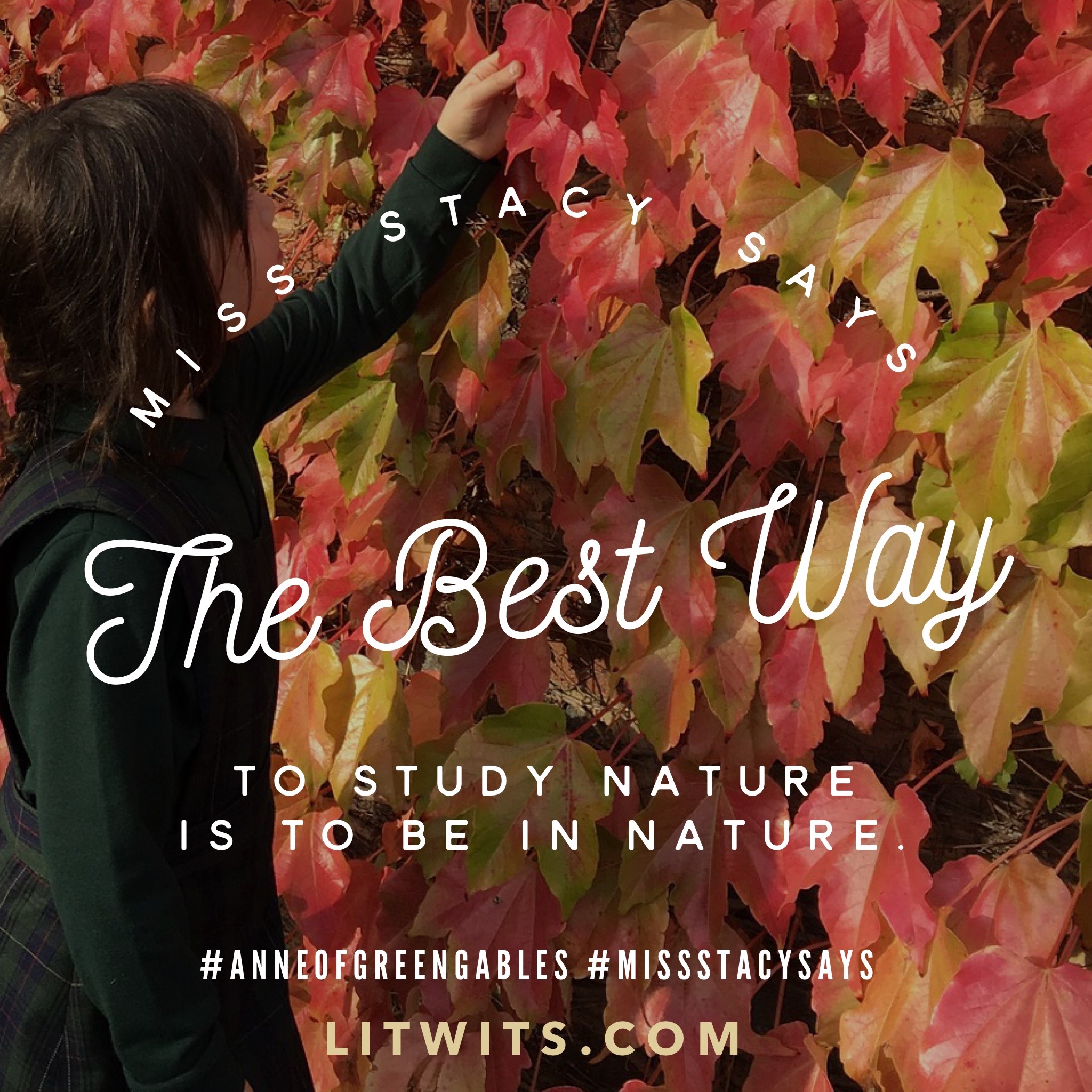
Of course it did turn out to be splendid, and Anne did find her teacher to be a kindred spirit. Miss Stacy would change Anne's life, first by being the kind of person whose respect Anne wanted to earn--a goal that grounded her, and helped her grow:
In the new teacher she found another true and helpful friend. Miss Stacy was a bright, sympathetic young woman with the happy gift of winning and holding the affections of her pupils and bringing out the best that was in them mentally and morally. Anne expanded like a flower under this wholesome influence and carried home to the admiring Matthew and the critical Marilla glowing accounts of schoolwork and aims.
“I love Miss Stacy with my whole heart, Marilla. She is so ladylike and she has such a sweet voice. When she pronounces my name I feel instinctively that she’s spelling it with an E." -Ch. 24
For Anne, hearing that e was tantamount to Miss Stacy calling her red hair auburn. Her new teacher was indeed lovable and relatable, but it was her innovative, nature-and-literature-based methods that inspired Anne to focus and learn.
Better yet, Miss Stacy didn’t just send her students into nature for exercise or scientific learning; she knew nature could inspire their writing, too:
It was an unusually mild winter, with so little snow that Anne and Diana could go to school nearly every day by way of the Birch Path. On Anne’s birthday they were tripping lightly down it, keeping eyes and ears alert amid all their chatter, for Miss Stacy had told them that they must soon write a composition on “A Winter’s Walk in the Woods,” and it behooved them to be observant. -Ch. 26
Miss Stacy's awareness of nature as a prime place to keenly observe and take note helped Anne channel her wild imagination into well-written compositions. As her writing won accolades, her desire to succeed in other areas increased. Her focus and self-discipline improved. She gained confidence, and eventually set the goal of becoming a teacher herself.
All because of Miss Stacy.

Like Anne, we’ve loved Miss Stacy wholeheartedly ever since we first read this book, and all our most memorable teachers have compared well to her. The comparisons really aren’t fair, we know, either to ourselves or other teachers (though Jenny’s kindergarten teacher in 1967, the legendary Betty Peck, truly seemed to be her in the flesh.). And it’s true that, in our most frustrated moments, we suppress Miss Stacy’s perfection--as we do with Marmee’s parenting goodness, in Little Women--telling ourselves oh come on now, really, she couldn’t really have been THAT amazing ALL the time.
But yes, she could. That’s the beauty of fiction, for characters and readers: we see just the good. Whatever the author chose to leave out, we don’t get, want, or need to know. Sure, our teaching (and parenting) models are idealistic, but we like aiming high, knowing we won’t reach cloud level, but that falling short will at least get us to a mountaintop--or even just a hill with a view.
Or better yet, out in the woods with our kids, learning through experience, exactly as our mentor taught us. It was Miss Stacy who inspired us to “bring the outside in” when we were homeschool and classroom teachers, long before we founded LitWits. In fact, once we started taking other people’s kids on sensory explorations of stories, it was her field trips that inspired our slogan:

Of course it wasn’t just Miss Stacy’s "field trips" we wanted to emulate; it was also her ability to help children see the power of written expression—others' and their own.
“Mrs. Lynde says it made her blood run cold to see the boys climbing to the very tops of those big trees on Bell’s hill after crows’ nests last Friday,” said Marilla. “I wonder at Miss Stacy for encouraging it.”
“But we wanted a crow’s nest for nature study,” explained Anne. “That was on our field afternoon. Field afternoons are splendid, Marilla. And Miss Stacy explains everything so beautifully. We have to write compositions on our field afternoons and I write the best ones.”
“It’s very vain of you to say so then. You’d better let your teacher say it.”
“But she did say it, Marilla. And indeed I’m not vain about it. How can I be, when I’m such a dunce at geometry? Although I’m really beginning to see through it a little, too. Miss Stacy makes it so clear. Still, I’ll never be good at it and I assure you it is a humbling reflection. But I love writing compositions. Mostly Miss Stacy lets us choose our own subjects; but next week we are to write a composition on some remarkable person. It’s hard to choose among so many remarkable people who have lived. Mustn’t it be splendid to be remarkable and have compositions written about you after you’re dead? Oh, I would dearly love to be remarkable.” -Ch. 24
But she was, of course; and the more she followed Miss Stacy’s advice and assignments, the more remarkable she became--even at geometry. This passage says so much about Anne’s earnestness, enthusiasm, and efforts, and about her humility, too. If she had known—if even her author had known—how remarkable she would turn out to be, she might have been—well, not quite as remarkable.
Because our workshops are all about “doing what characters did to learn what they learned,” we followed Miss Stacy’s example and had our kids write a composition on a remarkable person of their own choice. (You’ll see that activity on our page of Creative Teaching ideas for Anne of Green Gables.) Our own choice is the remarkable Miss Muriel Stacy, with gratitude to Lucy Maud Montgomery for making her real.
Please share our free ideas for teaching Anne of Green Gables and 50+ other great books with your teacher friends!
What do you think?
If you have questions or comments or anything to share, we'd love to hear from you. Please email us at beckyandjenny@litwits.com.