
by Becky
Lake Quintabacook, Searsmont, Maine
Just to the left of the wooden porch where I sit, between the cabin and the quiet lake, a single birch tree grows among a stand of maples. Beyond the maples, I see the rough bark of a hemlock tree, tough and true.
Each of these trees has a unique place world of great children’s books; Sam Gribley’s hemlock in My Side of the Mountain is a thing of escapist lore, and maples have provided the literary sap for sugaring-off scenes and epic dances in Little House in the Big Woods and The Birchbark House.
But there might not ever have been a tree as elegantly useful as the birch. And its appearance in multiple children’s books means another birch search is almost always somewhere around the corner for Jenny and me, as we prepare props and crafts to bring these great stories to life with kids.

At first, we tried to make do with our local barks. When we read that Sam Gribley drew his botanical sketches on birch bark, we did the best with what we had, just like Sam. Since eucalyptus bark peeled in shaggy skeins from the trees around the family farm, we industriously gathered the strips and cut them into manageable pieces for our kids to use. One time after a particularly raucous storm had left the giant eucs on the bluffs flayed and naked, with mud-spattered bark flung about. Jenny even washed the strips off clean in her bathtub and dried them on her clothesline.
They were a big hit, it worked, and the kids had fun.
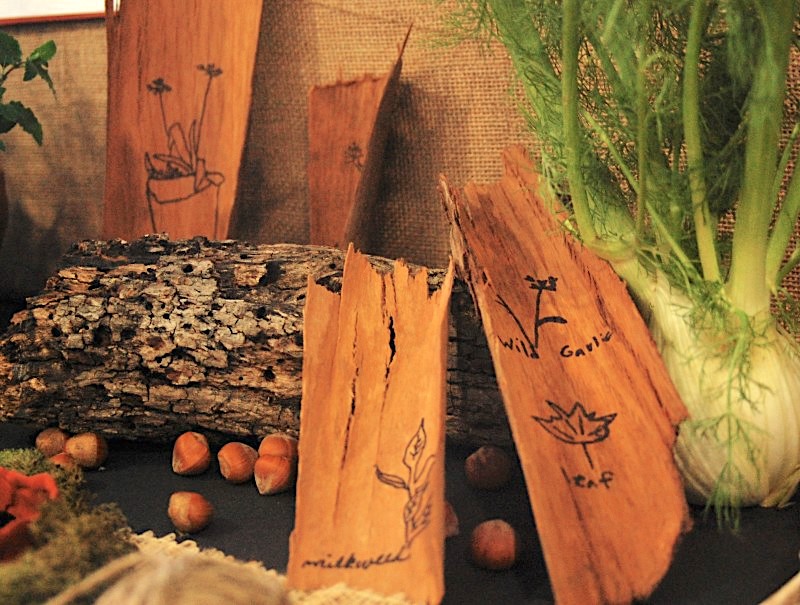
But to celebrate the ingenious indigenous wigwams of The Birchbark House, or the canoe-building scene in Caddie Woodlawn, we had to at least show our kids the real deal.
So we turned to eBay, and then to ever-resourceful Amazon, where square stacks of REAL birchbark could be procured from noble birchbark hunters for a fee that must surely justify the inherent dangers of their perilous endeavors. All we had to do was cut them into craft-size pieces with giant kitchen shears!
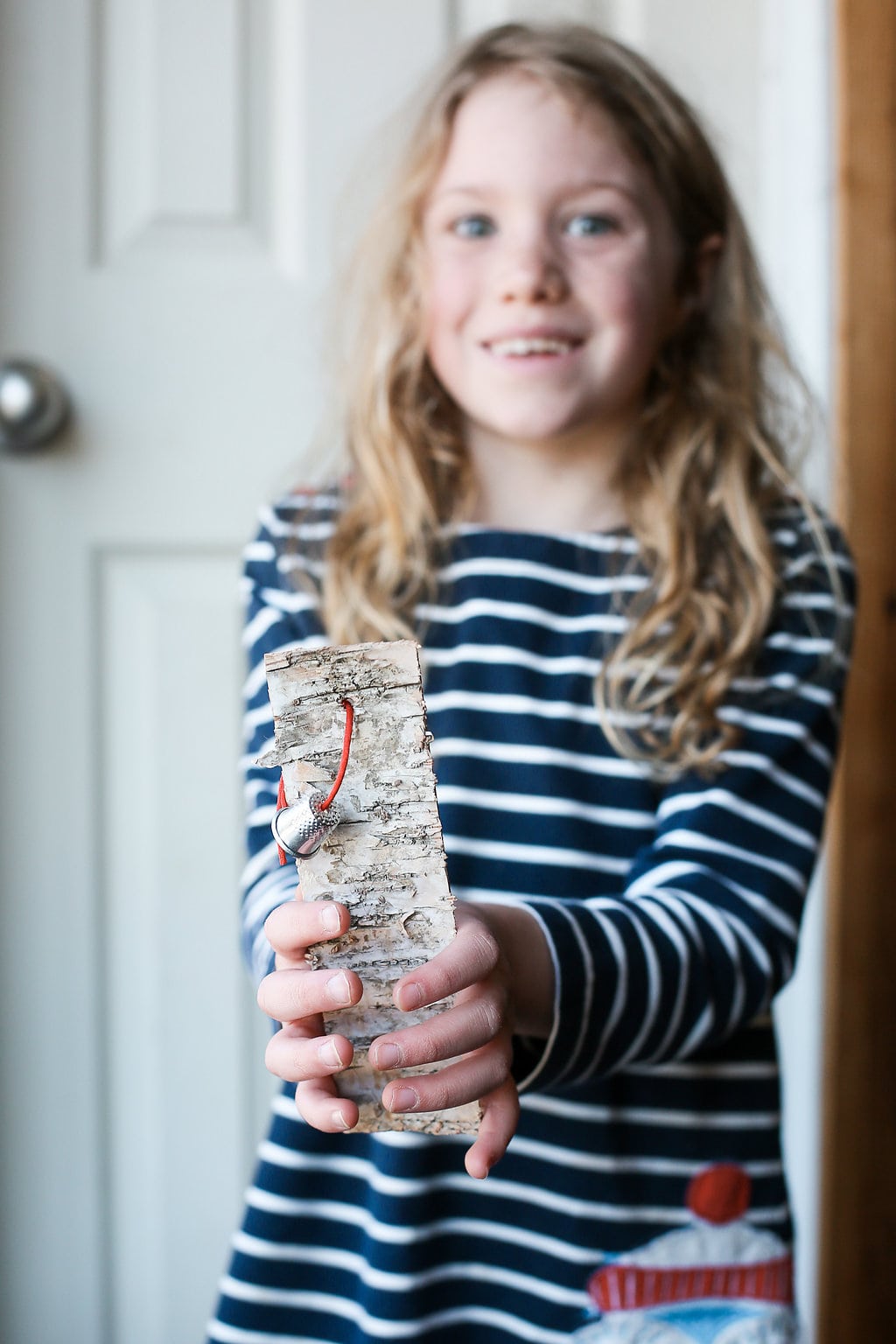
Now we could admire this useful and beautiful bark together with the kids. We could point out how lenticles (those horizontal dark streaks and small circles that give birch its distinct beauty) help the tree “breath.” We could run our fingers over the smooth underside and explain the anatomy of birch bark using words like “cambium,” “phloem,” and “cork.”
Why is this so powerful? Why do we all love to handle things, pass them around, see for ourselves the tiny stripes and whorls of the bark pattern? There are whole books written, certainly, around the value of experiential, hands-on learning. For our part, it’s always a no-brainer that if we can have the genuine item straight out of the story, the memory created is stronger and more durable. We’ve never wondered, at the end of the day, if ordering those square sheets of bark and trimming heaping, messy piles of them down to size was worth the extra time and expense.
All these thoughts spring instantly my mind as I look at the little birch tree and all the others that surround this little house, aptly named “Birch Cottage.” And of course I can’t help but gather a few scraps from the ground, as plentiful and free as they are, to touch and admire, and fight the ridiculous urge to bring some home to Jenny, as if birch bark was something she’d only read about in books.
What do you think?
If you have questions or comments or anything to share, we'd love to hear from you. Please email us at beckyandjenny@litwits.com.